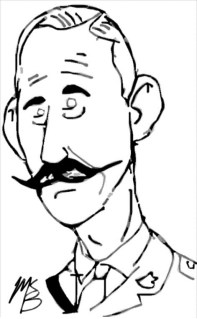
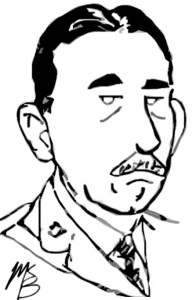
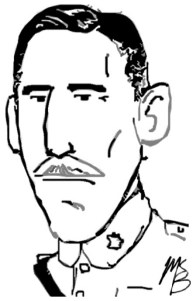
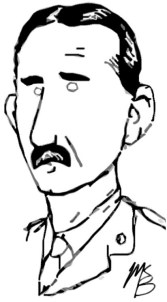
Lt. Col. Vicars

Lieutenant Colonel J.R.O. Vicars
172nd (Rocky Mountain Rangers) Battalion
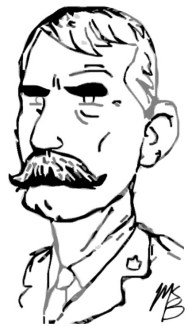
Vicars

The duty of all Canadians is to shed their last drop of blood in defence of the dear old Motherland. But why ask such a question? Is there a cur with a drop of British blood in his veins who doubts his duty? As for myself and Rangers, we are ready. Only let Colonel Sam. [Hughes] give the word. I speak for my men. They know me, and I know them.

(Vicars to Montreal Daily Star, 3 Aug 1914)

Too bad they broke us up for had they not we would have been in Berlin by this time or all in Heaven …  Although the latter place has already many of our poor fellows and every day adds to the number.

(Vicars to Kamloops Standard-Sentinel, 21 Sept 1917)

Despite his enthusiastic offer to volunteer on the outbreak of war in August 1914, sixty-year-old John Richard Odlum Vicars did not receive authorization to raise an overseas battalion until January 1916. Vicars was a British Columbia land surveyor and commanding officer of the 102nd Rocky Mountain Rangers. Born in Dublin, Ireland on 16 April 1855, he immigrated to Canada with his family in 1858 and moved west in the 1880s.
Continue reading

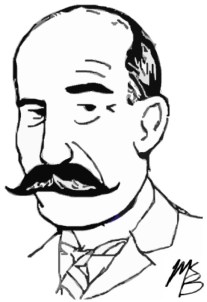
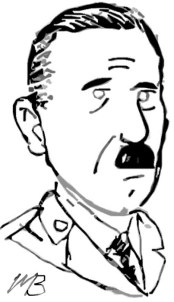
Lt. Col. Dawson

Lieutenant Colonel H. J. Dawson, D.S.O.
59th (Eastern Ontario) & 46th (South Saskatchewan) BattalionsDawson

During the recent fighting Lieut.-Colonel Dawson gave out and was sent down to the Hospital. I think he has gone on down the line and, as the strenuous fighting is likely to continue for some time, I would like very much to have another man in command of the Battalion and give Dawson a good chance to rest. He has been recommended as an Officer fit to command a Brigade in the Field, and is one of the best Commanding Officers I have. He has been hard at it now since the Fourth Division came to France.

(Gen. Arthur Currie, 17 Aug 1918)

Born in Birkenhead, England on 21 November 1876, Herbert John Dawson was an associate professor at the Royal Military College and militia officer with the 14th (The Princess of Wales’ Own Rifles) Regiment since 1901. He was appointed lieutenant colonel in May 1915 when he began to organize the 59th Battalion from Eastern Ontario and Hull, Quebec.

Continue reading

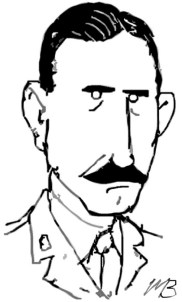
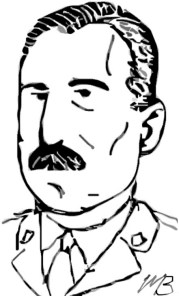
Lt. Col. Weaver

Major C. Y. Weaver, D.S.O.
49th (Edmonton Regiment) BattalionWeaver

Weaver was a man without a spark of vanity and had a wonderful sense of humor. He used to pretend to be suspicious of very clever men and argued at length that clever men were unstable, indeed dangerous. On the other hand he suggested that he himself was stupid, and contended that there were many advantages in being considered stupid. In point of fact, Weaver was a deep thinker and a student in the subjects in which he was interested.

(Gen. Griesbach, The Forty-Niner, 3 Jan 1931, 12)

Charles Yardley Weaver was an Edmonton barrister, justice of the peace and prominent cricket player. Born in Liverpool England on 9 June 1884, he moved to Canada and built a homestead in Alberta at the age of nineteen. He joined the Edmonton Fusiliers in 1908 and was selected by Lieutenant Colonel W. A. Griesbach to be his second-in-command when he raised the 49th Battalion in January 1915.

Continue reading

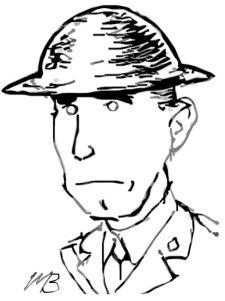
Lt. Col. Milne

Lieutenant Colonel Charles Milne
158th (Milne’s Men) Battalion

Milne

When the boys go marching through that mud, filth and slime under their pack, singing with that forced and indefinable gaiety which is the spirit of the troops, a lump comes into my throat and I can’t talk about it. I think that the devil when he sees it must laugh with glee and the angels weep tor sheer pity.

 (Milne’s interview, Vancouver World, 12 Sept 1917, 1)

Charles Milne was a gentleman militia officer with the 6th Duke of Connaught’s Own Regiment. Born in Huntly, Aberdeenshire, Scotland on 25 September 1866, he had served several years in the Gordon Highlanders before moving to Canada. In January 1916, he was authorized to raise the 158th Battalion from Vancouver.

Continue reading

Lt. Col. McMeans

Lieutenant Colonel Lendrum McMeans
221st (Bulldogs) Battalion McMeans

I desire to reiterate what the honourable gentleman [Mr. Sharpe] has just said. I too have lost of my substance and of my blood in this war; I too went out and did my best to raise men; and this honourable gentleman [Mr. Bennett] has no right to get up and sneer at men who have done that.

 (McMeans, Senate Debates, 26 May 1920, 434)

Born on 1 August 1859 in Brantford, Canada West, Lendrum McMeans was Conservative member of the Manitoba Legislature (1910—1914) and civic leader in Winnipeg. In April 1916, McMeans was authorized to raise the 221st Battalion. His oldest son, thirty-one year old Major Vivian Arthur Vinton McMeans returned from the front in August to join in his father’s battalion. The colonel’s youngest son, twenty-six year old Captain Ernest D’Harcourt McMeans, had been killed in battle on 22 May 1915.

Continue reading

Lt. Col. Ewing

Lieutenant Colonel Royal Ewing, D.S.O., M.C.
42nd (Royal Highlanders of Canada) BattalionEwing

They were looked on as a necessary evil. War diaries were presumably for the benefit of historians, if you will, and were prepared as carefully as could be under the circumstances.

 (Ewing’s testimony at Currie Libel Trial, 25 Apr 1928, 1)

 Royal Lindsay Hamilton Ewing enlisted in the 42nd Battalion as a subaltern, rose from platoon leader to adjutant, and returned home as the commanding officer in 1919. Born in Montreal on 12 November 1878, he was a real estate agent and member of the Black Watch regiment. Having served with the 42nd throughout the war, Ewing was twice mentioned in dispatches, received the Distinguished Service Order and Bar, and won the Military Cross.

Continue reading

Lt. Col. E.W. MacDonald

Lieutenant Colonel E. W. MacDonald, D.S.O., M.C.
10th (White Gurkhas) BattalionMacdonaldEW

Early in the day, before the attack, and again in the afternoon, he made personal reconnaissances over fire-swept ground, gaining first-hand information which enabled him to handle his men and direct the fire of his guns with remarkable success. His fine leadership, coolness and disregard of danger, carried his men along with him.

(D.S.O. Bar citation, Gazette, 2 Jan 1919)

On 24 May 1918, Eric Whidden MacDonald became the youngest battalion commander in the Canadian Expeditionary Force. He was born in Amherst, Nova Scotia on 20 July 1892. He moved to Calgary in 1913 to become an accountant with the Canadian Oil Company. He enlisted with the 10th Battalion in September 1914.

Continue reading

Lt. Col. Gunn

Lieutenant Colonel J. A. Gunn, D.S.O.
24th (Victoria Rifles) BattalionGunn

I would like to sound this note of warning. This war has united the soldiers into the most powerful force for good or evil in this country. If we use this force to promote our own selfish purposes we will have forgotten the high ideals for which we fought.

(Gunn, Toronto Globe, 18 Mar 1919, 9)

 A native of Toronto, John Alexander Gunn was born on 5 August 1873.  He had first joined the Queen’s Own Rifles in 1897 but transferred to the Victoria Rifles when he moved to Montreal in 1901. In October 1914, Gunn was appointed to command the 24th Battalion. At a reception before he departed overseas with his unit, Gunn defended the war as a just cause: “It means the triumph of honor, or of dishonor; the preservation of centuries of progress or a reversion to brutal militarism with its battle cry of iron and blood– in fact the whole future of the human race is at stake.”

Continue reading

Maj. Coote

Major A. Leslie Coote
47th (British Columbia) BattalionCoote

Objecting to being relegated to duty in a safety zone while men he had recruited were “in the line”, Col. Coote entered a strenuous protest but militia trained senior officers were a drug on the market in England just then while juniors and men for the ranks were badly needed. This being the case, while hundreds of other Majors returned to Canada, Col. Coote resigned his commission, enlisted in the King Edward Horse as a trooper…

 (Chilliwack Progress, 29 Apr 1920, 1)

Born in Tynemouth, England on 9 February 1868, Andrew Leslie Coote was a farmer and senior officer in the 104th Regiment. As second-in-command to Lieutenant Colonel W. N. Winsby in the 47th Battalion, Coote often assumed responsibility for the unit on the front when his superior was away at brigade conferences and headquarters meetings.

Continue reading

Lt. Col. Perry

Lieutenant Colonel Kenneth Perry, D.S.O.
13th and 87th BattalionsKPerry

An engineer by profession, he took up his duties as a soldier at the front with courage and enthusiasm, with the result that as the casualties thinned out the ranks of the senior officers he gradually rose, until from a lieutenant he became major and then eventually commanding officer of the 13th…

(Montreal Gazette, 1 Apr 1919, 4)

Kenneth Meikle Perry was born McLeod, Alberta on 7 November 1884. His father, Aylesworth Bowen Perry (1860—1956) was an original graduate of RMC and Commissioner of the Royal Canadian Mounted Police. The younger Perry graduated from McGill University, worked in Montreal as a civil engineer and belonged to the Black Watch. He was four times wounded in action and received the Distinguished Service Order and two Bars.

Continue reading