The Sportsman

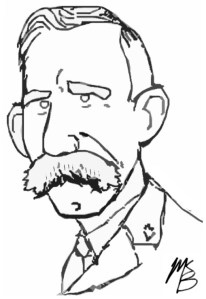
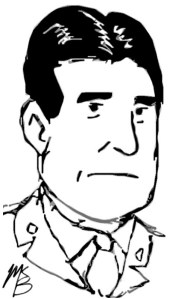
Lieutenant Colonel Dick Greer
180th (Sportsmen) Battalion
Greer

But the English and Canadians and Australians fight in a different way. They make a sport of fighting.

The German soldier has no sport. He is a machine; he is rigidly in his place. He can’t understand the idea that fighting is sport to the British. That long line of men charging, laughing and kicking a football along ahead terrifies him.

(Greer to Fosdick Commission, Toronto Globe, 18 June 1917, 9)

As president of the Sportsmen’s Patriotic Association, Richard Haliburton Greer proposed to raise a battalion of athletes from Toronto. Born on 19 October 1878 in Toronto, Greer was an Ontario Crown attorney and one of the city’s leading sportsmen. In his youth, Greer played amateur and semi-professional baseball. As a member of the University of Toronto ball club in the late 1890s, he was regarded as “one of the best short-stops in Canada.” In the 1898 UofT yearbook, Greer cited as his chief ambition in life: “To play the game.”
Continue reading

The Diarist

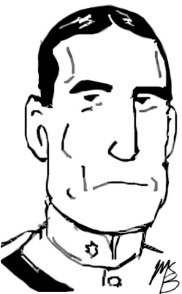
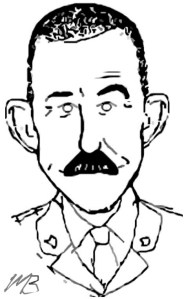
Lieutenant Colonel Lewis H. Beer
140th (St. John’s Tigers) Battalion

I forgot to mention that Gen. Seeley [sic] comes back on Tuesday the 10th. Well I have made up my mind to not stay when he returns. I am quite sure I would only get into trouble and would never feel easy under his command knowing he is not to be trusted. He is the kind of man who pats you on the back and at the same time knifes you. I want nothing to do with him. I have discovered him now in several lies not only about me but about other people. I have applied to return to England at the same time if humanly possible. I am going to make every effort to secure another place in France.

(L. H. Beer, Diary, 8 July 1917)

Lewis Herbert Beer was born in Charlottetown, Prince Edward Island on 12 December 1873. He was a member of Loyal Orange Lodge No. 614, worked in insurance and belonged to the 36th P.E.I. Light Horse. In October 1914, Beer joined Lord Strathcona’s Horse as a lieutenant. He served in England and France until December 1915 when he returned to Canada in order to raise the 140th Battalion from New Brunswick.

Continue reading

The Aristocrat

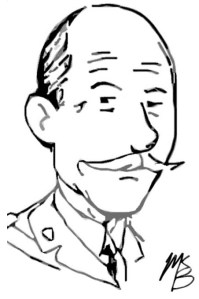
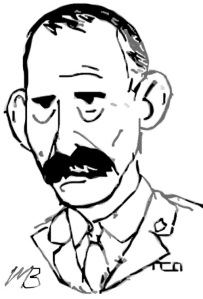
Major General Jack Seely, M.P.
Canadian Cavalry Brigade Seely

It was at that time, when carrying out a smaller raid, that my horse got shell-shocked, though not myself, I hope, and fell on me and smashed up five bones in my poor old body. However, I managed to get back all right.

(Seely Speech, Empire Club of Canada, 4 Oct 1920)

John Edward Bernard Seely, 1st Baron Mottistone, was a British soldier and politician. Born on 31 May 1868 in Brookhill Hall, Derbyshire, he was the son of Sir Charles Seely (1833—1915), a long-serving Liberal Unionist MP. During the Boer War, Seely joined the Imperial Yeomanry and won the Distinguished Service Order. In 1900, he was elected to the House of Commons as a Conservative. In 1904, he switched to the Liberal Party and later became a cabinet minister in Prime Minister Herbert Henry Asquith’s Government.

Continue reading

The Old Soldier

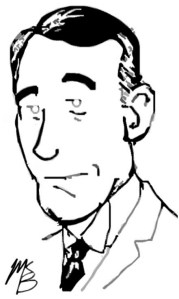
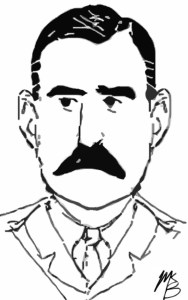
Lieutenant Colonel Robert Belcher
138th (Edmonton) Battalion
Belcher

I have in mind a man who has served for many years, first in the British Army, and afterwards in the Northwest Mounted Police and then in the South African war. Finally he was authorized to raise a battalion at Edmonton. On strength of his military experience and on the strength of his personal standing, he did raise a battalion without any serious difficulty. Surely such a man with such a battalion, raised under such circumstances—surely it would be right and proper that that battalion should go to the front intact under such leadership.

(Frank Oliver, Debates, 23 Jan 1917, 76)

Criticizing the breakup of the Canadian battalions, Frank Oliver, Liberal MP for Edmonton, alluded to the experience of Colonel Robert Belcher. Born on 23 April 1849 in London, England, the sixty-seven year old soldier and policeman was “one of the real old-timers in the west.”

Continue reading

The Hockeyist

Lieutenant Colonel Francis J. Murray
61st (Winnipeg) Battalion
Murray

The local soldier hockeyists completely outclassed the Saskatchewan champions in the two-game series and proved themselves worthy holders of the coveted mug.

This performance of Colonel Murray’s men is certainly remarkable, as the cup-seekers are a redoubtable squad of players but they were unable to cope with the sensational close checking and speed of the Winnipeggers. Only in the first fifteen minutes of the first game were the Westerners really in the running, as after that they were outplayed and seldom looked dangerous.

(Winnipeg Tribune, 20 Mar 1916, 10)

Born on 23 June 1876 in Portsmouth, England, Francis John Murray was a professional soldier and twenty-two year veteran of the Imperial Army. Having fought in the Boer War, Murray was appointed to raise the 61st Battalion from Winnipeg in spring 1915.

Continue reading

The Park Ranger

Lieutenant Colonel S. Maynard Rogers
9th BattalionRogers

The Canadian parks, I believe, possess vast potentialities for the betterment of the Canadian people in body, mind, and resultant energy and activity, and each year, as their attractions become better known, they will undoubtedly draw increasingly larger numbers to share in the benefits of the out-of-door life.

(S. M. Rogers, Humanitarian Ideals, April 1914)

Samuel Maynard Rogers was a military man, outdoorsman and sportsman. Born on 14 April 1862 in Plymouth, England, Rogers had volunteered to fight in the 1885 Rebellion and the Boer War. In 1913, Rogers was appointed first superintendent of Jasper Forest Park. As the administrator of Jasper, he promoted efficiency, wildlife protection and tourism.

Continue reading

The Blinded

Lieutenant Colonel Tom Perrett
68th (Regina) BattalionPerrett

Lt. Col. Perrett was severely wounded by splinter from bomb which entered head. He was adm. YPRES Dressing Station.

(5th RW Bn., War Diary, 29 Sept 1917, 13)

He has risen above his misfortune, however and has determined to “carry on” at home…

(Morning Leader, 10 Aug 1918, 17)

Thomas Edwin Perrett was a school inspector, teacher and principal. He was born on 13 February 1871 in Pembroke, Ontario and moved west in the 1890s to teach in Manitoba. He later became superintendent of schools in the North West Territories and principal of the Regina Normal School. In spring 1915, Perrett enlisted as a major with Lieutenant Colonel Edgar’s 68th Battalion, raised from Regina and Moose Jaw.

Continue reading

The Unlucky

Lieutenant Colonel Victor C. Buchanan, D.S.O. †
13th (Royal Highlanders of Canada) BattalionBuchanan

We then start to dig in where Col. Buchanan and Maj. Peterman had been buried but find their dead bodies. They must have died instantly. Apparently something must have exploded the gasoline and the shock brought in the weakest part of the dugout.

(Lieut. H.A. McCleave, 13th Bn., Diary, 28 Sept 1916)

During heavy German bombardment on the evening 26 September 1916, a shell struck the 13th Battalion headquarters. The explosion killed several senior officers including Lieutenant Colonel Victor Carl Buchanan. It was his forty-seventh birthday.

Continue reading

The Dentist

 Lieutenant Colonel E. F. Armstrong
159th (1st Algonquins) Battalion
EFArmstrong

I feel a little timid, but I know that you, Sir [Speaker of the House], are very sympathetic towards a young member who has had very little experience in public speaking and is addressing this House for the first time. But I am sent here by people of the north…

(Armstrong’s maiden speech, Debates, 22 Feb 1926, 1234)

Born 14 July 1878 in Flesherton, Ontario, Ernest Frederick Armstrong was a dental surgeon and mining prospector. He moved north as a young man and became an early settler of Cobalt. In the small mining community, he set up a dental practice and became chief magistrate.

Continue reading

The Toothless

Major John L. Youngs, M.C.
110th (Perth) BattalionYoungs

On August 15th, last, patient presented with very severe form of Trench Mouth. I extracted the four worst teeth and treated the balance. Teeth responded splendidly to treatment and became quite tight. On Sept. 4th, a lower denture was inserted and patient discharged.

Today, I find the natural teeth quite firm, and practically satisfactory. His denture is fairly satisfactory but I think as good as the average lower denture.

(Medical History of Invalid, 11 Dec 1917)

Lieutenant John Lant Youngs was a Stratford building contractor and member of the 28th Regiment. He was born on 11 December 1873 in Oxford County, Ontario. He served as company second-in-command to Captain T. G. Delamere when both enlisted with the 1st Battalion in September 1914.

Continue reading