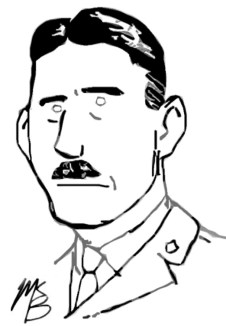
Col. Moore

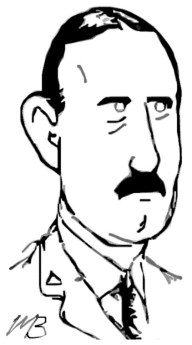
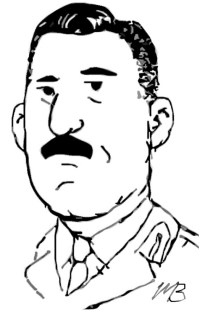
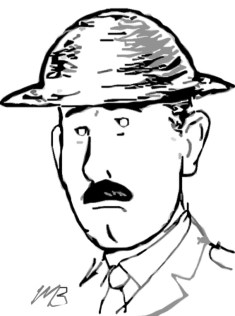
Colonel Edmund E.W. Moore
9th Reserve Battalion
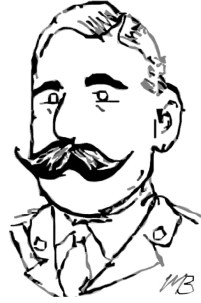
He walked his horse until he got across the Railway Bridge from the Brigade Office. After crossing the Railway Bridge he started to go faster as we went along. The horse broke into a gallop and Colonel Moore lost his cap. The Horse increase his pace galloping down hill. I then thought that Colonel Moore had lost control of the horse.

 (Pte. L.M. Carson, Court of Inquiry, 9 Apr 1917)

Born in Hamilton, Canada West on 8 September 1864, Edmund Evelyn Wentworth Moore was a surveyor and former commanding officer of the 13th Royal Regiment. Just before the First World War, he assumed command of the 4th Infantry Brigade of the militia. He went overseas with the First Contingent and took over the 9th Reserve Battalion from May 1915 until April 1916.
Continue reading

Lt. Col. Ripley

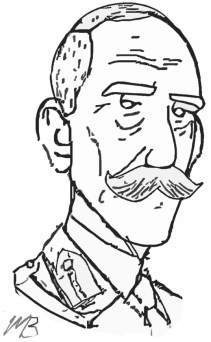
Lieutenant Colonel Blair Ripley
1st Canadian Railway Troops

Ripley

“Whatever do you want to write about me for?” asked a tall man with benign expression, his kind eyes glinting humorously behind glasses. “I’m retired.”

(Interview with Gwen Cash, Time Colonist, 22 Jan 1950)

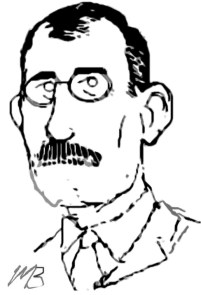
Blair Ripley was a Canadian Pacific Railway civil engineer born in Oxford, Nova Scotia on 28 August 1880. He worked on railways across the west and designed the Lethbridge Viaduct. By the outbreak of the war he was completing the North Toronto Grade Separation. In June 1916, he was assigned to take his railway and bridge building expertise to the front when appointed to raise No. 1 Construction Battalion.

Continue reading

Lt. Col. Jones

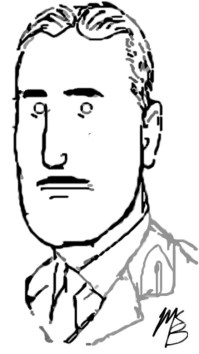
Lieutenant Colonel L.E. Jones, D.S.O.
18th (Western Ontario) Battalion

Jones LE

Jones is quite a sport with a forte in the baseball line. This year he is manager of the Varsity nine and his eagle eye is scanning the horizon for recruits. He is just quiet enough to be rated “a good fellow,” without an enemy around the institution.

 (Torontonensis, 1900, 53)

Louis Elgin Jones was born in Elgin County, Ontario on 2 November 1877. A graduate of the University of Toronto, he was a mathematics teacher, civil engineer, and member of the 27th Regiment. In November 1914, Jones joined the 18th Battalion as a captain.

Continue reading

The Widower

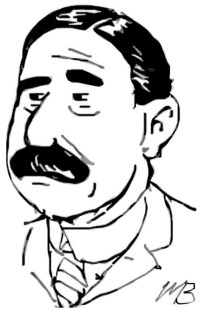
Lieutenant Colonel H.L. Milligan, D.S.O.
18th (Western Ontario) Battalion

Milligan

I met Colonel Milligan recently, and am advised that he is not physically fit to return to his duties, and have lost his wife and daughter in the last few months, I hope you will grant him this extension of leave.

(J.E. Armstrong to militia minister, 18 Jan 1917)

Henry Linton Milligan succeeded Lieutenant Colonel Ernest S. Wigle as commander of the 18th Battalion on 8 July 1916. A native of Scotland, he was born on 8 April 1872. A member of the 26th Regiment, he joined the 18th at the rank of major in October 1914. He remained in command until just after the battle of the Somme.

Continue reading

Maj. Gen. Macdonell

Major General Archie Macdonell
Lord Strathcona’s Horse
MacdonnellAC

“Batty Mac, our brigade commander, was crazy as a coot in many ways, I saw him actually get wounded one day … Somebody said ‘Be careful, sir, there’s a sniper’ and he said ‘Fuck the sniper,’ climbed up to get a look and the sniper took him through the shoulder and he went ass over applecarts into his shellhole from which he had emerged … My god, his language! You could hear him for miles around!”

(G.R. Stevens PPCLI, In Flanders Field interview, 1964)

Born on 6 October 1864 in Windsor, Canada West, Archibald Cameron Macdonell earned the nickname “Batty Mac” for his disregard of danger under fire. He graduated from the Royal Military College of Canada in 1886 and joined the Canadian Militia before transferring to the North-West Mounted Police. He volunteered during the Boer War and was commanding officer of the Lord Strathcona’s Horse at the outbreak of the First World War.

Continue reading

Lt. Col. MacDonald

Lieutenant Colonel D.J. MacDonald
Lord Strathcona’s Horse

For conspicuous gallantry and devotion to duty. In the attack launched by a cavalry brigade he led the reserve squadron of the regiment to the attack. Though suffering acute pain from a wound in the ankle, he continued to direct operations and led his men forward until the position was finally secured. But for his outstanding courage, skill and dash the position could not have been held

(Lt. Col. MacDonald, D.S.O. Bar citation, 1 Jan 1918)

Donald John MacDonald was son of an Ontario MPP and farmer born on 25 July 1889 in Glengarry, Ontario. He was commissioned as a lieutenant in Lord Strathcona’s Horse (LdSH) on 22 September 1914 and proceeded to France on 4 May 1915. After less than a month he was wounded and returned to recover in England and was given rest leave to Canada. He rejoined the LdSH in the field in October 1915 and within a few months had been promoted to major. Continue reading

Brig. Gen. Hervey

Brigadier General C.L. Hervey
4th Battalion, Railway Troops
Hervey

During my entire service in France I had in addition to my other duties to supply detachments for the moving of His Majesty’s naval siege guns, and certain guns of the Royal Artillery, and to devise the construct emplacements for same.

(Gen C.L. Hervey, US Engineers. 3rd Volunteers, Yearbook, 1918)

Chilton Longley Hervey was an engineering contractor born in Paris, Illinois on 27 April 1872. He served in the Spanish American War as a sergeant with the 3rd Volunteer Engineers. The son of United Empire Loyalists, Hervey moved to Ontario after marrying a Canadian in 1907. As a member of the Corps of Guides, he enlisted in the Canadian Railway Construction Corps in 1915.

Continue reading

Hon. Capt. Burnham & Lt. Col. Johnston

Honorary Captain J.H. Burnham, MP

Burnham

Lieutenant Colonel T.J. Johnston
93rd (Peterborough) Battalion

I think that, as one who spent six months in England and a few days in France, I am called upon to say something on behalf of the soldiers…

 Knowing humanity as I do–and I have lived quite a few years now; and I may tell you that I was connected with the 93rd Battalion from its inception and was with it in England until it was dispersed and sent to France—a more sober, orderly, upright, and thoroughly decent lot of men I never saw, even amongst the politicians

 (J. H. Burnham, Debates 26 Apr 1917, 817)

Born on 12 January 1861 in Otonobee, Canada West, Thomas James Johnson was a militia officer with nearly forty years’ experience in the 3rd Prince of Wales’ Canadian Dragoons. In November 1915, he was authorized to raise the 93rd Battalion from Peterborough. Conservative MP John Hampden Burnham acted as honorary captain to assist with recruiting. A graduate of the University of Toronto with a Masters’ of Arts, Burnham was nicknamed “the philosopher” by colleagues in the House of Commons.

Continue reading

The Lumber King

Major General Aleck McDougall
224th (Lumbermen’s) Battalion
Macdougall

Many of these men have left families at home, and are looking forward to rejoining them at the end of the war, and it is a scandal that the minds of these people should be disturbed by the thoughts that our soldiers are in the midst of dire temptation and are falling victims to it, when as a matter of fact the behaviour of the men of this corps since its formation has been exceptionally satisfactory and it is my opinion when they return home they will demonstrate that their overseas activities have improved them in every way.

(MacDougall to Montreal Gazette, 25 Apr 1918, 10)

In February 1916, British Colonial Secretary Bonar Law requested the Canadian Government provide a special battalion of lumbermen for overseas service. Ottawa timber magnate Alexander McDougall, who had proposed a forestry unit, was quickly appointed commander of the 224th Battalion. Born in Renfrew, Ontario in January 1878, McDougall was an experienced woodsman and leading figure in the North American lumber industry. Continue reading

Lt. Col. Patterson

Lieutenant Colonel W.R. Patterson
4th Canadian Mounted Rifles
Patterson

MISTAKEN IDENTITY

J.M. Patterson, ex-Mayor of Paris this morning expressed doubt that it is his son, Lt.-Col. W.R. Patterson who was yesterday reported to have been raised to the rank of Brigadier. Lt.-Col. Patterson is in command of the 4th CMR, while another officer, Lt.-Col. R.W Paterson, attached to the Fort Garry Horse, is the on who has received promotion. Similar confusion has arisen before as both officers have won the D.S.O.

(Brantford Courier, 5 June 1918)

William Reginald Patterson was born on 1 December 1884 in Paris, Ontario where he father was later three time mayor. The younger Patterson worked in his father’s grocery and glassware store before enlisting in the 4th Canadian Mounted Rifles, which by the end of the war he would command. Their very similar last names and reversed initials meant he was frequently confused with Brigadier Robert Walter Paterson of the Canadian Cavalry Brigade.

Continue reading