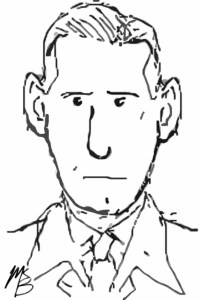
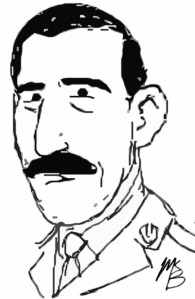
Lt-Col. C.R. Buchanan

Lieutenant-Colonel C.R. Buchanan
6th Battalion, Royal Scots Fusiliers

The Bn was very weary but the leading coys set off and reached the Northern edge of the village which they found to be strongly held … The CO was slightly wounded in the arm about 1300 hrs but when the 2 IC went up he insisted on finishing the battle and was only evacuated later in the evening when the 2 IC took over.

(War Diary, 9 Aug 1944)

Born on 22 May 1902 Shanghai, China, Colin Robert Buchanan was a commissioned officer with the Royal Scots Fusiliers since 1922. He served in the Far East and became 2nd Battalion adjutant in 1930. While stationed in Hong Kong, he and other officer were mistaken for Russian spies and briefly denied by Chinese authorities. He was promoted to captain in 1936 and made a major days before the outbreak of the Second World War.

Continue reading

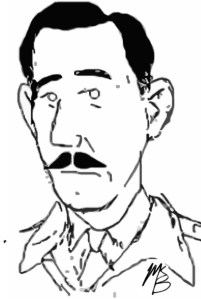
Lt-Col. B.A. Pearson

Lieutenant-Colonel Barclay Pearson
8th Battalion, Royal Scots

During this period this officer continually moved about his battalion under intense art and mortar fire. His energy and determination altered the entire course of the operation and prevented much hard fighting and heavy casualties, not only amongst his own battalion but also for the rest of the brigade.

(D.S.O. citation, 10 May 1945)

Born on 13 January 1912 in Dorchester, Dorset, Barclay Andrew Pearson was commissioned into the Argyll and Sutherland Highlanders in 1932. He served as adjutant with the 1st Battalion, which later fought in the Western Desert and Crete in 1941. In May 1942, the 15th Battalion was re-designated the 2nd Battalion, replacing the unit destroyed in the Battle of Singapore. Pearson served as major when it deployed to Normandy with the 15th Division in June 1944.

Continue reading

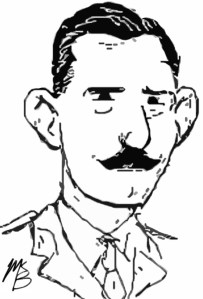
Lt-Col. P.R. Lane-Joynt

Lieutenant-Colonel P.R. Lane-Joynt
8th Battalion, Royal Scots

As the bn advanced enemy fire became most intense, control became increasingly difficult and extension of the bridgehead appeared impossible. However in the cramped and increasingly dangerous situation the CO pushed forward his coys in a continuous effort to enlarge the bridgehead.

(D.S.O. citation, 1 March 1945)

Born on 24 December 1901 in County Clare, Ireland, Philip Robert Lane-Joynt was educated at Royal Military College, Sandhurst. He was commissioned into the Royal Irish Rifles in 1921 before transferring to the Prince of Wales’s Volunteers the next year. He was promoted to captain in 1935 and major in 1938. He mobilized with the South Lancashire Regiment.

Continue reading

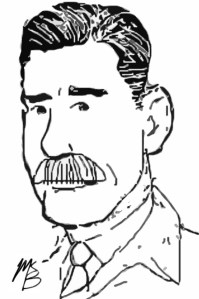
Lt-Col. R. Delacombe

Lieutenant-Colonel Rohan Delacombe
8th Battalion, Royal Scots

I don’t think I’ll be blown to bits today or tomorrow because of this Cuban business. My assessment of the Russian character is that while they will go to any length in applying pollical, moral or economic pressures, they will always endeavor to stop just short of war.

(Quoted in Montreal Gazette, 26 Oct 1962, 1)

Born on 25 October 1906 in St. Julian’s, Malta, Rohan Delacombe was a commissioned with the Royal Scots since 1926. He was educated at Harrow School before attending Royal Military College, Sandhurst. He served with the 1st Battalion in Egypt, China, India and Palestine where he participated in the suppression of the Arab revolt in the years prior to the Second World War. In 1940, he was assigned to 4th Infantry Brigade during the battle of France and then was posted to the general staff of Adrian Carton de Wiart during the Norway campaign.

Continue reading

Lt-Col. R.W.M. De Winton

Lieutenant-Colonel R.W.M. De Winton
5th/7th Battalion, Gordon Highlanders
1st Battalion, Tyneside Scottish
2nd Battalion, Gordon Highlanders

I did not mean to hit the man or the uniform. I wanted to hit only the major representatives of the Big Four at Pola. Unfortunately he was a man and a soldier. If I had had the occasion, I would have hit the Big Four—as a symbol of the injustice to my country.

(Maria Pasquinelli in Associated Press, 19 Mar 1947)

Born on 16 September 1908 in Edinburgh, Scotland, Robert William Michael De Winton was a graduate of Royal Military College, Sandhurst and a commissioned officer in the Gordon Highlanders since 1932. He temporarily took over 5/7th Battalion in Sicily in August 1943 and then commanded 1st Battalion, Tyneside Scottish from January 1944 until it deployed to France after D-Day.

Continue reading