The Anti-Ku Kluxer

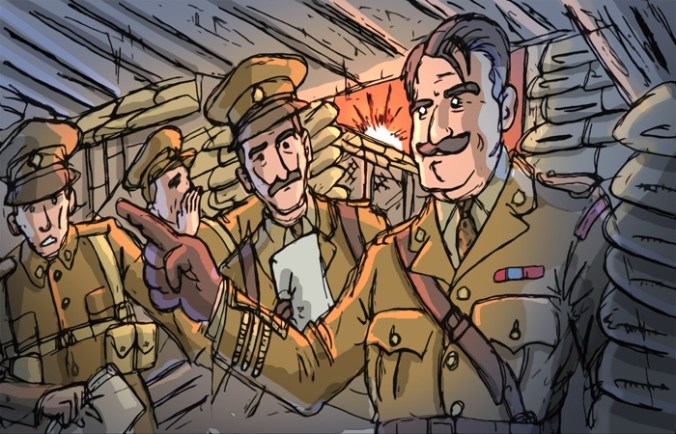
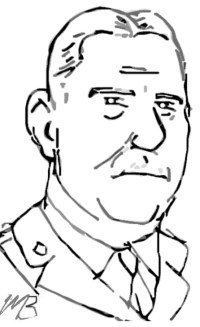
Lieutenant Colonel J.H. Hearn
214th (Saskatchewan) Battalion

By order of the Militia Department, Ottawa, the entire official staff, from Lieutenant-Colonel J. H. Hearn to the Junior subaltern is on the way back to Saskatchewan, pending an official investigation. The battalion will proceed under other officers. It is claimed that the 214th left Saskatoon with between $5,000 and $7,000 in regimental debts behind, and a host of angry creditors. Under military regulations no officers’ can proceed overseas until the regimental funds are given, clearance.

(Ottawa Journal, 13 Apr 1917, 6)

John Harvey Hearn was born in Sydney, Nova Scotia on 15 October 1882. After graduating from Dalhousie University with a law degree, he moved west to set up a practice in Wadena, Saskatchewan. A proud Roman Catholic lawyer, Hearn fought the Ku Klux Klan’s influence in the province during the 1920s.

Continue reading

Lt. Col. Fowler, MP

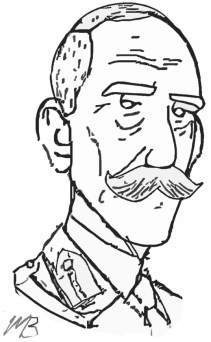
Lieutenant Colonel G.W. Fowler, MP
104th (New Brunswick) Battalion
Fowler

There is often a vast difference between the stories they tell in Canada, as to their achievements in France, and the stories that are told of them here. There have been cases where such Officers have, in consequence of the skillful manner in which they have trumpeted their own achievements (which were really of a very minor character) obtained advancement, much to the annoyance and disgust of men whose services have been far more valuable, but who have remained steadily on the job.

(Fowler to Robert Borden, 6 Sept 1916)

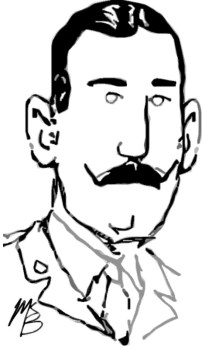
Born on 24 February 1859, George William Fowler was Conservative MP for King’s and Albert (1900—1908, 1911—1917) and senator for New Brunswick (1917—1924). A graduate of Dalhousie University and Boston College, he was a lawyer and Grand Master in the provincial Orange Order.

A retired militia officer with twenty years in the 8th Hussars, Fowler was appointed to command the 104th Battalion from New Brunswick in November 1915. On his attestation form, he lowered his birth date by two years and curiously listed his religion as pagan.

Continue reading

Maj. Rankin

Major “Jock” Rankin, D.S.O.
46th (Suicide) Battalion

Rankin

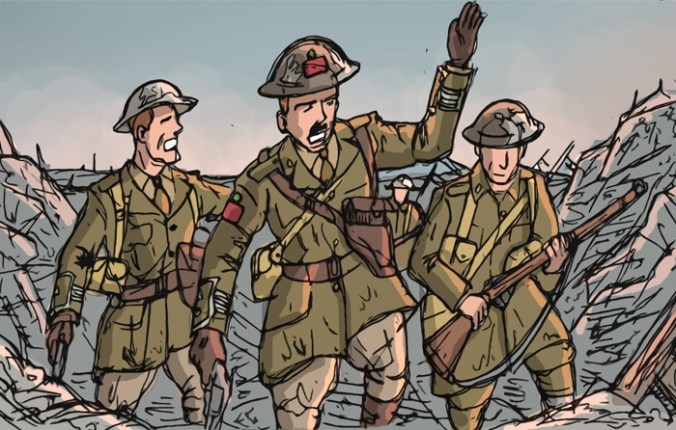
Whether in the arena of sports, the Training Camps in Canada or England, or on the Battlefields of France and Belgium, the “Fighting Forty-Sixth” (or Suicide Bn.) held an unsullied record of solid service’ and achievement, and of duty done quietly, surely and effectively.

 (46th Battalion CEF—Year Book, 1926, 9)

James Sabiston Rankin was born on 30 December 1882 in Liberton, Scotland. After graduating from the University of Glasgow, he joined the 8th Highland Light Infantry. He moved to Saskatchewan in 1905 to become a lawyer in Weyburn. In June 1915, he enlisted with the rank of captain in Lieutenant Colonel Snell’s 46th Battalion.

Continue reading

The Viking

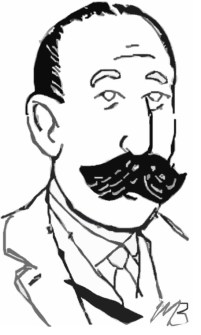
Lieutenant Colonel A. G. Fonseca
197th (Vikings of Canada) Battalion

FonsecaAG

War Invention by Colonel Fonseca Rips Barbed Entanglements to Pieces

 Proof of the military value of the new war machine invented by Lieut.-Col. Fonseca, of the 197th Battalion, was submitted to a number of experts In the art of modern warfare at Fort Rouge Tuesday afternoon. The news that a weapon which can successfully combat barbed wire In the field had been Invented created great Interest and Col. Fonseca consented to a series of tests to substantiate his claims.

(Winnipeg Tribune, 8 Aug 1916, 5)

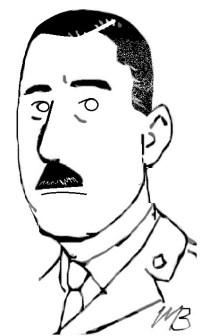
Despite his Latin name, Alfonso Gomez Fonseca raised a battalion of Scandinavians from Manitoba. He was born in Winnipeg on 14 June 1876. His father, William Gomez da Fonseca (1823—1905), was born in the Danish West Indies, moved to North America and became an early Winnipeg pioneer in the 1860.

Continue reading

Lt. Col. Green

Lieutenant Colonel W.J. Green
91st (Elgin) Battalion
Green

We learned that the possibility of out going to France intact was remote. It appeared that the C.O. with the most pull with old Sir Sam Hughes had the best chance to keep his command and as our C.O., Col. Green, was never given to cringing and kow-towing to the war time brass hats, he, of course, was not one of the favored ones.

(Harold Becker, 91st Bn., Memoirs, 161)

William James Green was a Boer War veteran and member of the 25th Regiment since 1893. He was born in St. Thomas, Ontario on 8 October 1875. In December 1915, Green was authorized to raise the 91st Battalion based in his hometown and raised from Elgin county.

Continue reading

Lt. Col. McLelan

Lieutenant Colonel A. W. McLelan
121st (Western Irish) Battalion
McLelan

Col. McLelan’s plan is this: All officers enter his regiment as lieutenants. They are given fullest opportunities for displaying their ability, and according to merit the senior appointments, such as those of field officers and captains of companies, are granted… Men who have captains and field officers’ certificates are placed on the same basin as the other officers and must qualify in this competitive sense for the senior rankings.

 “I think this is the only way in which real efficiency can be arrived at,” said Lieut.-Col. McLelan this morning. “My officers will know that they must make good, and it keys everyone of them up to do his best.”

 (Vancouver World, 19 Jan 1916, 15)

Archibald Woodbury McLelan was a fifth-generation Canadian of Irish ancestry. He was born on 26 August 1884 in Londonderry, Nova Scotia. McLelan’s namesake was his grandfather (1824—1890), the Lieutenant Governor of the province between 1888 and 1890. In the first Canadian parliament, the elder McLelan had sat as an anti-confederation member until an appointment to the Senate in 1869.

Continue reading

Lt. Col. Moodie

Lieutenant Colonel R.R. Moodie
205th (Hamilton Tigers) Battalion

He is suffering from neurasthenia with insomnia, loss of appetite, general debility, severe headaches, nervous chills and constant pain in temporal region and back of neck. Mental concentration is impossible, and he is easily worried over trifles.

(Proceedings of Medical Board, 3 Sept 1916)

Born in Hamilton, Ontario on 6 August 1884, Robert Roy Moodie was a knitting manufacturer, prominent sportsman and president of the city’s Tiger Football club. A member of the 91st militia and the Canadian Field Artillery, Moodie first joined Lieutenant Colonel Walter Stewart’s 86th Machine Gun Battalion at the rank of major in October 1915. By early 1916, he had received authorization to raise a sportsmen’s battalion from Hamilton, the 205th Tigers, which took its nickname from the city’s sports team.

Continue reading

Lt. Col. Rexford

Lieutenant Colonel I.P. Rexford
87th (Canadian Grenadier Guards) Battalion
Rexford

As a Rotarian who has held for the last 35 years the classification of “corporate executor” in the Rotary Club of Montreal, I was horrified to read in an article in THE ROTARIAN for October a recommendation by the author that a person should designate his wife as sole executrix to avoid the coast of a bond and “keep the commission in the family.”

 Surely the author must know of the many tragedies which have followed where a man has named his wife as sole executrix, a person usually entirely without experience in administrating an estate and managing investments.

 (Rexford, “Re: Making a Will”, The Rotarian, Jan 1950, 55)

Born on 14 September 1884 in Quebec, Irving Putnam Rexford was a Royal Trust Company manager and member of the Rotary Club with ten years’ experience in the Canadian Grenadier Guards. In September 1915, he joined the 87th Battalion organized by Colonel Frank Meighen.

Continue reading

Lt. Col. Ketcheson

Lieutenant Colonel W.G. Ketcheson
80th (Hastings) Battalion
Ketcheson

While not possessed of a very high academic education, Lieut. Col. Ketcheson has the qualities most essential in a Commanding Officer, i.e. – the ability to handle men and a strong personality.

 (80th Bn. inspection report, 1916)

Born on 29 March 1862 in Hastings County, Canada West, William Gilbert Ketcheson was a member of an old United Empire Loyalist family. His ancestor, Colonel William Ketcheson (1759—1848) had immigrated to Hastings County after the American Revolution and later served in the War of 1812. With 8 children, 71 grandchildren and 59 great-grandchildren, many of his descendants assumed prominent positions in the county.

Continue reading