The Nobleman

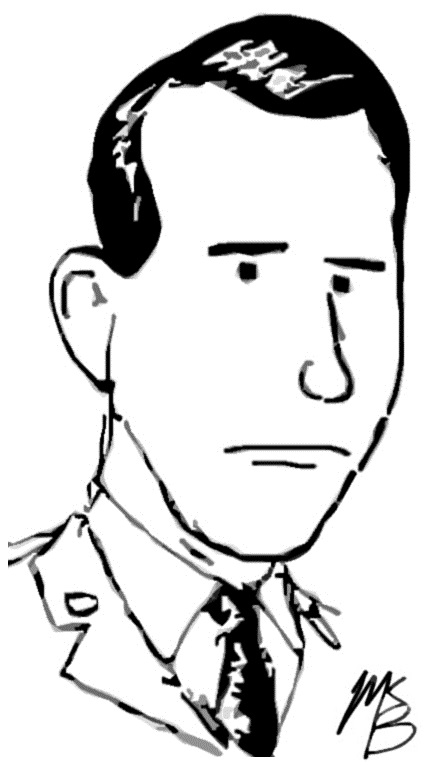
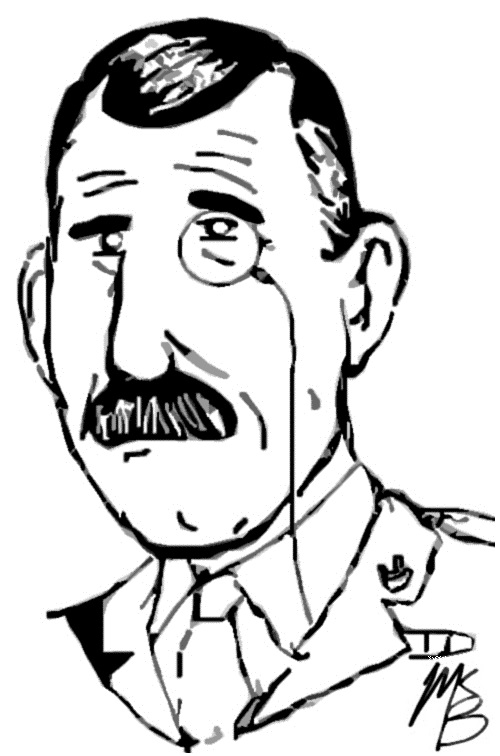
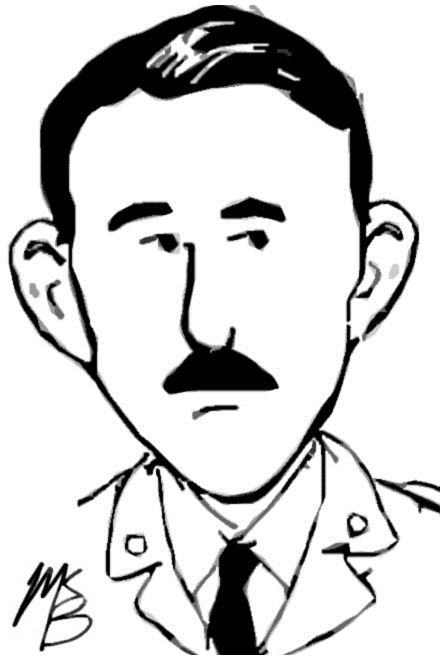
Brigadier General Lord Brooke
4th and 12th Infantry BrigadesLordBrooke
All day long I had witnessed the tragedy of men “made in the image of God” bringing their utmost skill and science to the hateful task of mutual murder.

As an exhibition of scientific slaughter the firing was lacking in nothing. The range of the guns was exact, the shooting perfect. The shrapnel burst over the heads of the retreating troops, as it were in large patterns. There was no cover, no escape for the unhappy Russians. Under this awful hail of bullets the men dropped like wheat beneath the sickle of the reaper. Death most truly was gathering a rich harvest.

(Lord Brooke, An Eye-Witness in Manchuria, 1905, 131)

Born on 10 September 1882, Leopold Guy Francis Maynard Greville was the son of British Conservative MP Francis Greville, 5th Earl of Warwick (styled Lord Brooke) and Daisy Greville, Lady Warwick, a socialist socialite who had been mistress to King Edward VII. While a student at Eton, Lord Brooke ran away to fight in the Boer War. He was a press correspondent during the Russo-Japanese War and recounted his experiences in An Eye-Witness in Manchuria (1905).
Continue reading

The Maverick

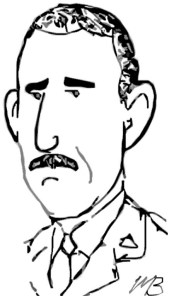
Lieutenant Colonel Agar Adamson, D.S.O.
Princess Patricia’s Canadian Light InfantryAdamson

What really makes a real man? The best men I have known always openly say they are cowards and hate the situation they find themselves in and really are afraid, perhaps it is partly their education which helps them to realize the danger, but there is a great deal in being one of a long line of soldiers in a family, although this only partly accounts for it, for men who never saw a soldier and for generations have led useless lives, have behaved in a similar manner when put against it out here...

(Agar Adamson to Mabel Adamson [wife], 4 Mar 1915)

Agar Stewart Allan Masterton Adamson was the first Canadian-born commander of Princess Patricia’s Canadian Light Infantry. A native of Montreal, he was born on 25 December 1865. A member of an influential family, Adamson became a socially connected civil servant and militia officer in Ottawa. Despite being forty-eight and having poor vision, in August 1914 the Boer War veteran enlisted as a captain with P.P.C.L.I. under Lieutenant Colonel Farquhar.

Continue reading

The Cemetery Keeper

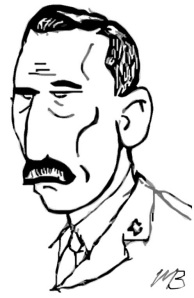
Lieutenant Colonel J. M. Prower, D.S.O.
8th (90th Winnipeg Rifles) BattalionPrower

I am pretty well all right but am scared of my nerves going, as I seem to be getting confoundedly jumpy. I suppose my “blow up” at Festubert and having been buried by Johnsons five times since, is what is worrying me, though why I cannot say, as it happens to most people.

(Prower to Aunt, July 1915)

John Mervyn Prower was born on 8 March 1885 in Quebec but grew up in England. After serving for seven years in the British Army, Prower returned to Canada and settled in British Columbia, where he joined the 31st Horse. In September 1914, he was selected captain of “H” Company in the 8th Battalion under the command of Lieutenant Colonel Louis Lipsett. He quickly gained a promotion to major in summer 1915 and later assumed command of the 8th on 3 August 1916.

Continue reading

The Young Man

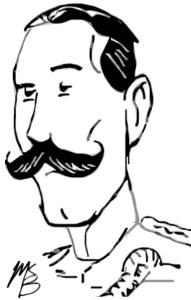
Major Bernard C. Pittman
212th (Winnipeg Americans) Battalion
BCPittman

Ability not age is the dominating factor in promotions over there. Major Bishop of the Canadian aviation corps, the most brilliant aviator in the British army is 18 years old. There is a brigadier general in the British army who is 28. This general enlisted from civil life as a private and worked his way to the top.

This war has proven that only young men and those of good physical ability can stand the strain of battle. Look at the order of General Pershing sending home all brigadier generals over 45 years of age.

(Pittman’s speech, Ellensburg Daily Record, 23 Jan 1918, 1)

Bernard Cleveland Pittman was born on 21 March 1887 in Independence, Missouri. In late 1915, the young National Guardsman travelled to Winnipeg to join the 101st Battalion and offered to raise an all-American company. After the formation of the 97th American Legion he went to Toronto to became the battalion junior major. When a regional American battalion was formed in the west, Pittman headed back to Winnipeg to take command of the 212nd.

Continue reading

The Ross Rifleman

Lieutenant Colonel C. H. Ackerman
247th (Victoria & Haliburton) BattalionAckerman

Officer is troubled with insomnia. There is also a history of nervous symptoms following his wounds. This nervous condition is referred to in previous boards. Officer is slight in build but fairly well nourished and up to his normal weight, no organic disease.

(Ackerman, “Medical History of Invalid,” Kingston, 12 Mar 1918)

While fighting with the 2nd Battalion at Festbuert in June 1915, Lieutenant Charles Haydn Ackerman suffered a gunshot wound to the shoulder and shrapnel injuries to the scalp. Born in Port Perry on 28 July 1888, Ackerman was a manufacturer in his father’s firm and member of the 57th Regiment. He was evacuated from the trenches to England, where he was treated for his physical injuries and mental overstrain.

Continue reading

The Unionist

Major Richard C. Cooper
7th (1st British Columbia) BattalionRCCooper

People’s thoughts are now turning to memorials to perpetuate the memory of our fallen, but unfortunately, their thoughts are turning to stone and iron to perpetuate flesh and blood. That is wrong. It is not worthy of the men who gave their lives that we might be free. I suggest that there is a greater, nobler, finer memorial to be erected to our fallen. I suggest that education is the only possible, adequate method of perpetuating the memory of the “immortals.”

(Cooper, Debates, 10 Mar 1919, 340)

Born in Dublin, Ireland on 31 December 1881, Richard Clive Cooper was a police constable in Rhodesia and South Africa where he was associated with the imperial projects of Cecil Rhodes. After serving in the Matabele War and the Boer War, he immigrated to British Columbia in 1906. Cooper enlisted in Lieutenant Colonel Hart-McHarg’s 7th Battalion in September 1914. He fought at Second Ypres before being recalled to Canada in order to aid training and recruitment efforts.

Continue reading

The Shell Shocked

Lieutenant Colonel Irvine R. Snider
27th (City of Winnipeg) Battalion

… this officer as the result of service in France and severe nervous strain has become very emotional and is unable to sleep well except for a short time each night. He is easily exhausted and has some muscular tremor. At present he is quite unfit for any mental or physical exertion and must have prolonged rest.

(Proceedings of Medical Board, 18 May 1916)

Irvine Robinson Snider was a Manitoba farmer, long-time militiaman and veteran of the Northwest Rebellion and the Boer War. He was born on 1 January 1864 in Nobleton, Canada West. In spring 1885, the twenty-one year old Snider joined the 90th Winnipeg Rifles as a private to put down Louis Riel’s insurrection. Fifteen-years later, he served with Lord Strathcona’s Horse in South Africa.

Continue reading

The Gassed

Lieutenant Colonel C. F. Bick
37th (Northern Ontario) BattalionBick

His heart is intermitting. He is very nervous. There is a fine tremor over the entire body. Insomnia. He is easily startled by the slightest noise. He wakes up several times during the night.

(Proceedings of Medical Board, Exhibition Camp, 12 Apr 1917)

Born on 1 December 1866 in Berkeley, England, Charles Frederick Bick was a building contractor with thirty-four years’ experience in the Canadian militia. He immigrated to Canada at the age of four. Bick served for four years with the 10th Royal Grenadiers in Toronto before moving to Cannington in 1885. He joined the 34th Ontario Regiment as a private and rose through the ranks to become commanding officer in 1913.

Continue reading