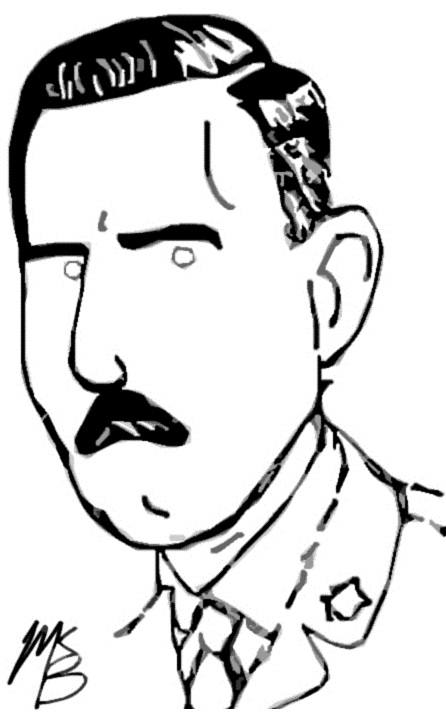
At the Sharpe End

The Story of Lt-Col. Sam Sharpe

Further reading: Mathew Barrett, “’Absolutely Incapable of Carrying On’: Shell Shock, Suicide, and the Death of Lieutenant Colonel Sam Sharpe,” Canadian Military History http://scholars.wlu.ca/cmh/vol25/iss1/19

In November 1915, Samuel Simpson Sharpe, Conservative member of parliament for Ontario North, organized the 116th Battalion and began recruiting men throughout Ontario County. After departing Canada on 23 July 1916, the 116th arrived for training in England. While almost all high-numbered battalions were broken up, Sharpe managed to ensure that much of 116th remained together when deployed to the Western Front in February 1917.
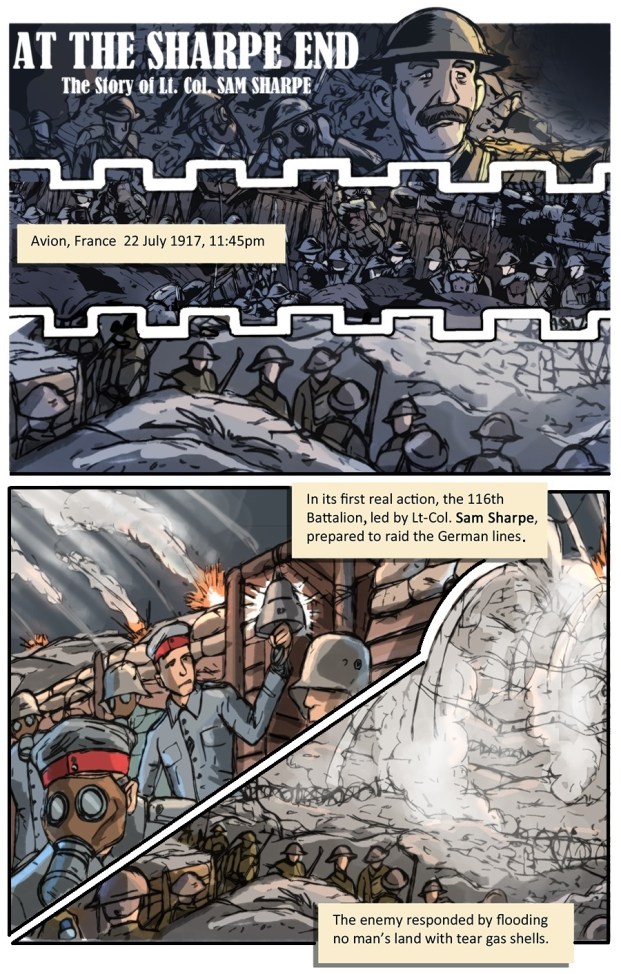
Sharpe 2023 1
Continue reading

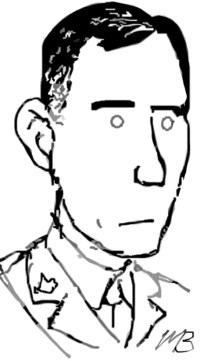
Lt. Col. Lalor

Lieutenant Colonel W.J.A. Lalor, M.C.
2nd Motor Machine Gun Brigade

This Officer gives a history of four years service in France, as a Machine Gun officer. Towards the end of his service, he states, he was developing symptoms of a fear neurosis, and this was finally precipitated by being blown up … There has been a strong tendency to repress his Overseas experiences, and towards self-reproach, as a result of his break-down. He states, now, he is afraid of the crowds, and cannot go to a Theatre. He is afraid to go over a bridge for fear that he will jump off. He has not made up his mind about his future.

 (Maj. A.A. Fletcher, Neurological Report, 13 Nov 1919)

Born in Muskoka, Ontario on 22 May 1878, William James Austin Lalor was a prospective homesteader in the west when the Great War broke out. He enlisted with the 1st Battalion in September 1914 and went to France in February 1915. Shortly thereafter he transferred to the Machine Gun Brigade, earning the Military Cross and a promotion to captain.

Continue reading

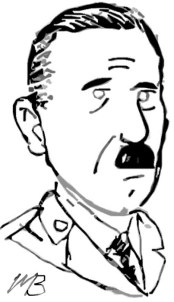
Lt. Col. Wilkin

Lieutenant Colonel F.A. Wilkin, M.C.
1st Motor Machine Gun Brigade
Wilkin

Has headaches – nearly constant and at times severe. States that his memory and thinking and reasoning power become very poor after he has been at work a few hours. Insomnia.

 (Medical Board Report of Lt Col. Wilkin, 28 Sept 1918)

Born in Yokohama, Japan on 8 July 1872, Francis Alfred Wilkin was an Alberta land surveyor and member of the Corps of Guides. He joined the Canadian Motor Machine Gun Brigade in January 1915 as a lieutenant and succeeded Lieutenant Colonel Raymond Brutinel as commanding officer in October 1916. Worn down after long service, he was replaced in March 1918 by Major William Keating Walker.

Continue reading

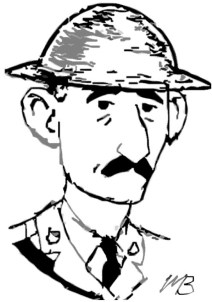
Lt. Col. Newcomen

Lieutenant Colonel T. Newcomen
Royal Canadian Dragoons

Examination of this officer to-day brings out the facts, that he cannot sleep at nights, that he has violent fits of temper, that he has very great trouble in concentrating his mind on any problems, and that he is restless and irritable. He himself fears that if these symptoms continue and increase their results may be very serious to him.

(Neurological Report on Lt. Col. Newcomen, 22 Sept 1923)

Terence Robert Gleadowe Newcomen was a professional British Army officers born in County Longford, Ireland on 18 November 1883. He had enlisted at seventeen during the Boer War and was commissioned in the 5th Battalion, the Royal Irish Regiment in 1901. Posted to Canada on an exchange program to train officers since 1912, he was commissioned a lieutenant in the Royal Canadian Dragoons in September 1914.

Continue reading

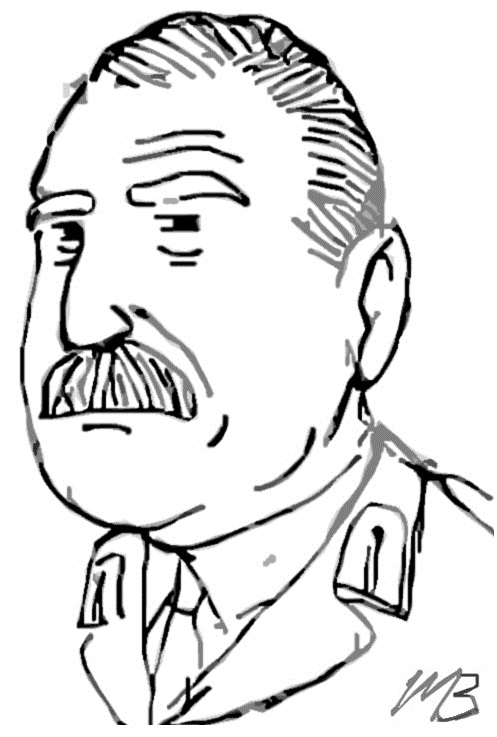
Brig. Gen. Elmsley

Brigadier General Jim Elmsley
8th Canadian Infantry Brigade
Elmsley

Facial expression slightly nervous, tremulous and changeable. Has been worrying excessively over routine matters, particularly having to meet people. Has been excessively worried over the ordinary conditions arising in the Brigade under his command. Sleep is fair, but there are times when he will be awake for three or four hours.

 (Medical Board Report of Brig. Gen. Elmsley, 4 June 1918)

Born in Toronto on 13 October 1878, James Harold Elmsley was a professional soldier and Boer War veteran. During the South African campaign, he was shot through the chest but somehow survived. On the start of the Great War. he was appointed second-in-command of the Royal Canadian Dragoons, followed by a brief period commanding the Canadian Light Horse. After Brigadier General Victor Williams was captured at the Battle of Mont Sorrel, Elmsley assumed command of the 8th Infantry Brigade in June 1916.

Continue reading

Lt. Col. Frost

Lieutenant Colonel R.W. Frost, D.S.O.
87th (Canadian Grenadier Guards) Battalion
Frost

Capt. Frost was twice blown up by shells but remained on duty.

 (14th Bn. War Diary, 3 June 1916)

 Capt. R. W. Frost, for the third time in 24 hours, was blown to the ground by a shell. Too dazed to walk, he was carried to Railway Dugouts, where he recovered and whence, on the following morning, he hastened to duty with the Battalion.

 (R. C. Fetherstonhaugh, The Royal Montreal Regiment, 14th Battalion [1927], 87)

Just as the 87th Battalion prepared to deploy to France in summer 1916, Reginald William Frost replaced Lieutenant Colonel Irving Rexford in command. A native of Norfolk, England, Frost was born on 21 May 1885 and immigrated to Canada in 1906. He had served seven years with the 66th Princess Louise Fusiliers when he enlisted in the 14th Battalion under the command of Frank Meighen at the outbreak of the war.

Continue reading

Maj. Coote

Major A. Leslie Coote
47th (British Columbia) BattalionCoote

Objecting to being relegated to duty in a safety zone while men he had recruited were “in the line”, Col. Coote entered a strenuous protest but militia trained senior officers were a drug on the market in England just then while juniors and men for the ranks were badly needed. This being the case, while hundreds of other Majors returned to Canada, Col. Coote resigned his commission, enlisted in the King Edward Horse as a trooper…

 (Chilliwack Progress, 29 Apr 1920, 1)

Born in Tynemouth, England on 9 February 1868, Andrew Leslie Coote was a farmer and senior officer in the 104th Regiment. As second-in-command to Lieutenant Colonel W. N. Winsby in the 47th Battalion, Coote often assumed responsibility for the unit on the front when his superior was away at brigade conferences and headquarters meetings.

Continue reading

Colonel Runaway

Colonel Jack Currie, M.P.
15th (48th Highlanders) Battalion
CurrieJA

As was the case to be in many Canadian battalions, Lt.-Col. Currie was an M.P. and very much more of a politician than an officer.

 He was one of the type of civilian-soldier who is simply worshipped by the poorer element among the ranks, but to serve under whom, for an officer, is sheer misery.

(Lt. Ian Sinclair, 13th Bn. personal diary)

The conduct of John Allister Currie at the second battle of Ypres in late April 1915 was the subject of much controversy and insinuation. According to some of his men in the 15th Battalion, he had fought “like a hero” with rifle and bayonet. However, by most accounts, Currie remained in a dugout well behind the lines, shell shocked and possibly drunk during the German gas attack on his unit at St. Julien.

Continue reading

The Piano Salesman

Lieutenant Colonel Milton Francis, D.S.O
47th (British Columbia) BattalionFrancis

This officer appears before the Board after one month’s extension of leave. He feels very much better and fit to return to duty. Former hospital papers and medical Board puts his disability as V.D.H. [Valvular Disease of the Heart] which is an old lesion & in the opinion of the Board was not the cause of his present breakdown, which was due to nervous overstain,

(Medical Board Report on a Disabled Officer, 1 Mar 1918)

Born in London, Ontario on 26 March 1884, Milton John Francis was manager of a Fort William music store selling pianos and gramophones. He first enlisted with the 44th (Manitoba) Battalion and transferred to the 46th as second-in-command before assuming command of the 47th just before the Vimy offensive in April 1917 .

Continue reading