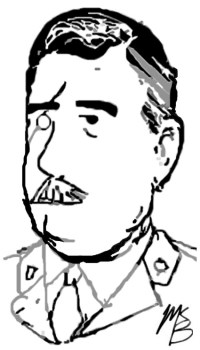
The Golfer

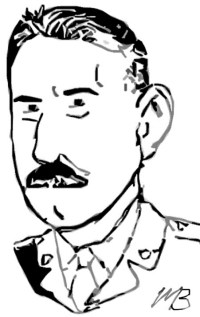
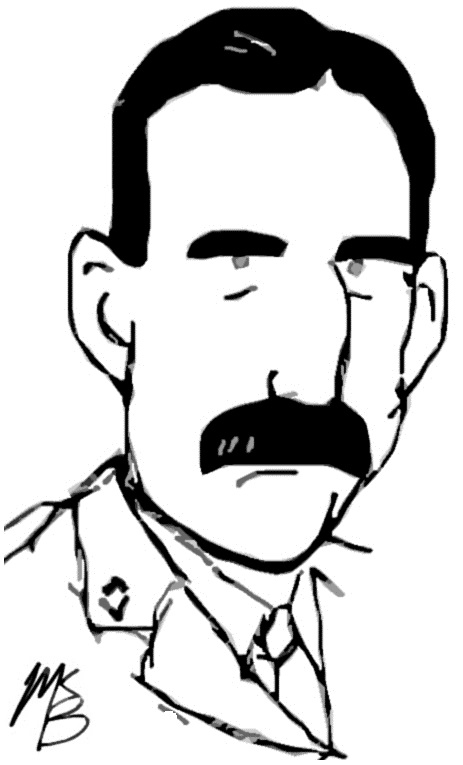
Lieutenant Colonel A.E. Griffin, D.S.O.
5th Battalion, Canadian Railway Troops
Griffin

His hobby is golf. In it he finds physical exercise and mental relaxation from the enterprises, some of which have been the most important railway construction jobs in the British Columbia mountains.

(Vancouver Sun, 16 Jan 1921, 11)

Born in Ontario on 17 September 1877, Atholl Edwin Griffin was a Vancouver civil engineer and contractor in the firm of Jack Stewart. In November 1916, he was commissioned in Stewart’s Canadian Railway Troops and given command of the 5th C.R.T. For two years service in France carrying out important construction operations, he received the Distinguished Service Order. The experience, however, wore down his health and required rest leave. particularly spring 1918 following the German offensive.
Continue reading

The Scout Master

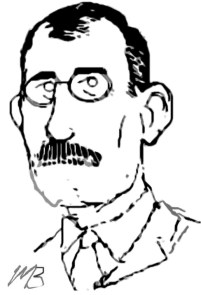
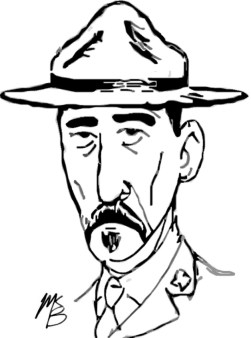
Lieutenant Colonel J.A. Hesketh
Lord Strathcona’s Horse

Among the citizens of Winnipeg, such men as Col. Hesketh is deserving of special praise and honor for his interest in our boys. His objective was not to teach them war, nor turn their thoughts in enmity towards any people. But he was one of the men who taught them the national need of rigid adherence to paths of duty.

(Winnipeg Tribune, 3 May 1921, 4)

Born in Aldershot, England on 20 November 1863, James Arthur Hesketh was a graduate of the Royal Military College and a Canadian Pacific Railway engineer in Winnipeg. He was a early leader of the Boy Scout movement and helped to organize the first scout council in Manitoba. With over thirty years in the Canadian militia and as commander of the Corps of Guides, Major Hesketh went to overseas with Lord Strathcona’s Horse in October 1914.

Continue reading

Lt. Col. Macdonald

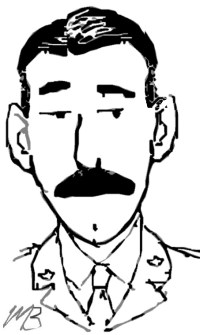
Lieutenant Colonel J.B.L. Macdonald, D.S.O.
3rd Canadian Railway Troops

MacdonaldJBL

This being dominion day and the fiftieth anniversary of Confederation the personnel of this observed a holiday so far as was possible.

(3rd CRT, war diary, 1 July 1917)

Born in Invernessshire, Scotland on 22 July 1867, James Brodie Lauder Macdonald was second-in-command of the 239th Battalion under Vancouver railway tycoon Colonel Jack Stewart. Prior to the war, Macdonald had been a railway contractor in one of Stewart’s firms and member of the 72nd Seaforth Highlanders. He appears to have lowered his age five years on enlistment.

Continue reading

Lt. Col. W.A. Munro

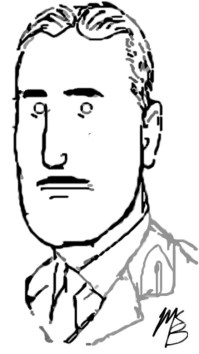
Lieutenant Colonel W.A. Munro
90th (Little Black Devils) Battalion

Munro

Heart disease, which originated in the first gas attack at Ypres in 1915, resulted in the death last night of Lieut.-Col. W.A. Munro, D.S.O., a prominent figure in the active militia in Western Canada.

 (Winnipeg Tribune, 2 Feb 1927, 2)

A native of Toronto, William Aird Munro was born on 12 June 1872. He joined the newly formed 48th Highlanders in 1891 before moving to Winnipeg three years later. At the outbreak of the Great War, he had twenty-years’ service with the 90th Winnipeg Rifles (The Little Black Devils). The regiment’s nickname dated back to the Métis resistance of 1885. A captured rebel remarked, “The red coats we know, but who are those little black devils?” referring to the 90th soldiers’ rifle green uniforms.

Continue reading

Lt. Col. Ripley

Lieutenant Colonel Blair Ripley
1st Canadian Railway Troops

Ripley

“Whatever do you want to write about me for?” asked a tall man with benign expression, his kind eyes glinting humorously behind glasses. “I’m retired.”

(Interview with Gwen Cash, Time Colonist, 22 Jan 1950)

Blair Ripley was a Canadian Pacific Railway civil engineer born in Oxford, Nova Scotia on 28 August 1880. He worked on railways across the west and designed the Lethbridge Viaduct. By the outbreak of the war he was completing the North Toronto Grade Separation. In June 1916, he was assigned to take his railway and bridge building expertise to the front when appointed to raise No. 1 Construction Battalion.

Continue reading

The Boer Veteran

Lieutenant Colonel W.H. Moodie
9th Canadian Railway Troops
MoodieWH

Then the agony began. There we lay in fatal range, many had been killed outright in the charge, and all who had not good cover were in fearful danger and the groans from different points all over the field told too plainly how they were picking off our men. Those of us who had good cover had to stick to it though it was fearful to be there and listen to the calls of the wounded for help.

(W.H. Moodie letter, 13 Dec 1899)

Born in Quebec City on 22 September 1871, Walter Hill Moodie was a British Columbia civil engineer and Boer War veteran. He volunteered with the Royal Canadian Regiment of Infantry and arrived to South Africa in December 1899. In letters home to Kelso, British Columbia he recounted his journey and remarked on his and comrades’ frustration “kicking our heels impatiently for our first engagement.” Two months later he experienced the full agony of modern warfare on Blood Sunday, 18 February 1900.

Continue reading

Lt. Col. Harstone

Lieutenant Colonel Jack Harstone
4th Canadian Railway Troops
Harstone

There is no transcontinental railway in operations today on the North American continent which he has not had some part in building.

(The Forty-Niner, Jan 1932, 18)

John Brunton Harstone was born in Port Arthur, Ontario on 15 September 1879. He enlisted as a lieutenant with the 49th Battalion in January 1915. Earning the nickname, “Fighting Jack,” he served in France from October 1915 until he was wounded a year later. While recovering he received the Distinguished Service Order.

Continue reading

Brig. Gen. Hervey

Brigadier General C.L. Hervey
4th Battalion, Railway Troops
Hervey

During my entire service in France I had in addition to my other duties to supply detachments for the moving of His Majesty’s naval siege guns, and certain guns of the Royal Artillery, and to devise the construct emplacements for same.

(Gen C.L. Hervey, US Engineers. 3rd Volunteers, Yearbook, 1918)

Chilton Longley Hervey was an engineering contractor born in Paris, Illinois on 27 April 1872. He served in the Spanish American War as a sergeant with the 3rd Volunteer Engineers. The son of United Empire Loyalists, Hervey moved to Ontario after marrying a Canadian in 1907. As a member of the Corps of Guides, he enlisted in the Canadian Railway Construction Corps in 1915.

Continue reading

Lt. Col. McMordie

Lieutenant Colonel S.P. McMordie
13th Canadian Railway Troops
McMordie

His real desire I am sure would be to land in the frontline trenches; however, his age and loss of an eye undoubtedly bars him from that objective. On learning from the press that there were many escapes from internment camps, and that two officers in charge of these camps had been suspended, it occurred to me you needed a tough guy and the Colonel was your man.

(G.W. Nickerson to secretary, Minister of National Defence, 19 May 1941)

Stewart Percival McMordie was born on 15 November 1877 and worked in Prince Rupert, British Columbia, as a contractor. He enlisted in the 48th Battalion in August 1915 and went overseas as a major. Following an instructional tour of the front, he re-joined the 48th which was re-designated 3rd Canadian Pioneers. On 13 June 1916, McMordie was badly wounded by a high explosive shell. A steel splinter resulted in the loss of his right eye.

Continue reading

The Surveyor

Lieutenant Colonel Albert C. Garner, D.S.O.
195th (City of Regina) BattalionGarner

The military record of Colonel Garner is a long and gallant one. During the Boer war he served as special scout in Lord Strathcona’s Horse in
1900 and 1901 and was severely wounded. He was honored by “special
mention in dispatches” in the London Gazette, February, 1901, and was
awarded the Queen’s medal and four clasps, the medal being presented
by His Majesty the King, Edward VII, on the 10th of February, 1901.

(Saskatchewan and its People, 1924)

Born on 6 September 1878 in Warwickshire England, Albert Coleman Garner immigrated to Canada with his family in 1888. He fought with Lord Strathcona’s Horse during the Boer War. After returning from South Africa, he joined the 16th Light Horse and the elite Corps of Guides. Before the First World War, he was a land surveyor and civil engineer in Saskatchewan.

Continue reading