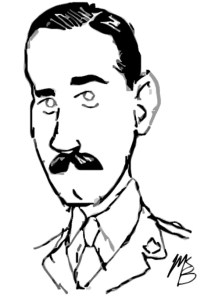
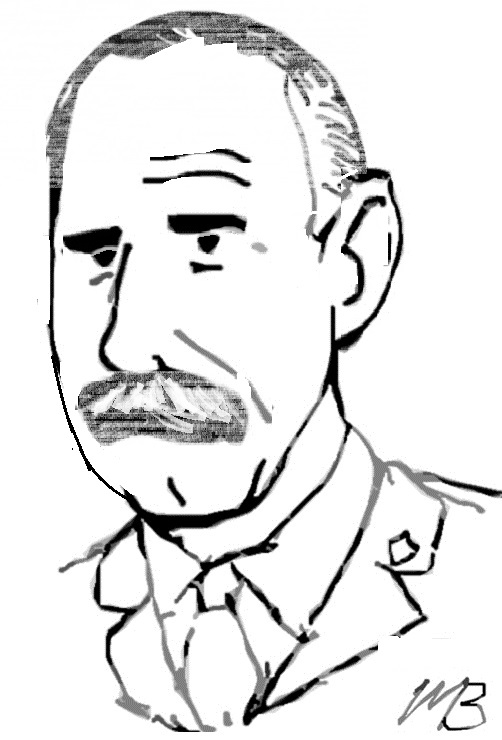
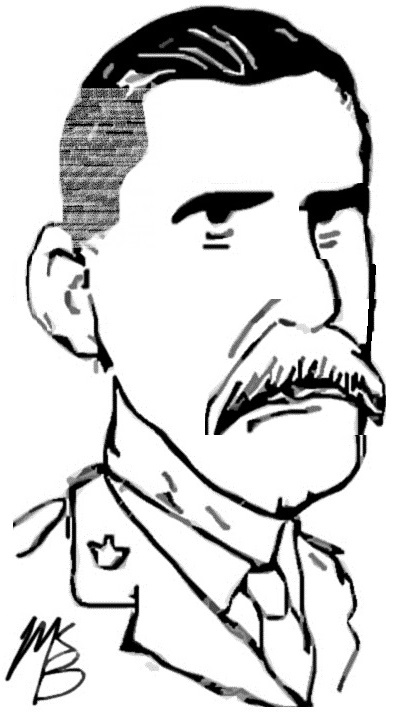
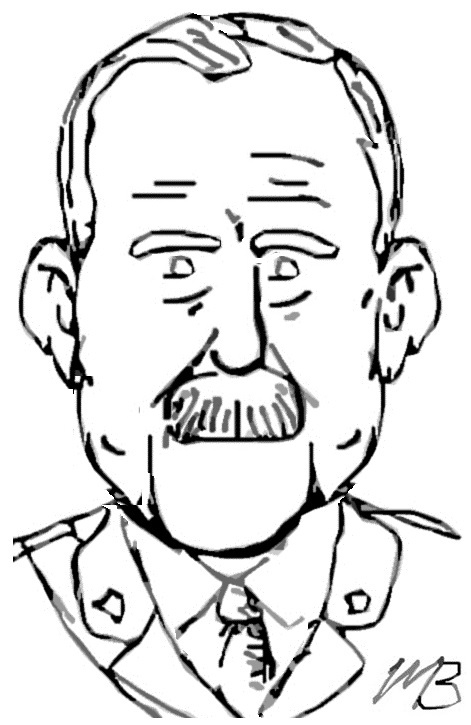
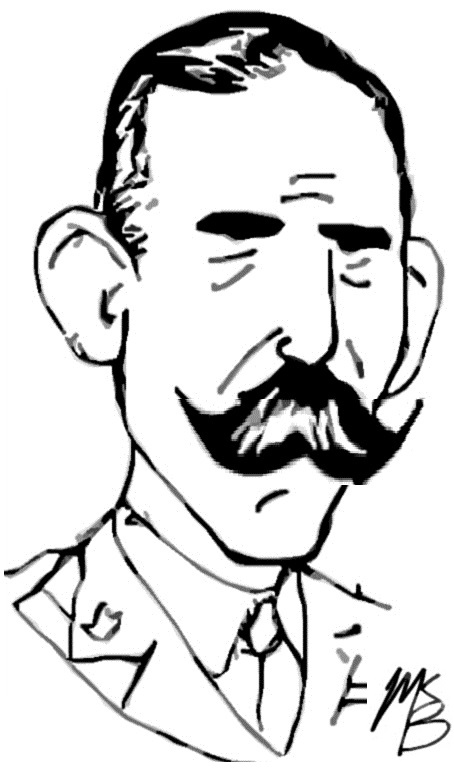
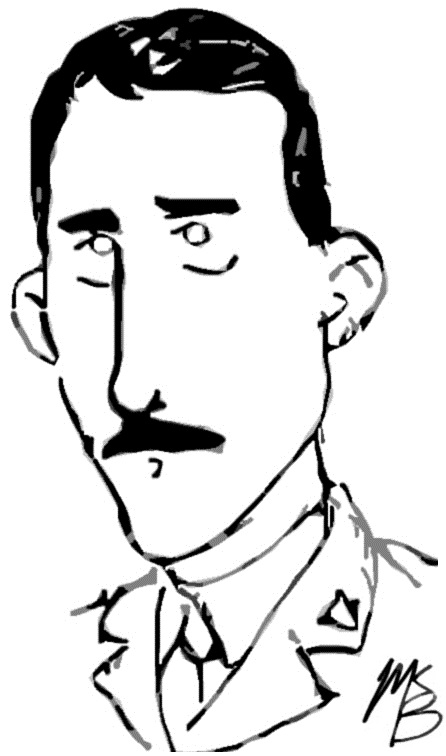
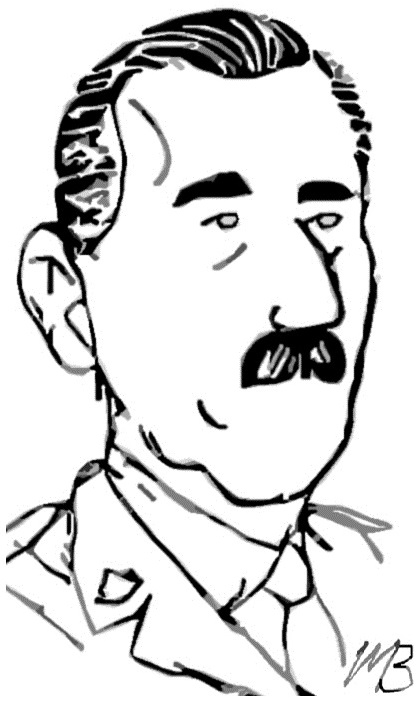
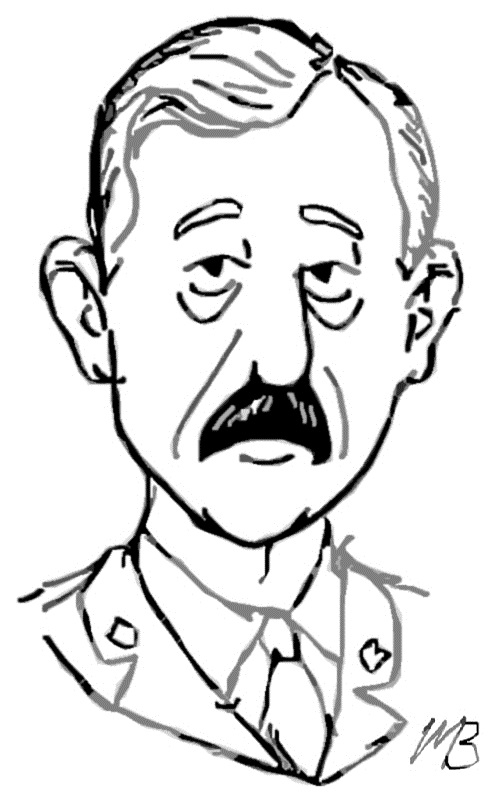
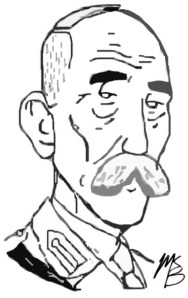
Lt-Col. S.M. Lett

Lieutenant-Colonel Steve Lett
Queen’s Own Rifles

Sleep is the thing we run short of most. The actual fighting isn’t so bad … we can all take that … but it’s being in before your own guns that’s tough. When they fire—and they’re firing a lot of the time—they practically blow you our of your own slit trenches. That’s not conducive to sleep, this moaning, whining and roaring which at times never ends. But the lads are in good spirits.

(Quoted in Toronto Star, 14 Jul 1944, 2)

Born on 27 July 1909 in Cobourg, Ontario, Stephen MacLeod Lett worked in the lumber industry in Toronto and Northern Ontario. He served as second-in-command of the Queen’s Own Rifles at D-Day and succeeded Lieutenant-Colonel Jock Spragge on his promotion to brigadier at the end of August 1944. He would be one of the few infantry commanding officers to remain in command through the latter phase of the Northwest Europe campaign from the end of the Normandy operation to the surrender of Germany.
Continue reading

Brig. J.G. Spragge

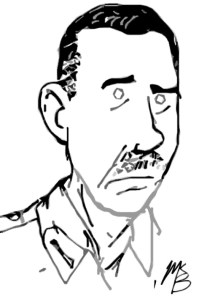
Brigadier Jock Spragge
Queen’s Own Rifles
7th Infantry Brigade

Then I saw it was the Colonel. I gave him plain hell … I told him he should be back at Battalion HQ, not up at the front with us—the last line between our forces and the enemy. He was too good and too necessary to be killed or wounded … [he] said ‘Charlie, it’s such a sad day. We’ve lost so many good me.’ He said goodnight and turned away, but not before I saw the tears in his eyes. Jock Spragge was all man. He was not one of the spit’n’polish professional types, but as a fighter he was the best.

(C.C. Martin, Battle Diary, 15-16)

Born on 20 May 1907 in Ottawa, John Godfrey Spragge was a sportsman, former Toronto banker, industrialist, and businessman in London, Ontario. He had joined the Queen’s Own Rifles as a private in 1925 and took a commission a year later. He returned to Toronto with the outbreak of the war when the regiment mobilized for active service. Before the QOR went overseas in July 1941, Spragge became second-in-command and succeeded Lieutenant-Colonel Harry Mackendrick in April 1942.

Continue reading

Lt-Col. H.C. Mackendrick

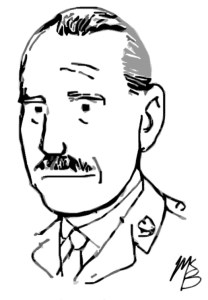
Lieutenant-Colonel Harry Mackendrick
Queen’s Own Rifles

This Officer was gassed with enemy gas while in support near Lens at 2 am on 5.9.17. He suffered from vomiting, blepharitis & conjunctivitis, sore throat, constriction of chest & cough … Sleep is greatly disturbed, waking with terrors; is nervous & has trembling spells & slight tremor.

(Personnel file, medical report, 1917)

Born on 30 August 1895 in Galt, Ontario, Harry Crane Mackendrick was a University of Toronto graduate and First World War veteran. He was commissioned with the UofT officer training corps and joined the 111th Battalion in January 1916. He went to France as a reinforcement officer for the 4th Battalion but suffered mustard gas burns in September 1917. He was admitted to a casualty clearing station where his father, a doctor attached to with the Royal Army Medical Corps, happened to be stationed.

Continue reading

Lt-Col. I.M. Macdonell

Lieutenant-Colonel Ian Macdonell
Queen’s Own Rifles

I don’t propose to be an alarmist … we must admit there is no point in us being ostriches. We are not preparing for what the Germans might do but for what we know they can do. Until we get organized there is no use in even giving an alarm, for nothing can be done.

(Kingston Whig-Standard, 29 Apr 1943, 2)

Born on 8 August 1895 in Toronto, Ian McLean Macdonell was a lawyer, former city alderman, and judge of the County Court of York. He was commissioned with the 41st Battery in December 1915 and deployed to France with the 11th Brigade, Canadian Field Artillery in July 1916. He was wounded in December 1917 and ended the war as staff captain with the 1st Canadian Division. He began a law practice in Toronto in 1920 and joined the Queen’s Own Rifles. After rising through the commissioned ranks, became commanding officer in April 1939.

Continue reading

The Shame Monger

Lieutenant Colonel George C. Royce
255th (Queen’s Own Rifles of Canada) Battalion  Royce_G

GIVE US HIS NAME
Nearly everyone knows of ONE MAN who should be in khaki to-day. We ask you to give us his name so we can call upon him and give him this opportunity to join an Overseas Battalion—

Doing this does not imply any slur upon the man you name…
That man whose name you give us may be just waiting for this chance…
Take this duty seriously. Do not send us unsuitable or “spite” names…

(255th Advertisement, Toronto Globe, 30 Nov 1916, 5)

Authorized in late 1916, the 255th Battalion was to provide reinforcements for the 3rd Battalion fighting on the frontlines France. The commanding officer, Lieutenant Colonel George Cooper Royce quickly realized the dire recruitment situation in Toronto. Having already provided multiple battalions, and with many more units still trying to enlist men, the Ontario capital had nearly exhausted its reserve of suitable soldiers.

Continue reading

The Old Timer & The Whippersnapper

Lieutenant Colonel Wellington Wallace
234th (Peel) BattalionWallace&
Lieutenant Colonel W.O. Morris
215th & 234th (Peel) BattalionMorris

Born in 1854 in Tipperary, Ireland, Wellington Wallace immigrated to Canada in 1878. He was a bank manager, militiaman and veteran of the Northwest Rebellion. He fought with the Queen’s Own Rifles against Cree Chief Poundmaker at the battle of Cut Knife on 2 May 1885. The son of a North West Mounted Police Inspector, William Otter Morris was born in Fort Battleford on 24 May 1885 and named after the Canadian commander at Cut Knife, Colonel William Dillon Otter. The thirty-year old Wallace and the two day old Morris were both present in Battleford when Poundmaker and the Cree surrendered on 26 May 1885. Over thirty years later, Morris succeed Wallace as commander of the 234th Battalion.

Continue reading

The Prisoner

Major A. J. E. Kirkpatrick
3rd (Toronto Regiment) BattalionAJEKirkpatrick

With ammunition gone, bleeding and bent,
With hunger, thirst, and weariness near spent,
With foes in crowds on every side to hem
Them in, to capture these, God pity them.

Their day was done, their suffering still to come.
They were to know the full and total sum,
Wearily marching to captivity,
How long? God knows! An eternity

(A. E. Kirkpatrick, Toronto Globe, 22 Apr 1931, 4)

A native of Toronto, Arthur James Ernest Kirkpatrick was born on 29 April 1876. He was a graduate of Upper Canada College, twenty-one year member of the Queen’s Own Rifles and married to the daughter of prominent Liberal Party leader William Mulock. Kirkpatrick fought at Second Ypres as second-in-command of the 3rd Battalion under Lieutenant Colonel Robert Rennie.

Continue reading

The Cadet Instructor

Lieutenant Colonel R. K. Barker
95th (Toronto) Battalion Barker

Man looks unwell.

Complains of weakness, loss of weight, loss of sleep, loss of nervous control. Accounts for this by loss of food and sleep.

(“Medical History of an Invalid,” 7 November 1923)

Rybert Kent Barker was a military instructor in Toronto and veteran of the Boer War. Born on 21 September 1869 in Kingston, Ontario, he had served with the Queen’s Own Rifles from 1880 to 1910 and commanded “C” company in South Africa. Prior to being appointed commander of the 95th Battalion, he was a cadet drill instructor with the 2nd Military Division.

Continue reading

The Clear Grit

Major General Robert Rennie, M.V.O.
3rd (Toronto Regiment) BattalionRennie

As a candidate, I seek election not on my personal record so much, but on that of those who were associated with me in the great war. I am now more a civilian than a soldier, but—and please let there be no frills about this—if war should threaten again, I am ready to offer my services.

I stand on a Liberal platform because I am a Liberal and always have been. I believe in the great principles of Liberalism…

(Rennie’s speech, Toronto Globe, 21 Nov 1921, 1)

Robert Rennie was a Toronto seed merchant and thirty-four year member of the Queen’s Own Rifles. He joined as a rifleman in 1880 and rose to become lieutenant colonel by 1914. Born on 15 December 1862 in Markham, Canada West, Rennie was an expert marksman, respected businessman and prominent sportsman, with a specialty in curling.

Continue reading