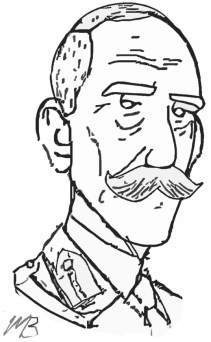
Lt-Col. F.M.W. Harvey

Lieutenant-Colonel Fred Harvey
Lord Strathcona’s Horse
Harvey

At this critical moment, when the enemy showed no intention whatever of retiring, and fire was still intense, Lt. Harvey, who was in command of the leading troops, ran forward well ahead of his men and dashed at the trench, skillfully manned, jumped the wire, shot the machine-gunner and captured the gun. His most courageous act undoubtedly had a decisive effect on the success of the operation.

(V.C. citation, 8 Jun 1917)

Born in Athboy, County Meath Ireland, on 1 September 1888, Frederick Maurice Watson Harvey worked as a rancher and surveyor after immigrating to Alberta at the age of twenty. In February 1915, he enlisted with the 13th Canadian Mounted Infantry before being commissioned over a year later. Overseas he transferred to the Lord Strathcona’s Horse in France as a lieutenant in November 1916. Initially awarded Distinguished Service Order for actions on 27 March 1917, his heroism was soon determined to merit the Victoria Cross.
Continue reading

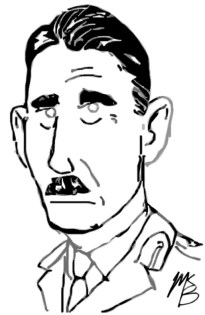
Lt. Col. Goodday

Lieutenant Colonel C. Goodday
Lord Strathcona’s Horse

The Regiment saddled up & “stood to” ready if needed to assist in or take advantage of a counter attack being delivered on the eastern side of the river. At 8 pm orders were given to oft-saddle and rest for the night. Major C. Goodday having rejoined from leave took over the command of the Regt.

(LdSH war diary, 31 March 1918)

Born in London, England on 25 October 1880, Claud Goodday was a British Columbia cricket player and self-styled gentleman. He had been commissioned as a lieutenant and adjutant with the Fort Garry Horse in 1913 and went overseas with Lord Strathcona’s Horse in October 1914. He swiftly rose through the officer ranks and was a major by August 1916. He temporarily assumed command after Lieutenant Colonel D.J. MacDonald was wounded on 30 March 1918

Continue reading

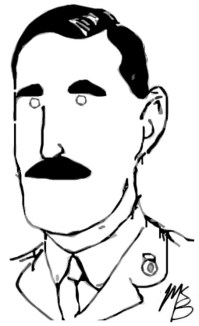
The Scout Master

Lieutenant Colonel J.A. Hesketh
Lord Strathcona’s Horse

Among the citizens of Winnipeg, such men as Col. Hesketh is deserving of special praise and honor for his interest in our boys. His objective was not to teach them war, nor turn their thoughts in enmity towards any people. But he was one of the men who taught them the national need of rigid adherence to paths of duty.

(Winnipeg Tribune, 3 May 1921, 4)

Born in Aldershot, England on 20 November 1863, James Arthur Hesketh was a graduate of the Royal Military College and a Canadian Pacific Railway engineer in Winnipeg. He was a early leader of the Boy Scout movement and helped to organize the first scout council in Manitoba. With over thirty years in the Canadian militia and as commander of the Corps of Guides, Major Hesketh went to overseas with Lord Strathcona’s Horse in October 1914.

Continue reading

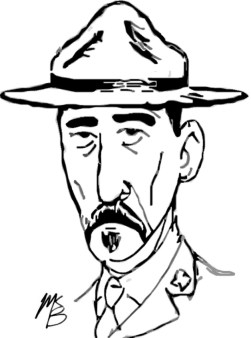
Maj. Gen. Macdonell

Major General Archie Macdonell
Lord Strathcona’s Horse
MacdonnellAC

“Batty Mac, our brigade commander, was crazy as a coot in many ways, I saw him actually get wounded one day … Somebody said ‘Be careful, sir, there’s a sniper’ and he said ‘Fuck the sniper,’ climbed up to get a look and the sniper took him through the shoulder and he went ass over applecarts into his shellhole from which he had emerged … My god, his language! You could hear him for miles around!”

(G.R. Stevens PPCLI, In Flanders Field interview, 1964)

Born on 6 October 1864 in Windsor, Canada West, Archibald Cameron Macdonell earned the nickname “Batty Mac” for his disregard of danger under fire. He graduated from the Royal Military College of Canada in 1886 and joined the Canadian Militia before transferring to the North-West Mounted Police. He volunteered during the Boer War and was commanding officer of the Lord Strathcona’s Horse at the outbreak of the First World War.

Continue reading