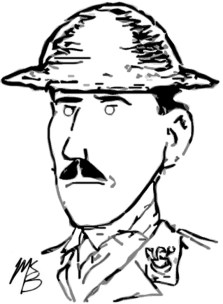
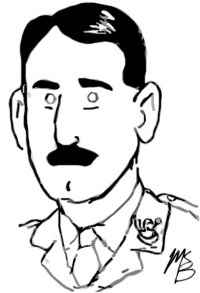
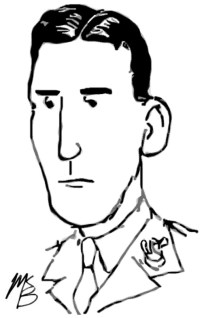
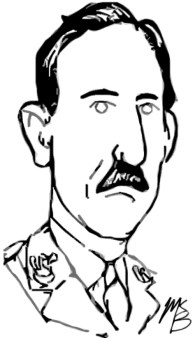
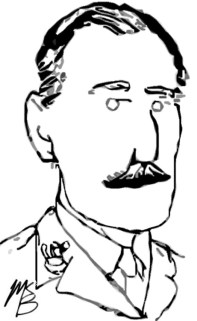
Col. Humphreys

Colonel E. Thomas Humphreys
1st Bn., Leinster Regiment (Royal Canadians)
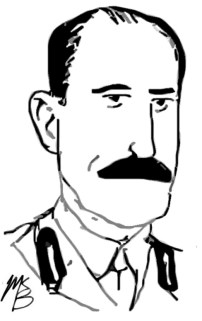
Humphreys

The officers of the First Battalion, Leinster regiment, known from their historical connection with the Dominion as the Royal Canadians, which regiment has just disbanded after presenting their colors to the King at Windsor Castle, are giving their regimental plate and trophies in trust to the Canadian Government “until the regiment is again raised, as a token of their regards for the Great Dominion, which gave birth to the battalion.”

(The Expositor, 29 Jun 1922, 1)

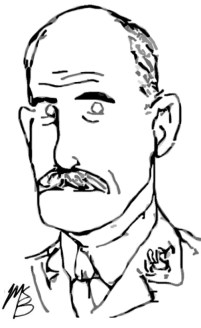
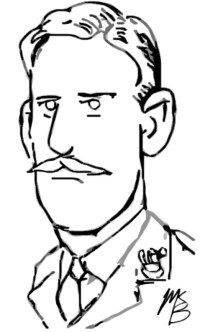
Born in London in Dover, Kent on 5 November 1878, Edward Thomas Humphreys graduated from Sandhurst in 1898 and was  commissioned with the Lancashire Fusiliers. He served in the Boer War and in France, Salonika and the Middle East during the Great War. In May 1918, he was promoted to command the 179th Brigade in the 60th Division, Egyptian Expeditionary Force. In September 1919 he transferred from the Lancashires to take command of the 1st Battalion, Leinster Regiment.
Continue reading

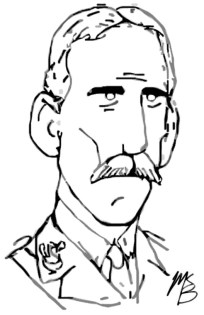
Lt-Col. Raynsford

Lieutenant-Colonel R.M. Raynsford
1st Bn., Leinster Regiment (Royal Canadians)
Raynsford

As you are no doubt aware we, the “Royal Canadians” together with other Irish regiments are being disbanded. I am hoping you may see your way to use your powerful influence to assist us in our efforts to be retained in the British army as the Prince of Wales’s Royal Canadian Regiment, our original title.

While all ranks desire the honor of still representing Canada, I have a personal interest as my wife is the grand daughter of Sandfield Macdonald, the first Prime Minister of Ontario.

(R. M. Raynsford to the prime minister, Ottawa Journal, 14 Mar 1922, 6)

Born in London on 19 May 1877, Richard Montague Raynsford married twenty-three-year-old Daphne Mildred Pemberton in England in April 1911. The daughter of an Indian Army colonel, she was the granddaughter of John Sandfield Macdonald (1812–1872), Ontario’s first premier after Canadian Confederation in 1867. The son of a Madras Army colonel, Raynsford was commissioned a second lieutenant in the Leinster Regiment in 1897, served in the Boer War and was adjutant in the 4th Battalion until 1908.

Continue reading

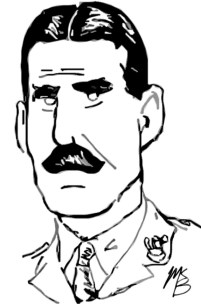
Lt-Col. Wildblood

Lieutenant-Colonel E.H. Wildblood
1st Bn., Leinster Regiment (Royal Canadians)
Wildblood

The following are the considered opinions submitted by the Court …

That the situation at present obtaining in Palestine is exceedingly dangerous and demands firm and patient handling if a serious catastrophe is to be avoided.

(Maj-Gen. Palin, Brig. Wildblood, and Lt-Col. C.V. Edwards, Palin Commission, 1920)

Born on 2 May 1878 in Cheshire, England, Edward Harold Wildblood was a solider, sportsman, and big game hunter. He fought as a trooper in Roberts’ Horse during the Boer War and was commissioned with the Leinster Regiment in 1900. He served with the 1st Battalion in the heavy fighting at Ypres through to its deployment on the Salonika front. By early 1917, he had succeeded Lieutenant-Colonel J.D. Mather in command.

Continue reading

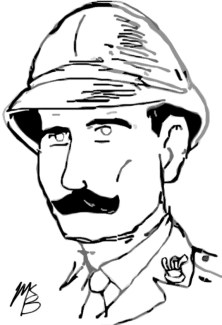
Lt-Col. H.W. Weldon

Lieutenant-Colonel Henry Weldon
2nd Bn., Leinster Regiment (Royal Canadians)

The Regiment has unfortunately lost some most valuable officers … all of whom had done splendid work, which would have brought recognition had they been fortunate enough to survive.

(Weldon to Maj. Gen. Prior in Whitton, The History of the Prince of Wales’s Leinster Regiment, vol. 2, 174)

Born in Dublin on 2 November 1878, Henry Walter Weldon was commissioned a lieutenant in 1900 and served in South Africa. He was adjutant for the 1st Leinsters and temporarily took command after Second Ypres following the death of Lieutenant-Colonel C. Conyers on 12 May 1915. He served with the battalion now under the command of Lieutenant-Colonel J.D. Mather on the Salonika front in 1916.

Continue reading

Maj. Frend

Major J.R. Frend
2nd Bn., Leinster Regiment (Royal Canadians)

Heavy hostile shelling of TEMPLEUX QUARRIES commenced about 11:30am until 12:30pm. Extremely accurate. Lt. Col. Murphy, DSO, MC [and others] were in HQ mess attending to wounded when a shell dropped right in their midst killing the CO … Shelling was kept up at intervals of 50 minutes throughout the day & night. Major J.R. Frend assumed command of Bn. at 1 pm.

(2nd Bn. Leinster Regiment War Diary, 6 Nov 1917)

Following the death of Lieutenant-Colonel A.D. Murphy, Major John Roberts Frend took command of the 2nd Leinsters. He was born on 7 February 1883 in Cloghjordan, Tipperary. He served in the Boer War and joined the Leinster Regiment before emigrating to Australia in 1909. On the outbreak of the Great War, he rejoined his old regiment and served with the 2nd Leinsters in France.

Continue reading

Lt-Cols. Jameson & McDonnell

Lieutenant-Colonel E.J. Jameson
Jameson
&
Lieutenant-Colonel John McDonnell
McDonnell
5th Bn., Leinster Regiment (Royal Canadians)

He was not the showy or popularity-seeking kind, but always pursued the even tenor of his path to duty. Reserved, rather taciturn, a somewhat lonely figure, he yet inspired confidence and esteem. Outwardly he appeared a man of care and silent sorrow, which rather belied his age and vigour. He knew his work, had confidence in himself and inspired it in others. Fearless and impartial, he never spared a subordinate, from a private upwards. But he never spared himself.

(Tribute to Lt-Col. Jameson in Whitton, The History of the Prince of Wales’s Leinster Regiment, vol. 2, 393)

Both majors who succeeded Lieutenant-Colonel E.F. Farrell in command of the 5th Battalion, Leinster Regiment would each later lead a battalion in the field before being killed in action. Born on 11 June 1875 in Dublin, Edmond James Jameson died of wounds on 27 March 1917 while in command 1/4th Essex Regiment during the First Battle of Gaza. Born on 2 November 1878 in Dublin, John McDonnell died with the 1st Inniskilling Fusiliers at Ypres on 29 September 1918.

Continue reading

Lt-Col. Colquhoun

Lieutenant-Colonel J.C. Colquhoun
6th Bn., Leinster Regiment (Royal Canadians)
Colquhoun

“Once a Leinster always a Leinster.”

(Whitton, The History of the Prince of Wales’s Leinster Regiment, vol. 2, 96)

Born in Perthshire, Scotland on 31 December 1870, Julian Campbell Colquhoun was the second son of Colonel William Campbell Colquhoun of Clathick Estate. After finishing school, he joined the 2nd Battalion, Leinster Regiment, was promoted to captain in 1898, and served in the Boer War. He retired to the reserve of officers in 1907 but immediately reported for duty in August 1914. He was posted to the new 6th {Service) Battalion under the command of Lieutenant-Colonel John Craske.

Continue reading

Lt-Col. Stannus

Lieutenant-Colonel T.R.A. Stannus
7th Bn., Leinster Regiment (Royal Canadians)
Stannus

Although severely wounded, and thereby unluckily precluded from leading them to the attack his careful supervision and preliminary preparations undoubtedly ensured the success which his men attained. His adjutant was wounded at the same moment, but Lieut.-Colonel Stannus declined all aid until the other officer had been attended to. He had previously done splendid work when acting as O.C., on one occasion frustrating a raid with great loss to the enemy, entirely through personal foresight and grasp of the situation.

(Lt. Col. Stannus, D.S.O. citation, 18 Sept 1917)

Born on 29 September 1870 in Clonygowan, Ireland, Thomas Robert Alexander Stannus was a long serving soldier and Boer War veteran. He was taken prisoner and later wounded in action with the Imperial Yeomanry in South Africa. Having served with the Leinster Regiment since 1889, he retired to the Special Officer Reserve in April 1914. On the outbreak of the Great War, he rejoined the 4th (Extra Reserve) Battalion at the rank of major.

Continue reading

Lt-Col. Buckley

Lieutenant-Colonel G.A.M. Buckley
7th Bn., Leinster Regiment (Royal Canadians)
Buckley

We are not yet out of the wood, let us see to it that at the eleventh hour nothing is done to detract from the high honour that has come to us. I appeal to you once again–officers and men let us pull ourselves together for the last lap … As for me, my heart has bled for you all during these days and nights of trial. I shall thank God when I see you all safely out, and there is no prouder colonel in the whole British Army than I am to-day.

(Lt. Col. Buckley, 5 Aug 1917 in Whwiitton, The History of the Prince of Wales’s Leinster Regiment, vol. 2, 428)

 Born on 25 October 1866 in Christchurch, New Zealand George Alexander McLean Buckley was a sheep farmer, land broker, county politician, sportsman, swimmer, polo player, model yacht enthusiast, explorer, and soldier. He joined the British Army in 1885 and served in India before returning to New Zealand in 1891 to manage the large Lagmhor Estate. Noted for his many interests and adventurous spirit, he travelled to Patagonia in 1897 and joined partway Ernest Shackleton’s 1907 expedition to Antarctica. By the outbreak of the Great War, he had been living in England for ten years and took up soldiering once again.

Continue reading

Lt-Col. Craske

Lieutenant-Colonel J. Craske
6th Bn., Leinster Regiment (Royal Canadians)
Craske

“When I am sniped, I always sit down,” and did so—still in the open, while the remainder wasted little time in taking advantage of some convenient rocks. More sniping—then a volley of oaths from Craske whose staccato imprecation “Mygod, mygod. Damnfellowsgotme. Damnitall. Damnitall,” was characteristic. Fortunately the wound was a slight one in the left arm.

 (Whwhiitton, The History of the Prince of Wales’s Leinster Regiment, vol. 2, 334)

Born in Somerset, England on 7 November 1869, John Craske was commissioned with the Leinster Regiment in 1890 and fought in the Boer War, for which he received the Distinguished Service Order. Unlike many officers of the “Royal Canadians,” he had a personal connection to the Dominion. In 1899, he married Grace Oliver of Halifax, Nova Scotia, daughter of William Silver Oliver, former Canadian deputy surgeon general.

Continue reading