The Fearless

Lieutenant Colonel Arthur Birchall †
4th (Central Ontario) Battalion Birchall
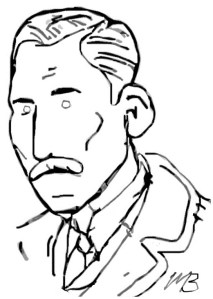
A few years ago it was thought that a soldier was a machine, and should never be allowed to think for himself; the South African War altered all that, as far as our Army was concerned; the soldier is now taught to use his brains and to take advantage of ground and cover, with results which have been amply justified during the present war. In other words, our men are regarded as intelligent human beings.

(Birchall, Rapid Training of a Company for War, 1915, 29)

Arthur Percival Dearman Birchall was one of three CEF colonels killed in action during the second battle of Ypres in April 1915. Born on 3 July 1877 in Gloucester, England, Birchall was a professional soldier and fourteen-year veteran with the British Army. Before the World War, he participated in an officer exchange program with the Canadian militia and relocated to western Canada. As a military instructor, he attempted to transform citizen militiamen into effective soldiers prepared for war.

Continue reading

Father Christmas

Lieutenant Colonel George B. Laurie
1st Battalion, Royal Irish RiflesLaurie

I used to be up at cockcrow when a small child on Christmas Day, to see what Santa Claus had brought me, and I shall be up early enough to-morrow in all conscience too, but for a different reason—standing to arms—so that I shall not get my throat cut.

Best of love to you for Christmas. Whilst you are in church I shall be in the trenches, but both doing our rightful duty, I trust.

(Lt-Col. Laurie to Wife, 24 Dec 1914)

On 25 December 1914, George Brenton Laurie was one of the few Canadian-born officers to witness the so-called Christmas truce in No Man’s Land. He recorded the encounter in a letter to his wife: “Then we saw both sides, English and German, begin to swarm out to meet each other; we thought it wiser to keep our men in, because we did not trust the Germans.” Suspicious, Laurie initially held his men back before going to investigate himself. As both side met, the Germans complimented the colonel on his battalion’s marksmanship and were eager to learn if the Canadian Division had arrived to the front yet. The armistice held for two days until both sides resumed the fighting.

Continue reading

The Rifleman

Lieutenant Colonel W. Hart-McHarg †
7th (1st British Columbia) BattalionHart-McHarg

There was much gloom and sorrow among the British Columbians that night for they all loved their colonel and they knew that there was very little hope for him. He died the following day at Poperinghe. Thus died one of the bravest of the Canadians, a splendid soldier, the champion sharpshooter of America, for that matter of the world. He had always displayed great coolness and daring, and British Columbia will always cherish and revere his name.

(Col. Currie, 15th Bn. The Red Watch, 1916, 233)

William Frederick Richard Hart-McHarg was one of three CEF colonels killed in action at the second battle of Ypres on 24 April 1915. A veteran of the Boer War, he was serving as second-in-command of the 6th Regiment at the outbreak of the Great War. The militia colonel, J. H. D. Hulme, stepped aside in order for Major Hart-McHarg to organize the 7th Battalion at Valcartier. Puzzled why Hulme would miss “the chance of a lifetime,” Hart-McHarg reasoned, “But with me it is different. I have only a couple of years to live in any case.”

Continue reading

The Private

This site normally profiles majors, colonels and generals—but for Remembrance Day, I focus on a private soldier, my great-great uncle, H. J. Barrett.

Private Harry John Barrett
204th and 3rd (Toronto) BattalionsHJBarrett

Whist in the act of firing his Lewis Machine Gun during Military operations in the vicinity of UPTON WOOD, Private Barrett was shot by a bullet from the rifle of an enemy sniper and instantly killed.

(H. J. Barrett, Circumstances of Death, 30 Aug 1918)

Harry John Barrett was born in Peterborough, England on 31 March 1900. He immigrated to Canada with his family in 1907 and worked as a labourer in Toronto. Despite being only one month over sixteen, Harry enlisted in the CEF on 26 April 1916. Claiming to be eighteen years old , he joined the 204th Beavers commanded by Parkdale MPP, Lieutenant Colonel William Herbert Price. Harry’s older brother, George William Barrett, had signed up earlier in April with the 208th Irish Fusiliers, commanded by Lieutenant Colonel Thomas Lennox, another Ontario MPP.

Continue reading

The Unlucky

Lieutenant Colonel Victor C. Buchanan, D.S.O. †
13th (Royal Highlanders of Canada) BattalionBuchanan

We then start to dig in where Col. Buchanan and Maj. Peterman had been buried but find their dead bodies. They must have died instantly. Apparently something must have exploded the gasoline and the shock brought in the weakest part of the dugout.

(Lieut. H.A. McCleave, 13th Bn., Diary, 28 Sept 1916)

During heavy German bombardment on the evening 26 September 1916, a shell struck the 13th Battalion headquarters. The explosion killed several senior officers including Lieutenant Colonel Victor Carl Buchanan. It was his forty-seventh birthday.

Continue reading

The Berserker

Major Axel “Rass” Rasmussen †
97th (American Legion) BattalionRasmussen

Rasmussen was a big, handsome man; fearless in war and pitiless to four-flushers anywhere, any time.

(J. W. Pegler, Evening News, 26 June 1918, 2)

“But so far I’ve always found that a man has time to get down to avoid the fragments— if he moves fast. If it’s got your initials on it— well, no one but a prime so-and-so wants to live forever!”- Maj. Rasmussen

(E. S. Johnston,  Americans vs. Germans: the First AEF in Action, 1942, 33)

Axel Thorvald Rasmussen was one of the American Legion’s most famous members. The thirty-eight year old, Danish-born resident of Oregon was a veteran of the Spanish-American War and the Philippine Insurrection. During the Mexico Revolution, he fought in support of General Obregón’s army. Regarding his previous fights as “mere skirmishes,” in 1916, Rasmussen traveled to Canada in order to join Lieutenant Colonel Wade Jolly’s 97th American Legion.

Continue reading

The One-Eyed

Lieutenant Colonel Herbert Buller, D.S.O. †
Princess Patricia’s Canadian Light Infantry Buller

The question of the command of the battalion is now, I am glad to be able to tell you, admirably settled in the appointment of Buller with the temporary rank of Lieut.-Colonel. Although Farquhar can never be replaced, Buller will make a splendid commanding officer. He has, as of course you know, the absolute confidence of us all and is eminently qualified for the arduous duties which lie before him.

(Maj. Gault to Sam Hughes, 20 Apr 1915)

Hebert Cecil Buller succeeded Lieutenant Colonel F. D. Farquhar as commander of Princess Patricia’s Canadian Light Infantry on 21 March 1915. The son of British Admiral Alexander Buller, he was born in 1881 in England. He joined the Rifle Brigade in 1900 and later became aide-de-camp to Governor General of Canada Prince Arthur, Duke of Connaught. In August 1914, Buller joined P.P.C.L.I. as the battalion adjutant.

Continue reading

The Princess & The Guardsman

Colonel-in-Chief Princess Patricia of Connaught
PrincessPat&
Lieutenant Colonel F. D. Farquhar, D.S.O. †
Princess Patricia’s Canadian Light InfantryFarquhar

So poor Francis Farquhar is dead; killed, as he would have wished it himself, in action, fighting for his own dear country and her Allies.

(London Times, 30 Mar 1915, 14)

Francis Douglas Farquhar was a Coldstream Guard and military secretary to the Governor General of Canada Prince Arthur, Duke of Connaught. Born on 1 September 1874 in England, Farquhar had been a professional soldier and veteran of the Boer War and Somaliland.

Continue reading

The Fighter

Lieutenant Colonel Russ Boyle †
10th (Canadians) BattalionBoyle

Words will not express the absolute sense of calamity which has struck every officer and man in the battalion since we have lost him. He was our ideal of a man and a leader and I can assure you that there was not one of us who did not feel to the very limit his loss.

(Captain Ross, 10th Bn. to Mrs. Laura Boyle [wife], 27 May 1915)

Russell Lambert Boyle was one of three CEF colonels killed in action during the second battle of Ypres in April 1915. Born on 29 October 1880 in Port Colbourne, Ontario, Boyle was active in the militia from a young age. He joined the Canadian Field Artillery in 1894 and served with the 15th Light Horse. During the Boer War, he volunteered and fought in South Africa. As a resident of Crossfield, Alberta, Boyle sat on the town council and owned a ranch.

Continue reading

The Cavalryman

Lieutenant Colonel Sam Beckett †
75th (Mississauga) BattalionSBeckett

Col. Beckett ranked with the few most prominent and able military officers which Toronto and even Canada has produced in the present struggle abroad. That he was efficient and an authority on military tactics, particularly cavalry manoeuvers was attested when he was chosen one of the few officers who left here commanding battalions to take his regiment to France. He had innumerable friends in Toronto.

(Toronto World, 5 March 1917, 1)

Lieutenant Colonel Samuel Gustavus Beckett of the 75th Battalion was killed in action during a March 1917 trench raid near Vimy Ridge. Born on 2 December 1869 in Toronto, Beckett was a partner in an architect firm with fellow Lt. Colonel W. C. V. Chadwick of the 124th Battalion. A student of military history and expert on the cavalry tactics of American Confederate General Stonewall Jackson, Beckett had been involved in the Canadian militia since 1893. At the outbreak of the war, he was commanding officer of the 9th Mississauga Horse.

Continue reading