Lt-Col. G.W. Little

Lieutenant-Colonel G. W. Little
Princess Patricia’s Canadian Light Infantry
Perth Regiment
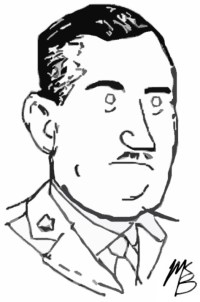
Little GW

My Brigadier, the son of a bitch, is still alive— I’ll kill him.

(G. W. Little on Brig. Gen. J. A. Clark, CBC Interview, 1964)

George Wilfrid Little was born on 1 November 1891 in London, Ontario. A graduate of University of Toronto and Western University, he originally enlisted with 5th University Company as a lieutenant in December 1916 before transferring to the PPCLI on the Western Front. Promoted to captain in August 1917, he became acting commanding officer on 28 September 1918 when all senior ranks had been put out of action.
Continue reading

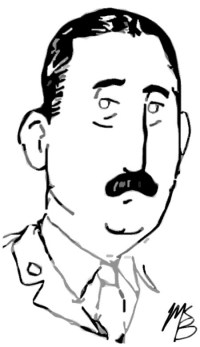
Lt. Col. G.H. Kirkpatrick

Lieutenant Colonel G.H. Kirkpatrick
11th Canadian Mounted Rifles & 72nd Battalion
GHKirkpatrick

The outstanding fearlessness of the new C.O., Lieut-Col. G. H. Kirkpatrick, D.S.O., also calls for special notice. This was the first occasion on which he had complete command of the Battalion in an action, and his courage and coolness were an inspiration to all ranks.

(History of the 72nd Battalion, Seaforth Highlanders of Canada, 1920, 150)

Guy Hamilton Kirkpatrick succeeded Lieutenant Colonel J. A. Clark in command of the 72nd Battalion on 5 September 1918. Born on 5 November 1875 in Kingston, Ontario, he graduated from the Royal Military College in 1896 and fought in South Africa with Lord Strathcona’s Horse. His father, Sir George Airey Kirkpatrick (1841—1899), had been a Conservative MP and Lieutenant Governor of Ontario.

Continue reading

The Son of a Bitch

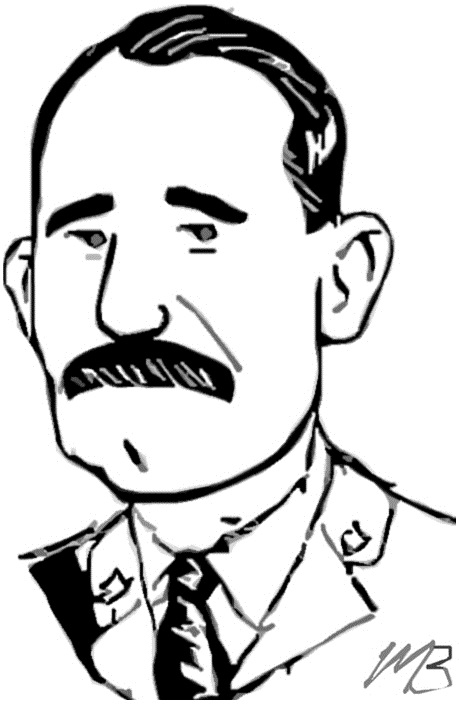
Brigadier General J. A. Clark, D.S.O.
72nd (Seaforth Highlanders) Battalion
JAClark

“My Brigadier, the son of a bitch, is still alive— I’ll kill him if I see him.”

(Capt. W. G. Little, P.P.C.L.I., 1964)

Born in West Flamborough, Ontario on 8 June 1886, John Arthur Clark was a Vancouver barrister and militiaman. A major in the 72nd (Seaforth Highlanders of Canada) Regiment, Clark was appointed to command the 72nd Battalion, one of the few CEF units to perpetuate its militia designation. Commenting on the tremendous responsibility of a commanding officer one of his men observed that the twenty-nine year old colonel “looked forty.”

Continue reading