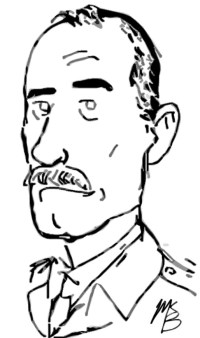
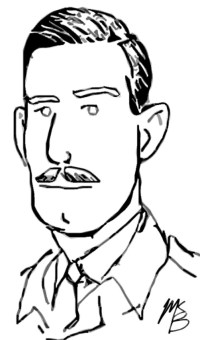
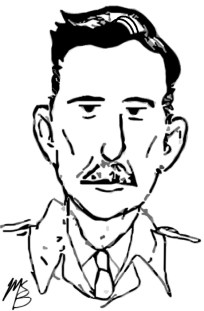
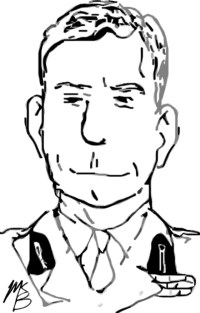
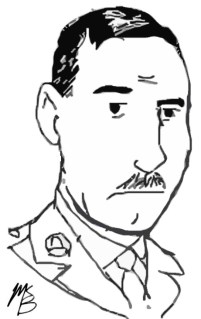
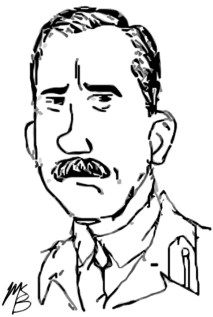
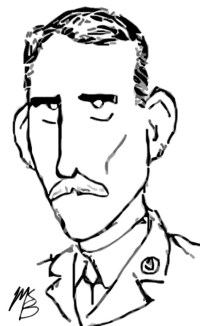
Lt-Col. G.E.B. Renison

Lieutenant-Colonel G.E.B. Renison
Hastings and Prince Edward Regiment
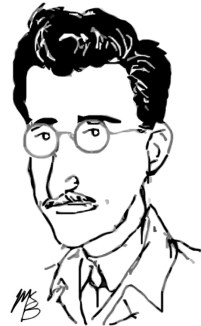
Renison

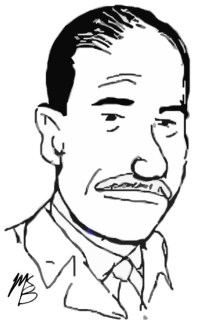
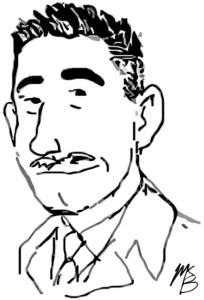
George Renison, who, during the Second World War, was almost blown to smithereens by a land mine, displayed such a talent for leadership during combat that by the war’s end he was in command of the First Canadian Infantry Brigade—a remarkable feat considering he was all of 26 and had gone overseas as the lowest-ranking officer of the 48th Highlanders of Canada.

(James Macgowan, Globe and Mail, 8 Sept 1998, A22)

Born in Hamilton on 25 August 1918, George Everett Bristol Renison was a Trinity College student and son of Anglican Bishop Robert Renison (1875–1957). He went overseas as a lieutenant with the 48th Highlanders in December 1939, and served in the short-lived expedition to France in June 1940 before returning to Canada to take a junior staff course at the Royal Military College.
Continue reading

Lt-Col. G.A. Ross

Lieutenant-Colonel G. Allen Ross
Hastings and Prince Edward Regiment
RossGA

Alan Ross, still a major and acting CO. only, was not to be allowed to carry on in command. The Brigadier had decided to replace him with an unknown from the 48th Highlanders. This news did not greatly affect the new reinforcements, but the older soldiers, the N.C.O.s and officers, were properly irate. Ross had served the Regiment for a long time. He had displayed outstanding leadership in battle and, since Cameron’s departure, had handled the battalion with skill and good effect.

(Farley Mowat, The Regiment, 369)

Born in Montreal 14 September 1909, George Allen Ross Jr. was an investment broker and captain in the Royal Highlanders of Canada (The Black Watch). He went overseas with the regiment in September 1942 but transferred to the Hastings and Prince Edward Regiment as a reinforcement officer in Italy over a year later. He joined prior to the Battle of Ortona and earned a field promotion to major within six months.

Continue reading

Lt-Col. D.C. Cameron

Lieutenant-Colonel Don Cameron
Hastings and Prince Edward Regiment
Stormont, Dundas and Glengarry Highlanders
CameronDC

Cameron had managed a hard task with skill. He had commanded the unit through some of its best days, and through its darkest hours, and he had not failed the Regiment which had adopted him, and of which he had become a living part. His personality, with those of Kennedy, Graham, Tweedsmuir, Sutcliffe and Salmon, was deeply woven into the fabric of the unit.

(Farley Mowat, The Regiment, 369)

Born on 5 April 1911 in Lochiel, Ontario, Donald C. Cameron enlisted with the Stormont, Dundas and Glengarry Highlanders in 1926 and gained a commissioned two years later. He went overseas as a major in June 1940 and served as second-in-command of the Highlanders in England until he requested a posting to the front. He transferred to Italy in late 1943.

Continue reading

Lt-Col. A.A. Kennedy

Lieutenant-Colonel Bert Kennedy
Hastings and Prince Edward Regiment
Queen’s Own Cameron Highlanders
Kennedy

One morning a strange Italian forced his way past the indignant guards at B.H.Q. and presented himself to the astounded adjutant. Filthy, thin as a refugee, and clade in disintegrating civilian clothes, Major Bert Kennedy had returned to the unit out of the limbo of the missing. Kennedy had a tale to tell.

(Farley Mowat, The Regiment, 196)

Born on 25 July 1905 in Owen Sound, Ontario on Albert Arnett Kennedy was a manufacturer and commanding officer of the Grey and Simcoe Foresters. He reverted in rank to go on active service in September 1939. Following instructional duties in Toronto, he went overseas as an instructor with a holding unit before transferring to the Hastings and Prince Edward Regiment.

Continue reading

Lt-Col. Lord Tweedsmuir

Lieutenant-Colonel Lord Tweedsmuir
Hastings and Prince Edward Regiment
Tweedsmuir

Barely thirty years of age, soft-spoken, kindly, with a slight tendency to stutter, he was a tall, fair-haired English romantic out of another age … his famous father’s perhaps. “Tweedie,” as we called him behind his back, had as a youth sought high adventure as a Hudson’s Bay Company trader in the Arctic, then as a rancher on the African veldt, and finally as a soldier in a Canadian infantry battalion. But until this hour real adventure in the grand tradition had eluded him.

(Farley Mowat, And No Birds Sang, 111)

Born in London, England on 25 November 1911, John Norman Stuart Buchan, 2nd Baron Tweedsmuir was son of the Governor General of Canada and the famous author John Buchan (1875–1940). Educated at Eton, he served in the colonial administration of Uganda before moving to Canada in 1936. Following a stint with the Hudson’s Bay Company in the far north, Buchan volunteered on mobilization in September 1939. He inherited his father’s title on 11 February 1940.

Continue reading

Lt-Col. B.A. Sutcliffe

Lieutenant-Colonel Bruce Sutcliffe
Hastings and Prince Edward Regiment
Sutcliffe

From official information we have received your husband was killed in action against the enemy. You may be assured that any additional information received will be communicated to you without delay.

The Minister of National Defence and the members of the Army Council have asked me to express to you and your family their sincere sympathy in your bereavement.

(Gen. Letson to Nell Sutcliffe, 2 Aug 1943)

Born in Peterborough, Ontario on 27 October 1904, Bruce Albert Sutcliffe was a Toronto postal clerk and a sixteen-year member of the Hastings and Prince Edward Regiment. On the promotion of Lieutenant-Colonel H.D. Graham to brigadier in September 1942, command of the regiment passed to Sutcliffe. Ten months later, on 10 July 1943, he landed with the regiment in Sicily as part of Operation Husky. Within ten days Sutcliffe was dead.

Continue reading

Brig. H.D. Graham

Brigadier Howard Graham
Hastings and Prince Edward Regiment
1st Infantry Brigade
Graham

I gave him a concise history of our relationship as being cold, critical, harsh, and unfriendly on his part, and he seemed to have little or no understanding or appreciation of the problems to be faced by a commander in the field. My brigade was excellent, there was none better, we had accomplished everything asked of us. I then told him of the tongue-lashing Simonds had given me in front of my driver and signaller after an all-night, difficult, but successful move.

(Graham, Citizen and Soldier, 163)

Born in on 15 July 1898 in Buffalo, New York, Howard Douglas Graham was a lawyer and long-time militia officer with the Hasty Ps. He had enlisted with the 155th Battalion in March 1916 before serving as an orderly clerk in England and with Canadian Corps headquarters in France. He graduated from Osgoode Hall in 1921 and was later commissioned with the newly formed Hastings and Prince Edward Regiment. He served a term as mayor of Trenton, Ontario in 1933.

Continue reading

Lt-Col. J.N. Edgar

Lieutenant-Colonel Jimmy Edgar
Hastings and Prince Edward Regiment
Princess Patricia’s Canadian Light Infantry

He assumed command of the battalion after his commanding officer had fallen. Under very heavy fire he on three occasions personally supervised attacking operations in the front line. His cool courage and able leadership inspired those under him to do the good work achieved by them.

(Capt. J. Edgar, M.C. citation, 20 Sept 1919)

Born in Hartlepool, England on 15 May 1887, James Nesbitt Edgar volunteered with the PPCLI in August 1914, was commissioned from the ranks in June 1916, and became a captain at Passchendaele. He briefly took command of the regiment at Cambrai after all other officers were killed or wounded on 28-29 September 1918. He ended the war with the Military Cross and continued in the PPCLI with the Permanent Force.

Continue reading

Maj-Gen. H.L.N. Salmon

Major-General H.L.N. Salmon
Hastings and Prince Edward Regiment
7th Infantry Brigade
1st Canadian Division
Salmon

He was an outsider; Lt. Col. Harry Salmon, a Permanent Force soldier who might have been insulted by the order to take over a militia battalion. Certainly the regiment was grossly insulted by the appointment. Nevertheless, this man possessed the catalyst which was needed to transform the magnificent promise of the Regiment into reality. He knew the way, and he was ruthless.

(Farley Mowat, The Regiment, 74)

Born in Winnipeg on 9 February 1894, Harry Leonard Nowell Salmon fought in the trenches at the Somme and Courcelette, earning the Military Cross. He had enlisted with the 68th Battalion from Regina as a lieutenant in November 1915 and joined the 28th Battalion as a reinforcement officer in France in July 1916. Following a gunshot wound in September, he returned to the field just before Passchendaele.

Continue reading

Lt-Col. S. Young

Lieutenant-Colonel Sherm Young
Hastings and Prince Edward Regiment

… Canadians fought like demons. Pte. Young said he had no idea he would come out alive, but he fought on until taken prisoner. His left hand was very badly wounded but the Germans took little care of that. He saw over twenty wounded Canadians, who were lying on the ground, killed by the Germans. After he was taken back from the firing line he was better treated, and the German doctors did everything possible for his hand. He is very enthusiastic about the ability of these doctors.

(Weekly British Whig, 9 Dec 1915, 3)

A farmer born in Athol, Ontario on 8 October 1894, Sherman Young enlisted with the Canadian Expedition Force as a private in September 1914. He fought with the 2nd Battalion at the Second Battle of Ypres, where he was gassed, shot in the hand, and captured. After six months interned as a prisoner of war, he was exchanged and repatriated in October 1915. Undeterred, Young re-enlisted as a lieutenant in the 155th Battalion, but his deformed hand precluded active service.

Continue reading