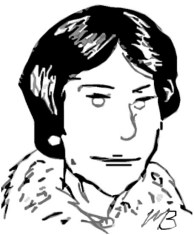
The Logger

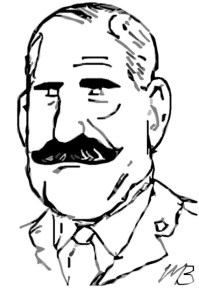
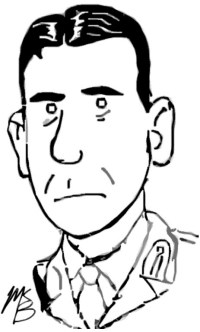
Colonel J.B. White
242nd (Foresters) Battalion
JBWhite

He came to me and told me he would guarantee to raise me a French Canadian battalion inside of two weeks. I said “God bless you my boy, go ahead, I will give you every help I can.” But I never dreamt he would get them.

Inside of two weeks Colonel White came to me and said: “The jig is up; we cannot raise the men.”

(Hughes, Debates, 5 Apr 1918, 411)

John Burton White was a lumberman and sawmill manager in the Ottawa Valley. He was born on 1 January 1874 in Aylmer Road, Quebec. A senior officer with the 17th Hussars, he enlisted as a major with Alexander McDougall’s 224th Battalion in April 1916. He left with the forestry unit for England but was recalled home two months later to raise a new lumber battalion from Quebec.
Continue reading

The Lumber King

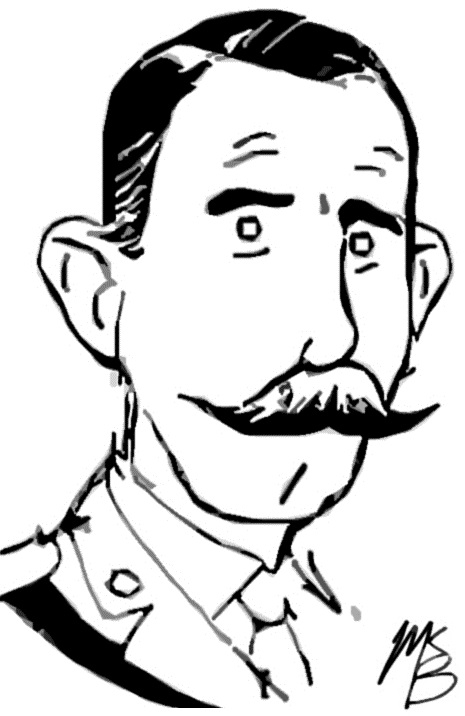
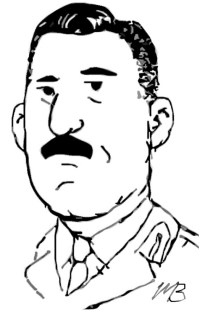
Major General Aleck McDougall
224th (Lumbermen’s) Battalion
Macdougall

Many of these men have left families at home, and are looking forward to rejoining them at the end of the war, and it is a scandal that the minds of these people should be disturbed by the thoughts that our soldiers are in the midst of dire temptation and are falling victims to it, when as a matter of fact the behaviour of the men of this corps since its formation has been exceptionally satisfactory and it is my opinion when they return home they will demonstrate that their overseas activities have improved them in every way.

(MacDougall to Montreal Gazette, 25 Apr 1918, 10)

In February 1916, British Colonial Secretary Bonar Law requested the Canadian Government provide a special battalion of lumbermen for overseas service. Ottawa timber magnate Alexander McDougall, who had proposed a forestry unit, was quickly appointed commander of the 224th Battalion. Born in Renfrew, Ontario in January 1878, McDougall was an experienced woodsman and leading figure in the North American lumber industry. Continue reading

Lt. Col. W.R. Smyth, MP

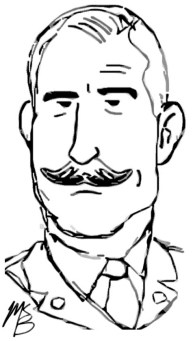
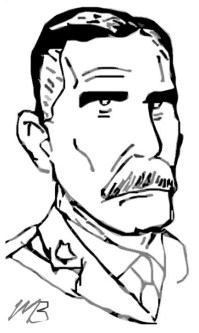
Lieutenant Colonel W.R. Smyth, MP
238th (Canadian Forestry) Battalion
Smyth

Am extremely sorry that certain cables crossed and I inadvertently accepted nomination. I wired Robb withdrawing my acceptance … Please convey this to electorate at first opportunity. I depend on all loyal Canadians to support the Union Government and thereby help win the war. We need men and must have them.

(Smyth to G.B. Nicholson, Nov 1917)

William Ross Smyth was a lumber tycoon, Conservative MPP in the Ontario legislature (1902—1908 and federal MP for Algoma East (1908—1917). He was born in Aberdeenshire, Scotland on 3 January 1857. He was one of several sitting Conservative MPs selected to recruit an overseas battalion.

Continue reading

Lt. Col. Jones

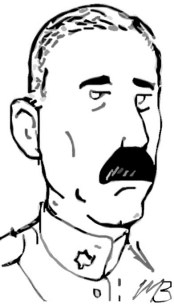
Lieutenant Colonel C.H. LeP. Jones
227th (Men o’ the North) Battalion
Jones_CH

I do not believe I am competent not having been in the trenches myself, to thank you for these men. I do not believe in all modesty I am clothed with sufficient authority from them to speak for them. I do not believe any man can adequately answer this toast unless he has had his baptism of fire in this, the greatest war of all time, but I will clothe myself with sufficient authority to say a good old fashioned “Thank you” for them.

(Col. Jones, Pulp and Paper Magazine, 9 Feb 1917, 148)

Charles Hugh LePailleur Jones was a well-known figure in the paper and pulp industry. He was born in Montreal on 1 May 1876 and graduated with a degree in engineering from McGill University. He had belonged to the 3rd Victoria Rifles before moving to Sault Ste. Marie where he became commanding officer of the 51st Soo Rifles. In August 1916, Jones was appointed to raise the 227th Battalion from Sudbury-Manitoulin-Algoma. Continue reading

Lt. Col. Robinson

Lieutenant Colonel C.W. Robinson
187th (Veterans) Battalion

I have offered to take up the story where I left off two years ago, and go over in command of a Company as a Major. There seems to be lots of Colonels in England.

 (Col. Robinson letter, Red Deer News, 21 Mar 1917, 3)

Charles Wilson Robinson was a veteran of the Boer War and original officer with Lieutenant Colonel Boyle’s 10th Battalion at Second Ypres. Born in Loftus, England on 2 February 1877, Robinson was a central Alberta farmer and member of the 15th Light Horse. During the heavy fighting at the battle of St. Julien in late April 1915, Robinson suffered a broken arm and shattered ribs. During the same action, his commanding officer, Russell Boyle was killed in action. Robinson returned to Canada in fall 1915 to join the 89th Battalion before receiving a command appointment to the 187th. Continue reading

Lt. Col. Grant

Lieutenant Colonel D.M. Grant
122nd (Muskoka) Battalion
Grant

This affords an opportunity to the men who are accustom to working in the bush to take on their regular line of work for the next year or so, have a trip to England or France and if on the ground when Peace is declared will have the time of their lives. It is ENTIRELY a separate force from the fighting units.

(122nd Batt., Recruiting Poster, 1917)

Born on 2 April 1868 in Deleware, Ontario, Donald McKenzie Grant was a Huntsville lawyer and son of Rev. George Munro Grant (1835—1902). Commanding officer of the 35th Regiment, he was initially authorized to raise a new battalion from Simcoe County in November 1915. However, he soon ordered to switch with Lieutenant Colonel D. H. MacLaren of the 157th to organize the 122nd from Muskoka. A local newspaper wrote, “Such a change would have made many men give up their work in disgust, but such was not the case with Col. Grant, who thus roved his true military worth, sincerity, loyalty and determination.” Continue reading

Lt. Col. Fee

Lieutenant Colonel J.J.H. Fee
109th (Victoria & Haliburton) Battalion
Fee

& Lady Flora McCrea Eaton

LadyEaton

I have often thought that if I were a man I would be at the front to relieve them. The honor and glory of the Canadian soldier is all his own because he has made it himself. It is our duty now that we see that he is not deserted.

 (Lady Eaton, Toronto Star, 8 Dec 1917, 5)

On 24 May 1916, the 109th Battalion under the command of John James Havelock Fee assembled before a crowd of ten thousand in Lindsay, Victoria Country as it prepared to depart overseas. Speeches followed by Victoria member of parliament and Minister of Militia, Sir Sam Hughes, and the battalion’s sponsors, Sir John and Lady Eaton.

Continue reading