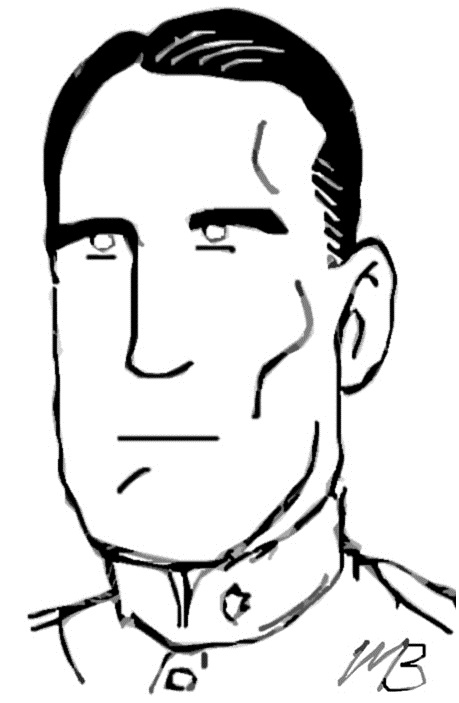
Lt. Gen. Alderson

Lieutenant General Edwin Alderson
Canadian Corps
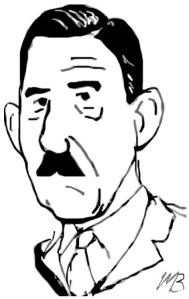
Alderson

A great deal of my time is taken up in preventing men being appointed to command Brigades, Battalions, etc., who are not in the least fit, but who have influence. In most cases I have succeeded, and in others I have told them after they have been here a short time ‘I am very sorry, but it is my duty to tell you that you have not the experience, capacity, and above all, the personality to successful command men on active service,’ – and they have gone!

(Alderson to Robert Borden, 13 March 1916)

Sir Edwin Alfred Hervey Alderson was a professional British Army officer and first commander of the Canadian Corps. Born on 8 April 1859 in Capel St Mary, England, Alderson received his commission at seventeen and served in several African campaigns. He came out of semi-retirement after the outbreak of the First World War and was appointed to command the 1st Canadian Division in September 1914.  Due to disagreements about training, discipline, and officer selection, Alderson soon found himself subject to the vitriol and opposition of Canada’s bombastic militia minister Sir Sam Hughes. Continue reading
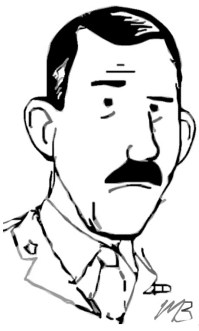
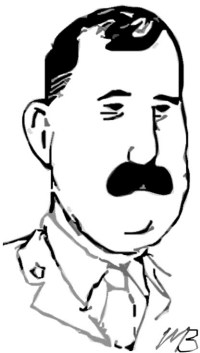
Lt. Col. Pelly

Lieutenant Colonel Raymond T. Pelly
Princess Patricia’s Canadian Light Infantry
Pelly

Pelly always was a nervous temperament and the trenches came harder on him than on some others but you are quite wrong in imagining he is not full of courage for I know him to be. And at Frise when H.Q. was shelled he absolutely refused to go into the cellars until the last servant had taken to his hiding place.

(Agar Adamson to wife, 2 Jan 1916)

Raymond Theodore Pelly was born on 30 July 1881 in Woodford England. He served with the Royal North Lancashire Regiment from 1900 to 1914. As a member of the Governor General of Canada’s staff, in August 1914, he enlisted as a major with PPCLI under Colonel Francis Farquhar, who was killed by a sniper in March 1915.

Continue reading

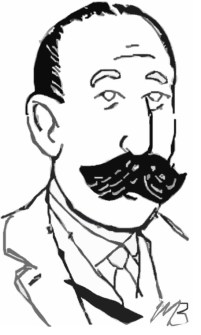
Lt. Col. Reid

Lieutenant Colonel J.Y. Reid
179th (Cameron Highlanders of Canada) Battalion
Reid

He proved himself an excellent Group Commander, energetic and capable, and concerned for the comfort of the men under his command.

(Labour Commandant, Second Army, 13 Jan 1919)

John Young Reid Jr. was a department store manager and merchant in Winnipeg. Born in Toronto on 30 June 1871, he was the son of John Reid Sr., publisher of the Toronto Globe. After working as a clerk in Toronto, the younger Reid moved to Manitoba in 1907. He was one of the first officers in the 79th Cameron Highlanders and became senior major of the 179th Battalion in January 1916.

Continue reading

The One-Armed

Lieutenant Colonel D. F. Campbell, D.S.O., M.P.
2/7th Battalion, Duke of Wellington’s RegimentDFCampbell

I seldom press myself upon the House, and I will only to do so to-night for two or three minutes. I am actually one of only two soldiers left here to-night.

The thing is to get on with the War and banish everything that retards the progress of the War. I have had occasion several times to make criticisms of a military character during this War, but I have never done so in this House.

(Hansard, 10 Jan 1916, 1420)

Duncan Frederick Campbell was born on 28 April 1876 in in Simcoe, Ontario. After graduating from the University of Toronto in 1898, he received a commission to the Lancashire Fusiliers. Awarded the Distinguished Service Order for gallant service in the Boer War, Campbell retired from the Territorial Force in 1910. Following an unsuccessful political bid in the December 1910 British election, Campbell was elected Conservative Member of the British Parliament for North Ayrshire in a by-election one year later.

Continue reading

The Giant

Lieutenant Colonel F. Pawlett, D.S.O.
128th (Moose Jaw) BattalionPawlett

The commanding officer, whose name I have never mentioned, may be an honorable officer. He said in a public address in the city of Moosejaw that he had been stabbed from behind… It was not an utterance an officer should have made. I have my duty to perform, and he has his. So far as I have had any personal relations with him, they have been of unalloyed friendship. I know him very slightly, because he is a stranger in our city.

(W. E. Knowles, Debates, 6 May 1916, 3541)

Born in Leicester, England on 8 September 1879, Francis Pawlett served with the Imperial Yeomanry in South Africa from 1899 to 1903. He settled in Yorktown. Saskatchewan after the Boer War and joined the 16th Light Horse in 1910. In September 1914, the six-foot-four militia officer volunteered with the 5th Battalion. Pawlett was wounded on the front, invalided to England and returned to Canada in late 1915 to raise the 128th Battalion from Moosejaw.

Continue reading

The King’s Own

Lieutenant Colonel F. C. McCordick
35th Battalion & 15th Bn., King’s Own Yorkshire Light InfantryMcCordick

My dear Col. McCordick,

If you haven’t already heard, you will be surprised to get this letter from m⁠e⁠—in Germany. It happened at that awful slaughter⁠—rhe 3rd battle of Ypres, & even now when I think of it all, I doubt my reality of existence…

Hope all is well with you & 35th. Good luck & best regards to all.

(Lt. A. Watson Sime to McCordick, 3 July 1916)

Born on 2 June 1873 in St. Catharines, Ontario, Frank Case McCordick was a leather manufacturer and member of the 19th Regiment. In early 1915, he took command of the 35th  Battalion from Lieutenant Colonel Charles Frederick Bick who transferred to the 37th. Many of McCordick’s volunteers belonged to Toronto’s militia units, the Royal Grenadiers, the Queen’s Own Rifles, the 48th Highlanders, the 12th York Rangers, and the 109th Regiment.

Continue reading