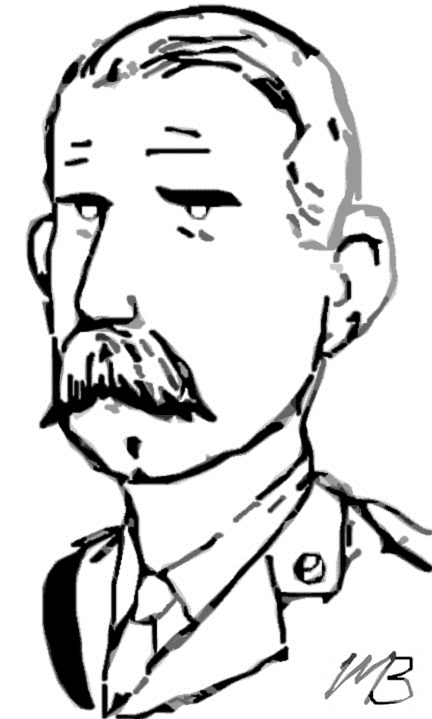
Brig. J.G. Spragge

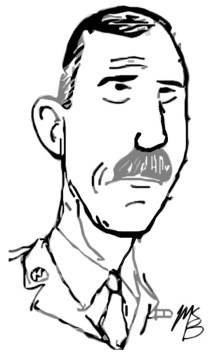
Brigadier Jock Spragge
Queen’s Own Rifles
7th Infantry Brigade
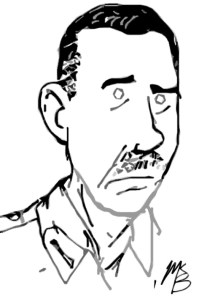
Then I saw it was the Colonel. I gave him plain hell … I told him he should be back at Battalion HQ, not up at the front with us—the last line between our forces and the enemy. He was too good and too necessary to be killed or wounded … [he] said ‘Charlie, it’s such a sad day. We’ve lost so many good me.’ He said goodnight and turned away, but not before I saw the tears in his eyes. Jock Spragge was all man. He was not one of the spit’n’polish professional types, but as a fighter he was the best.

(C.C. Martin, Battle Diary, 15-16)

Born on 20 May 1907 in Ottawa, John Godfrey Spragge was a sportsman, former Toronto banker, industrialist, and businessman in London, Ontario. He had joined the Queen’s Own Rifles as a private in 1925 and took a commission a year later. He returned to Toronto with the outbreak of the war when the regiment mobilized for active service. Before the QOR went overseas in July 1941, Spragge became second-in-command and succeeded Lieutenant-Colonel Harry Mackendrick in April 1942.

Continue reading

Brig. T.G. Gibson

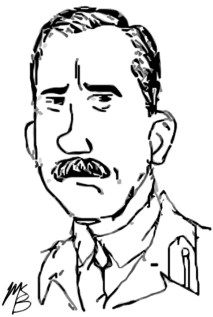
Brigadier T. Graeme Gibson
Royal Winnipeg Rifles
9th, 3rd, 2nd & 7th Infantry Brigades

We in Canada inherited the regimental system and reaped its benefits in World War II and Korea … In our regiments from coast to coast, the system kept the militia alive for more than a century in peacetime and provided a warm human environment to the Canadian fighting man in the brutal adversities of war.

(T. Graeme Gibson, National Post, 5 May 1973, 36)

Born on 26 April 1908 in Toronto, Thomas Graeme Gibson joined the Queen’s Own Rifles in 1925 and became a Permanent Force officer with the Royal Canadian Regiment in 1931. He attended the war staff college at Camberley, England and first served as liaison staff officer with the 2nd Canadian Division in 1940. Following general staff duties with 2nd Infantry Brigade he was appointed commanding officer of the Royal Winnipeg Rifles in January 1942. He succeeded two First World War veterans twenty years’ his senior.

Continue reading

Brig. C.C. Mann

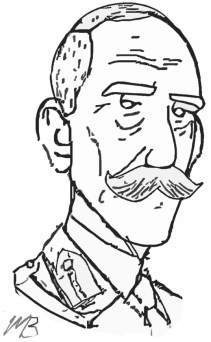
Brigadier Churchill Mann
8th Reconnaissance Regiment (14th Hussars)
7th Infantry Brigade
Mann

It was like watching a demonstration of tracer firing punctuated with the flash and crash of guns from both sides and although it was a thrilling and spectacular display, it filled us with foreboding as we all realized that the chance of our effecting surprise was greatly diminished.

(Mann, “Notes on Dieppe,” 1942)

Born on 6 September 1904 in Nutley, New Jersey and raised in Toronto, Clarence Churchill Mann was an RMC graduate, horseman and captain in the Royal Canadian Dragoons. He was attached to the headquarters staff of 1st Division and acted an instructor at the first Canadian staff college in England before being appointed commanding officer the newly formed 8th Reconnaissance Battalion in March 1941.

Continue reading

Maj-Gen. H.W. Foster

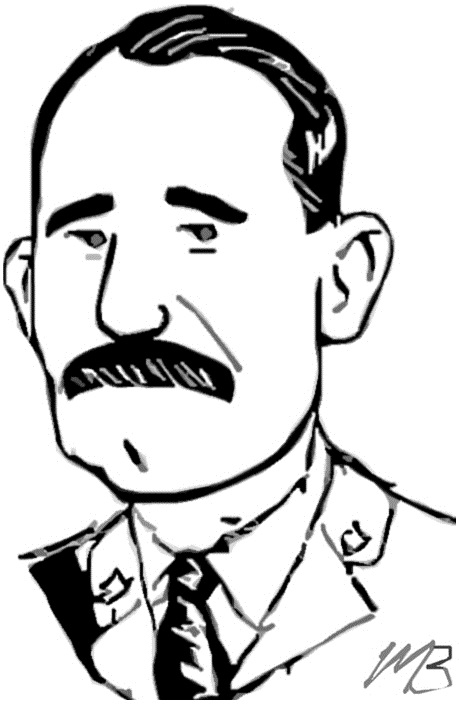
Major-General Harry Foster
4th Princess Louise Dragoon Guards
Highland Light Infantry of Canada
13th & 7th Infantry Brigades
4th & 1st Canadian Divisions
Foster

He was just as guilty of murder as I was at the time … or any other senior officer in the field during a battle. The difference between us was that I was on the winning side. That makes a big difference.

— Gen. Foster on Kurt Meyer

(Quoted in Tony Foster, Meeting of Generals, 1988)

Born on 2 April 1904 in Halifax, Nova Scotia, Harry Wickwire Foster left Royal Military College the in 1924 to take a commission with the Lord Strathcona’s Horse. His father, Major-General Gilbert Lafayette Foster, had been director of medical services for the Canadian army during the First World War. With the outbreak of Second World War in September 1939, Foster was appointed brigade major of the 1st Canadian Brigade in England.

Continue reading

Brig. W.G. Colquhoun

Brigadier “Shorty” Colquhoun
Princess Patricia’s Canadian Light Infantry

He was rather always upset about it, but he was the first Canadian taken prisoner in the First World War (laughs) … it was the first fighting patrol and Shorty was 6’7 and he was taken prisoner. That was the extent of Shorty’s first war … he was a regimental soldier, never went to staff college and when I joined … Shorty’s great pronouncement was that no Patricia will go to staff until he’s been shot at in anger. Well, that’s a pretty narrow philosophy, isn’t it?

(C.B. Ware, interview, 10 July 1979)

Born on 9 August 1888 in Hamilton, Ontario, William Gourlay Colquhoun was a First World War veteran and commanding officer of the PPCLI since February 1937. Although awarded a Military Cross for heroism at St. Eloi as a lieutenant with the PPCLI in February 1915, he spent almost the entire war as a prisoner in Germany. After repeated escape attempts, he was repatriated in October 1918. Nicknamed “Shorty,” Colquhoun in fact stood six-foot-seven.

Continue reading

Maj-Gen. H.L.N. Salmon

Major-General H.L.N. Salmon
Hastings and Prince Edward Regiment
7th Infantry Brigade
1st Canadian Division
Salmon

He was an outsider; Lt. Col. Harry Salmon, a Permanent Force soldier who might have been insulted by the order to take over a militia battalion. Certainly the regiment was grossly insulted by the appointment. Nevertheless, this man possessed the catalyst which was needed to transform the magnificent promise of the Regiment into reality. He knew the way, and he was ruthless.

(Farley Mowat, The Regiment, 74)

Born in Winnipeg on 9 February 1894, Harry Leonard Nowell Salmon fought in the trenches at the Somme and Courcelette, earning the Military Cross. He had enlisted with the 68th Battalion from Regina as a lieutenant in November 1915 and joined the 28th Battalion as a reinforcement officer in France in July 1916. Following a gunshot wound in September, he returned to the field just before Passchendaele.

Continue reading

Maj. Gen. Macdonell

Major General Archie Macdonell
Lord Strathcona’s Horse
MacdonnellAC

“Batty Mac, our brigade commander, was crazy as a coot in many ways, I saw him actually get wounded one day … Somebody said ‘Be careful, sir, there’s a sniper’ and he said ‘Fuck the sniper,’ climbed up to get a look and the sniper took him through the shoulder and he went ass over applecarts into his shellhole from which he had emerged … My god, his language! You could hear him for miles around!”

(G.R. Stevens PPCLI, In Flanders Field interview, 1964)

Born on 6 October 1864 in Windsor, Canada West, Archibald Cameron Macdonell earned the nickname “Batty Mac” for his disregard of danger under fire. He graduated from the Royal Military College of Canada in 1886 and joined the Canadian Militia before transferring to the North-West Mounted Police. He volunteered during the Boer War and was commanding officer of the Lord Strathcona’s Horse at the outbreak of the First World War.

Continue reading

The Son of a Bitch

Brigadier General J. A. Clark, D.S.O.
72nd (Seaforth Highlanders) Battalion
JAClark

“My Brigadier, the son of a bitch, is still alive— I’ll kill him if I see him.”

(Capt. W. G. Little, P.P.C.L.I., 1964)

Born in West Flamborough, Ontario on 8 June 1886, John Arthur Clark was a Vancouver barrister and militiaman. A major in the 72nd (Seaforth Highlanders of Canada) Regiment, Clark was appointed to command the 72nd Battalion, one of the few CEF units to perpetuate its militia designation. Commenting on the tremendous responsibility of a commanding officer one of his men observed that the twenty-nine year old colonel “looked forty.”

Continue reading

The Independent

Brigadier General Hugh Dyer, D.S.O.
5th (Western Cavalry) BattalionDyer

I thank you for the unanimity with which you have chosen me as your candidate, for without unanimity we cannot get anywhere. Let there be no mistake. I am not agreeing to run as the representative of any particular party. I am not agreeing to run as a representative of any one class or sect. I will not be tied to any hitching ropes. I will not be haltered by any party. If you elect me, you will elect Hugh Dyer. If that is satisfactory to you, I, on my part, pledge myself to do everything in my power in your interests, and will not spare myself as your representative in the house of commons.

(Dyer speech, Winnipeg Tribune, 21 Oct 1921, 2)

Nicknamed “Daddy Dyer” by his men, Hugh Marshall Dyer was the second CO of the 5th Battalion and commander of the 7th Infantry Brigade. Born in Kingstown, Ireland on 28 January 1861, he immigrated to Manitoba in 1881 and built a farm in Minnedosa where he lived for the rest of his life.

Continue reading