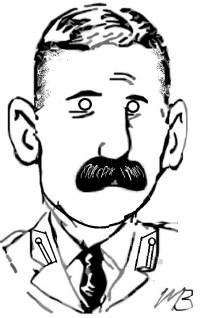
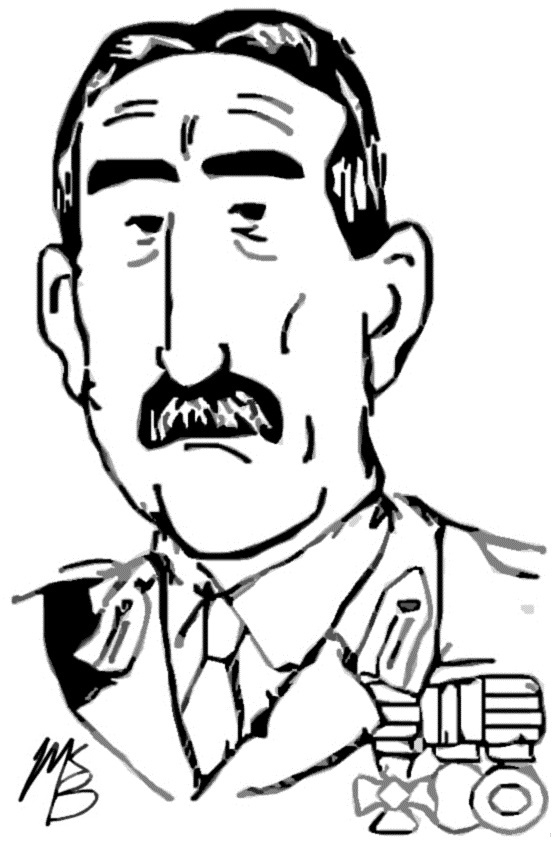
Brig. G.V. Whitehead

Brigadier Victor Whitehead
Royal Montreal Regiment
5th Infantry Brigade
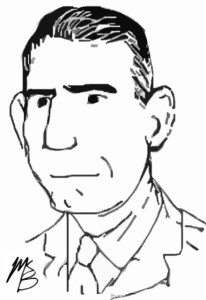
… one of the guests was Brigadier Victor Whitehead, my former commander at 5th Brigade. He was a bitter man. Having trained the brigade for two years, he had been replaced, as being too old, by a former signals corps officer, Brigadier Bill Megill, who at that time did not have a clue about infantry and who later proved to be one of the Army’s most controversial brigade commanders.

(Jeffrey Williams, Far From Home, 219)

Born on 8 October 1895 in Montreal, George Victor Whitehead was a First World War veteran, insurance executive, and long serving militia officer. He attended Bishop’s College before being commissioned a lieutenant in the 148th Battalion in December 1915. He embarked for England in October 1916 and joined the 14th Battalion in France in April 1917. He was invalided from a shell wound at Passchendaele, rejoined the 14th in May 1918, and ended the war at the rank of captain.
Continue reading

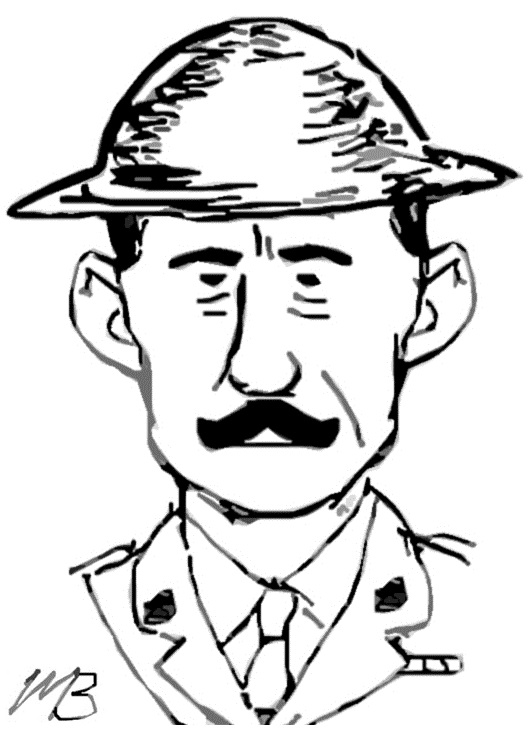
Brig. P.E. Leclerc

Brigadier P.E. Leclerc
5th Infantry Brigade
7th Canadian Division

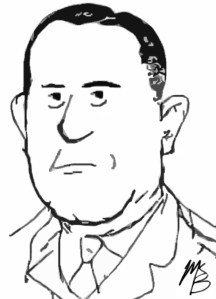
I am told that the breakdown in the brigadier’s health was a sequel to an order from H.Q. 2 Cdn Div requiring all staff officers and formation commanders to walk five miles every day.

(C.P. Stacey, “Recent Changes in Commands and Staff,” 1941)

Born on 20 January 1893 in Montreal, Pierre Edouard Leclerc was a First World War veteran, businessman, and long serving militia officer. He first enlisted as a private with 5th Field Company, Canadian Engineers in January 1915. He earned the Military Medal then took a commission in a new battalion raised in Quebec. He was wounded and shell shocked in August 1917 while attached to the 22nd Battalion. He served as commanding officer of Le Regiment De Joliette in the 1930s and by the outbreak of the Second World War was colonel of the 11th Infantry Brigade, Military District No. 4.

Continue reading

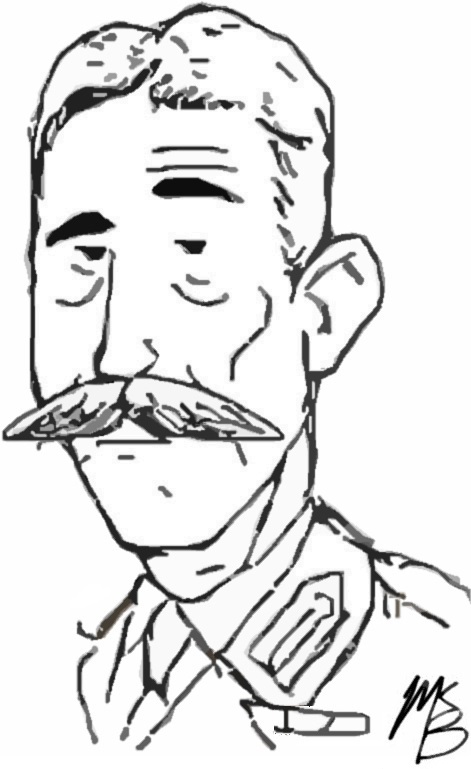
Brig. W.J. Megill

Brigadier W.J. Megill
Algonquin Regiment
5th Infantry Brigade

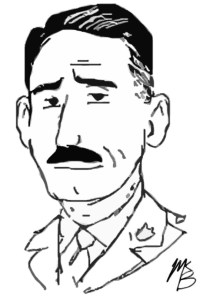
It was perfectly clear that the attack should have been called off at a very early stage in the morning. I suggested this not later than perhaps 8:00 or 9:00 o’clock. Instead the Corps commander was pressing the divisional commander and he was pressing us to get on with an attack which we knew was almost hopeless. Under these circumstances one does not quit. You do as much as you possibly can and hope that someone will see the light and give you some relief.

(Quoted in Copp, The Brigade, 88)

Born in Ottawa on 26 June 1907, William Jemmett Megill was a graduate of Queen’s University and RMC who had risen from the ranks of the Royal Canadian Corps of Signals which he joined in 1923. He was attending staff college in India when the Second World War began. Following general staff appointments with 3rd Division headquarters, he was promoted to brigadier with I Canadian Corps headquarters in June 1943. General Harry Crerar, described him as “the type of man who needs to experience in order to know. He is not what I would call imaginative … his lack of field experience definitely handicaps him.” To gain command experience, Megill request a revision in rank to lieutenant-colonel and was posted to the Algonquin Regiment in October 1943.

Continue reading

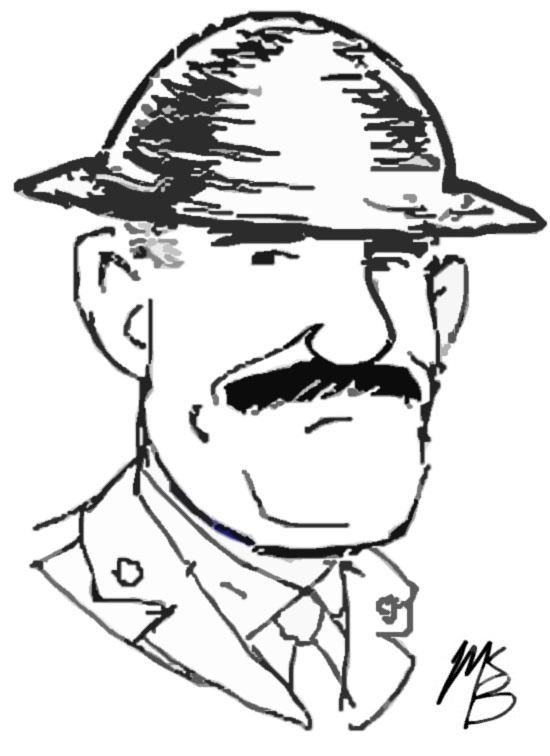
Col. Landry

Colonel Joseph Philippe Landry
2nd Training Brigade

Landry

Hon. Mr. W.H. SHARPE: May I ask the honourable gentleman a question?

Hon. Mr. LANDRY: Certainly.

Hon. Mr. SHARPE: At the present time the honourable gentleman’s own son is at the front fighting the battles of Canada and the Empire. I would like to ask him how he is going to meet that son when he returns to Canada?

Hon. Mr. LANDRY: That is a question of sentiment, not one of reason. My son has his ideas and I have mine.

(Senate Debates, 3 Aug 1917, 424)

Joseph Philippe Landry was son of Conservative Senator Auguste Charles Philippe Robert Landry (1846—1919), a strong francophone advocate and opponent of conscription. The younger Landry was born on 27 June 1870 in St. Pierre, Quebec. At the age of thirteen, he joined his father’s 61st (Montmagny) Rifles as a bugler. He became commanding officer of the 61st in 1901. In May 1915, Landry took command of the 5th Infantry Brigade in the CEF, but was replaced before it deployment to the field.

Continue reading

The Francophone

Brigadier General Tommy Tremblay
22nd (Royal French Canadians) Battalion
Tremblay

I am confident that the French Canadians will defend all their trenches with fierce vigour and will hold on at any price, even the price of death. Let us not forget that we represent an entire race and that many things—the very honour of French Canada—depend upon the manner in which we conduct ourselves. Our ancestors bequeathed to us a brave and glorious past that we must respect and equal. Let us uphold our beautiful old traditions.

 (Tremblay, Diary, 1916)

Thomas-Louis Tremblay would prove to be the 22nd Battalion’s most famous commanding officer. Notorious for his strict discipline, he was determined to prove the only all French-Canadian unit serving in the field was the finest in the CEF. Born in Chicoutimi, Quebec on 16 May 1886, he was a graduate of the Royal Military College, a civil engineer and member of the 1st Canadian Field Artillery.

Continue reading

The Schemer

Major General Sir David Watson, D.S.O.
2nd (Iron Second) BattalionWatson

Had he not been colonel he would have received the V.C. for this. Ypres made him a marked man, and it left its mark on him. His friends say that he aged ten years in the ten days, for he and his battalion were in the fiercest part of the fighting.

(F. A. McKenzie, Through the Hindenburg Line, 1918, 10)

David Watson was a sportsman, journalist and owner of the Quebec Morning Chronicle. He was born in Quebec City on 7 February 1869. In his youth, Watson played for the Quebec Hockey Club and became active in the 8th Royal Rifles. Watson, a Conservative Party supporter and friend of Militia Minister Sam Hughes, was selected to command the 2nd Battalion when the Canadian Expeditionary Force assembled at Valcartier.

Continue reading

The Ruthless

Brigadier General John M. Ross
29th (Vancouver) Battalion JMRoss

At the end of September 1916, twenty German prisoners were transferred from the 28th Battalion to the 29th under the command of John Munro Ross. After only eleven prisoners arrived to the “Corps Cage,” the 6th Brigade command staff began to make inquiries. Ross clarified the situation:

“The enemy party mentioned ran into bad luck and after a misunderstanding with one of my L.G. [Lewis Gun] crews they were too dead to be used as prisoners.”

Continue reading

The Imperialist

Major General A. H. Macdonell, D.S.O.
Royal Canadian RegimentAHMacdonell

Theirs was not a spectacular adventure.

Modern warfare had lost that glamour which in centuries past stirred the imagination of peoples. When whole nations are aligned on the battle fields in a long mass of muddy burrows, war becomes horribly monotonous, yet officers and privates faced the same dangers and they shared the same fate.

(Macdonell, Speech at War Memorial, St. John, N.B., 10 June 1925)

Born in Toronto on 6 February 1868, Archibald Hayes Macdonell was a decorated professional soldier and veteran of multiple British imperial adventures in Africa. He had fought in the Boer War, the Aro Expedition and military operations in Nigeria with the West African Frontier Force. During the South African campaign, he had briefly been taken prisoner by Boer General Christian De Wet and earned the Distinguished Service Order.

Continue reading