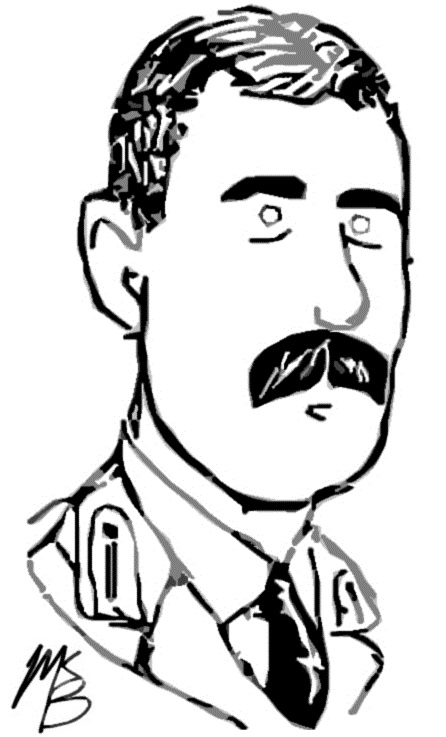
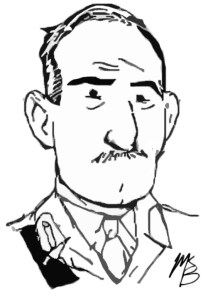
Lt-Gen. C. Foulkes

Lieutenant-General Charlie Foulkes
3rd Infantry Brigade
2nd Canadian Division
II Canadian Corps
I have come to the conclusion that attempts to limit the use of force by banning certain types of weapons or by partial disarmament including all types of nuclear weapons, does not appear to be the right answer to this dilemma. I take issue with those who say let us go back to conventional weapons, as if it was all right to settle disputes by conventional means when only soldiery get killed but the world is saved from destruction.

(National Post, 9 Mar 1963, 6)

Born on 3 January 1903 in Stockton-on-Tees, England, Charles Foulkes grew up in London, Ontario and joined the Royal Canadian Regiment after graduating from Western University in 1926. Following staff posts to militia district headquarters in Toronto and Kingston, he attended staff college at Camberley, England. At the outbreak of war in 1939, he was appointed brigade major when the 1st Division went overseas in December 1939. By September 1940, he was back in Canada as general staff officer for the newly formed 3rd Canadian Division.
Continue reading

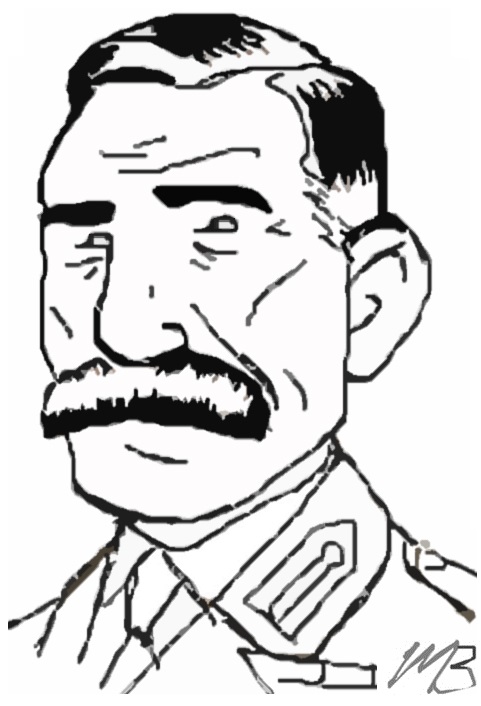
Brig. M.H.S. Penhale

Brigadier Matthew Penhale
4th & 3rd Infantry Brigades

[On nuclear attack] Surely it is better to tell the people everything than to withhold information they must have to ensure survival.

(Quoted in Star-Phoenix, 16 Jan 1960, 5)

Born in Sherbrooke, Quebec on 13 February 1895, Matthew Howard Somers Penhale enlisted with the Royal Canadian Horse Artillery in 1915 after graduation from RMC. He was wounded at Cambrai in 1917 and made a professional career in the army after the First World War. After the outbreak of war in 1939, Penhale served as assistant adjunct general of Canadian Military headquarters in London before returning to Canada to head the directorate of staff duties at National Defence Headquarters.

Continue reading

Maj-Gen. C.B. Price

Major-General C. Basil Price
3rd Infantry Brigade
3rd Canadian Division

In this ideological struggle we must call upon our physical forces. We must build up our armed forces and industrial potential, we must be prepared for sacrifices, such as high taxes and austerity, if we are to prevent another world conflict.

(Quoted in Montreal Gazette, 10 Nov 1949, 13)

Born on 12 December 1889 in Montreal, Charles Basil Price was a decorated First World War veteran, Canadian Legion spokesman, diary farmer, and former commanding officer of the Royal Montreal Regiment. A member of the Victoria Rifles since 1905, he enlisted with the 14th Battalion in September 1914. While on patrol at St. Julien in May 1915, he earned the Distinguished Conduct Medal for rescuing a comrade: “Company Sgt Major Price went out and shooting the two Germans who had wounded him brought in the man, undoubtedly saving life. His conduct all through the action was of the most meritorious and self-sacrificing kind.”

Continue reading

Brig. T.G. Gibson

Brigadier T. Graeme Gibson
Royal Winnipeg Rifles
9th, 3rd, 2nd & 7th Infantry Brigades

We in Canada inherited the regimental system and reaped its benefits in World War II and Korea … In our regiments from coast to coast, the system kept the militia alive for more than a century in peacetime and provided a warm human environment to the Canadian fighting man in the brutal adversities of war.

(T. Graeme Gibson, National Post, 5 May 1973, 36)

Born on 26 April 1908 in Toronto, Thomas Graeme Gibson joined the Queen’s Own Rifles in 1925 and became a Permanent Force officer with the Royal Canadian Regiment in 1931. He attended the war staff college at Camberley, England and first served as liaison staff officer with the 2nd Canadian Division in 1940. Following general staff duties with 2nd Infantry Brigade he was appointed commanding officer of the Royal Winnipeg Rifles in January 1942. He succeeded two First World War veterans twenty years’ his senior.

Continue reading

The Quiet Man

Brigadier General R. G. E. Leckie
16th (Canadian Scottish) BattalionLeckie_R

Spare of figure, short of stature, with an almost ascetic type of face, a trait which was accentuated rather than disturbed by the scar on the cheek received when he was mauled by a leopard in a big game hunt in Somaliland, the original Commanding Officer of the 16th was of a reserved disposition, even shy. In action he was cool and observant; he talked, and gave his orders, in a conversational tone. He showed not the slightest sign of irritation; and what such a temperament means in battle only the soldiers who have been through the turmoil of it can truly estimate.

(Urquhart, History of the 16th Battalion CEF, 1932, 97)

Born in Halifax on 4 June 1869 Robert Gilmour Edwards Leckie was a soldier and mining engineer in British Columbia. He graduated from the Royal Military College, served in South Africa and Somaliland, and organized the 72nd Seaforth Highlanders in 1910. During a safari on the Somaliland frontier in 1904, a wild leopard attacked him. Of the incident Leckie explained, “I brought the skull and skin home with me.”

Continue reading

The Commander

Brigadier General G. S. Tuxford, D.S.O.
5th (Tuxford’s Dandies) BattalionTuxford

On the 24th [April 1915] Major Hilliam, my adjutant, called me out about 4 o’clock in the morning to witness a huge wall of greeny, yellow smoke that was rolling up the hillside. We had no idea what it was, but thought it might have something to do with the reported gas attacks of the preceding day. We were not long left in doubt.

(Tuxford, “After Action Report,” 10 Mar 1916)

Born in Wales on 7 February 1870, George Stuart Tuxford was a Moose Jaw homesteader, rancher and militiaman. In August 1914, he received authorization to raise two mounted units from the West. He later explained, “In the one battalion I placed the 12th, 16th, 27th, 29th, 30th, 31st, 35th (Light Horse) and Corps of Guides. This battalion became the 5th Canadian Infantry Battalion, and later on being asked to select a name for the battalion, I could think of no better than that of Western Cavalry, and as such they remained the 5th Battalion, Western Cavalry.”

Continue reading