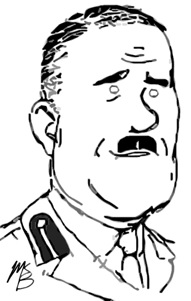
Brig. T.G. Gibson

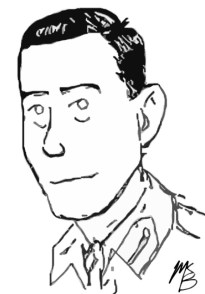
Brigadier T. Graeme Gibson
Royal Winnipeg Rifles
9th, 3rd, 2nd & 7th Infantry Brigades

We in Canada inherited the regimental system and reaped its benefits in World War II and Korea … In our regiments from coast to coast, the system kept the militia alive for more than a century in peacetime and provided a warm human environment to the Canadian fighting man in the brutal adversities of war.

(T. Graeme Gibson, National Post, 5 May 1973, 36)

Born on 26 April 1908 in Toronto, Thomas Graeme Gibson joined the Queen’s Own Rifles in 1925 and became a Permanent Force officer with the Royal Canadian Regiment in 1931. He attended the war staff college at Camberley, England and first served as liaison staff officer with the 2nd Canadian Division in 1940. Following general staff duties with 2nd Infantry Brigade he was appointed commanding officer of the Royal Winnipeg Rifles in January 1942. He succeeded two First World War veterans twenty years’ his senior.
Continue reading

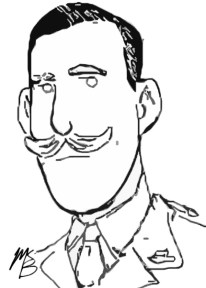
Maj-Gen. A.E. Potts

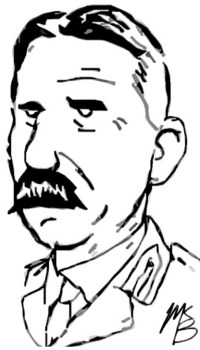
Major-General A.E. Potts
Saskatoon Light Infantry
2nd Infantry Brigade
6th Canadian Division

I have often wondered: I commanded a division, I know training-wise, discipline-wise, I did a good job. I have no inhibitions about that. How I would have done if I had commanded a division in battle, I have no idea …

(Potts, interview, 15 Oct 1971)

Born on 24 October 1890 in Blyth, Northumberland, England, Arthur Edward Potts was a First World War veteran, University of Saskatchewan diary professor, and head of the university’s officer training corps. Educated at the University of Edinburgh with a Master’s degree from Cornell, he worked as an instructor at Ames College in Iowa prior to enlisting with the Canadian Expeditionary Force. In June 1915, he joined with the 2nd Universities Company and reinforced the PPCLI as a private in France.

Continue reading

Brig. M.P. Bogert

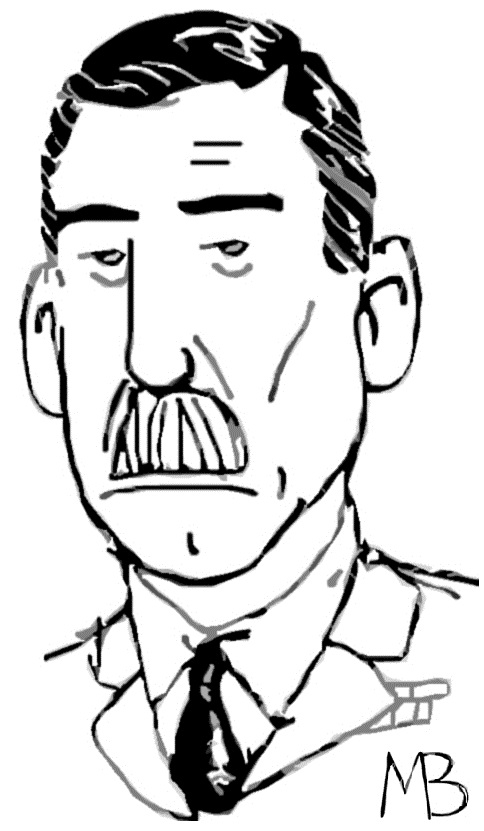
Brigadier Pat Bogert
West Nova Scotia Regiment
2nd Infantry Brigade
Bogart

He always seemed to rise to the occasion when the going got tough, and set a wonderful example. He was an extremely brave man, and was invariably to be found somewhere up forward, personally leading the battalion, however stiff the climb or hard the marching. When he gave an order one always felt that his reasoning was sound and that he would not knowingly send you into an untenable position.

(Bill Thexton, quoted in John Gardam, Canadians in War and Peacekeeping, 10)

Born on 17 March 1908 in Toronto, Mortimer Patrick Bogert was an RMC graduate and Permanent Force officer since 1930. Still a lieutenant with the RCR shortly before the outbreak of the war, he rose quickly following mobilization and served as a general staff officer with the 1st Division. By late 1941 he was a lieutenant colonel attached as an observer with the British Army in Egypt and Libya. With this fighting experience from North Africa, he took command of the West Nova Scotia Regiment from July 1942 until January 1943, when temporarily assigned to staff of II Canadian Corps. By popular demand of his officers, he resumed command in June 1943.

Continue reading

Maj-Gen. B.M. Hoffmeister

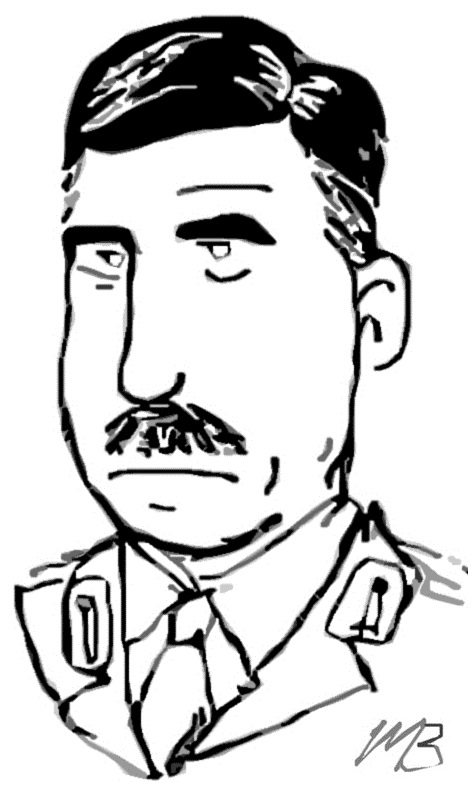
Major-General Bert Hoffmeister
Seaforth Highlanders of Canada
2nd Infantry Brigade

5th Armoured Division
Hoffmeister

I’ll never forget one of my most embarrassing moments, having given my usual spiel, and having told them how important it was to keep right up close to the shell bursts, that the first shell bursts were all forward and there was absolutely no danger. In keeping up, you got to the German positions before they got their heads up, it reduced casualties and so on … when one round landed behind us. We were all flat on the ground, of course … but every soldier in that company looked around at me as if to say, “OK wise guy, what have you got to say about this?”

(Hoffmeister quoted in Delaney, The Soldiers’ General, 124)

Widely regarded as Canada’s most successful and respected general in the Second World War, Bertram Meryl Hoffmeister commanded a battalion, a brigade, and a division from the landings at Sicily, through the Italian campaign until the final battles in Northwest Europe. Born in Vancouver on 15 May 1907, he was a lumber sales manager and member of the Seaforth Highlanders of Canada since 1927. He mobilized as a captain in September 1939 and three years later assumed command of the regiment he would lead into battle.

Continue reading

Maj. Gen. Loomis

Major General F.O.W. Loomis
13th (Royal Highlanders of Canada) Battalion
Loomis

We have laid the bodies of many of our best under rows of little wooden crosses. We love those comrades who have fallen; we remember their deeds, and recall their deaths with pride and joy, and we know that their souls go marching with us. We know that the spirit of devotion that animated them remains with us, and we feel that the enemy has no battalions, no gas, guns, shells, nor bombs which will dampen or deter this spirit of determination — the Canadian Spirit.

 (Loomis to W. F. Gibson, The Listening Post, 1 Dec 1917, 3)

Frederick Oscar Warren Loomis was a Montreal manufacturer and member of the militia since 1886. He was born in Sherbrook, Quebec on 1 February 1870. As commander of the Royal Highlanders, Loomis led the 13th Battalion to France in February 1915. He guided the Highlanders through the first major action at Second Ypres and was promoted to command the 2nd Brigade in January 1916.

Continue reading

The Capitalist

Brigadier General Robert P. Clark, D.S.O. M.C.
14th (Royal Montreal Regiment) & 2nd BattalionsRPClark

This Christmas, I believe, will be your last in France. That the next may find you Home again, safe and happy, and with your loved ones, is my most earnest wish. The war is drawing to a close. Your many trials and privations will soon be forgotten. The horrors of this war will soon become to you a memory, dimmed by happier things to come. But the glory of this war, though some day a memory too, can never fade.

(Gen. Clark to The Listening Post, 2 Nov 1918)

Robert Percy Clark was a Vancouver businessman, investor, real estate agent and capitalist. He was born in London, England on 17 April 1874. He worked on the London Stock Exchange and volunteered to fight in the Boer War. He later immigrated to British Columbia, where he pursued various gold mining enterprises. He served in the 5th and 50th Regiments under Arthur Currie. As part of the First Contingent of the Canadian Expeditionary Force, Clark became staff-officer to Currie with the 2nd Brigade.

Continue reading

The Liaison

Brigadier General John Embury
28th (Northwest) BattalionEmburyJFL

Words can but inadequately express our feelings. Your personality at work or at play was an inspiration to all ranks, your personal disregard of danger, your sympathy with the wounded, and your human understating of our frailties will always dwell in our memories.

(Illuminated address to Embury from 28th Bn. Officers, 1920)

John Fletcher Leopold Embury was a Regina lawyer and commanding officer of the 95th Saskatchewan Rifles. Born on 10 November 1875 in Hastings County, Ontario, he was a graduate of the University of Toronto and Osgoode Hall. In late 1914, Embury was authorized to form the 28th Battalion from the Northwest. The battalion’s official history declared, “No better choice could have been made. The colonel was a man’s man and won the confidence of all ranks…”

Continue reading