Lieutenant Colonel Jack Mersereau, D.S.O.
25th (Nova Scotia Rifles) Battalion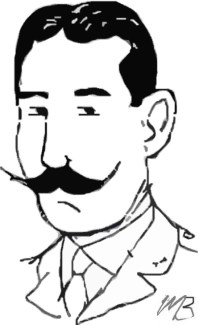
He talks spontaneously but with deliberation at uncommon words he pauses an instant for he has to visualize the word before he can say it. He tends to displace words or syllables. If he wants to say ‘tomorrow’ he will often say \yesterday’ and sometimes he will not recognize the mistake. He mixes up the person or verbs, he will say ‘he’ instead of ‘she’ or ‘we’ instead of ‘they.’ At times will say damn in place of another word.
(Medical consultant report on Lt. Col. Mersereau, 9 July 1919)
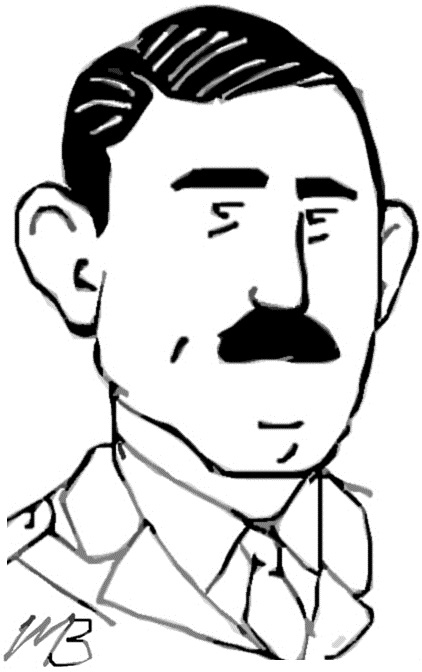
While carrying a message to Brigadier General Arthur Currie during the Second Battle of Ypres, Major Chalmers Jack Mersereau was struck in the head by a piece of shrapnel. Although he managed to make the delivery to headquarters, he slipped into unconsciousness. Hospitalized for the next two months, he found that he had lost his power speech. Fluent in English and French with some German before the war, he struggled to regain basic vocabulary, which remained partially impaired for the rest of his life.
 World War Graphic History