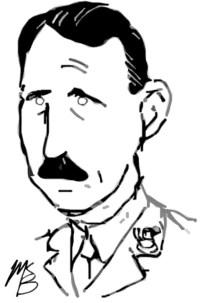
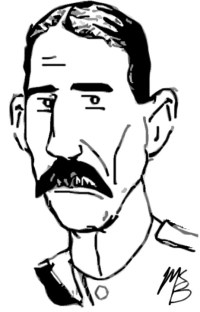
Col. Humphreys

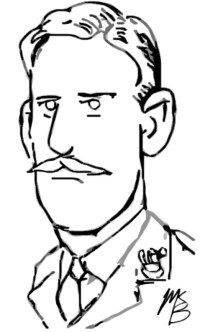
Colonel E. Thomas Humphreys
1st Bn., Leinster Regiment (Royal Canadians)
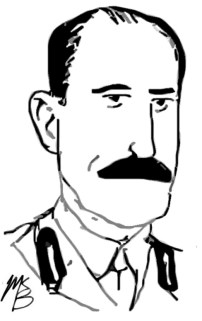
Humphreys

The officers of the First Battalion, Leinster regiment, known from their historical connection with the Dominion as the Royal Canadians, which regiment has just disbanded after presenting their colors to the King at Windsor Castle, are giving their regimental plate and trophies in trust to the Canadian Government “until the regiment is again raised, as a token of their regards for the Great Dominion, which gave birth to the battalion.”

(The Expositor, 29 Jun 1922, 1)

Born in London in Dover, Kent on 5 November 1878, Edward Thomas Humphreys graduated from Sandhurst in 1898 and was  commissioned with the Lancashire Fusiliers. He served in the Boer War and in France, Salonika and the Middle East during the Great War. In May 1918, he was promoted to command the 179th Brigade in the 60th Division, Egyptian Expeditionary Force. In September 1919 he transferred from the Lancashires to take command of the 1st Battalion, Leinster Regiment.
Continue reading

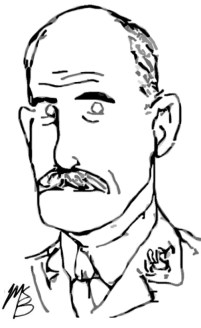
Lt-Col. Raynsford

Lieutenant-Colonel R.M. Raynsford
1st Bn., Leinster Regiment (Royal Canadians)
Raynsford

As you are no doubt aware we, the “Royal Canadians” together with other Irish regiments are being disbanded. I am hoping you may see your way to use your powerful influence to assist us in our efforts to be retained in the British army as the Prince of Wales’s Royal Canadian Regiment, our original title.

While all ranks desire the honor of still representing Canada, I have a personal interest as my wife is the grand daughter of Sandfield Macdonald, the first Prime Minister of Ontario.

(R. M. Raynsford to the prime minister, Ottawa Journal, 14 Mar 1922, 6)

Born in London on 19 May 1877, Richard Montague Raynsford married twenty-three-year-old Daphne Mildred Pemberton in England in April 1911. The daughter of an Indian Army colonel, she was the granddaughter of John Sandfield Macdonald (1812–1872), Ontario’s first premier after Canadian Confederation in 1867. The son of a Madras Army colonel, Raynsford was commissioned a second lieutenant in the Leinster Regiment in 1897, served in the Boer War and was adjutant in the 4th Battalion until 1908.

Continue reading

Lt-Col. Wildblood

Lieutenant-Colonel E.H. Wildblood
1st Bn., Leinster Regiment (Royal Canadians)
Wildblood

The following are the considered opinions submitted by the Court …

That the situation at present obtaining in Palestine is exceedingly dangerous and demands firm and patient handling if a serious catastrophe is to be avoided.

(Maj-Gen. Palin, Brig. Wildblood, and Lt-Col. C.V. Edwards, Palin Commission, 1920)

Born on 2 May 1878 in Cheshire, England, Edward Harold Wildblood was a solider, sportsman, and big game hunter. He fought as a trooper in Roberts’ Horse during the Boer War and was commissioned with the Leinster Regiment in 1900. He served with the 1st Battalion in the heavy fighting at Ypres through to its deployment on the Salonika front. By early 1917, he had succeeded Lieutenant-Colonel J.D. Mather in command.

Continue reading

Lt-Col. Mather

Lieutenant-Colonel J.D. Mather
1st Bn., Leinster Regiment (Royal Canadians)
Mather

I was just sitting down to breakfast (in the M de Prémesques farm) when the greatest burst of fire I have every heard broke out … C and D companies (Leinster Regt) had been driven out of their trenches by the enemy’s attack.

(J.D. Mather, diary, 20 October 1914 in 2nd Bn., Leinster Regiment War Diary)

Born in North Shields, Northumberland, England on 17 March 1872, John Dryden Mather had been commissioned with the Leinster Regiment in 1892 and served in the Boer War. Following sick leave for bronchitis in April 1915, Mather joined the 1st Leinsters on 26 June 1915. He took command after Lieutenant-Colonel Charles Conyers had been mortally wounded in action on 11 May. Following a relatively quiet summer after the heavy fighting of late 1914 and early 1915, the 1st Leinsters learned their division was to be redeployed from the Western Front. In November 1915, the 27th Division sailed from Marseilles “for an unknown destination.”

Continue reading

Maj. Conyers

Major Charles Conyers†
1st Bn., Leinster Regiment (Royal Canadians)
Conyers

6pm – Trench in firing line lost. Battalion ordered to counter attack. Left about 11pm. ‘C’ Coy gained the captured trench but were obliged to retire owing to enfilade machine gun fire being brought to bear on them. Major Conyers (commanding Bn) mortally wounded.

(1st Bn., Leinster Regiment War Diary, 11 May 1915)

Charles Conyers was born on 19 November 1867 at his family estate Castletown Conyers in Limerick, Ireland. He had been commissioned since 1889, served in the Boer War, and was a major with the Royal Irish Fusiliers on the out break of the Great War. He transferred to the 1st Battalion, Leinster Regiment to succeed Lieutenant-Colonel C.B. Prowse on 29 April 1915

Continue reading

Lt-Col. Prowse

Lieutenant-Colonel C.B. Prowse†
1st Bn., Leinster Regiment (Royal Canadians)

Between the newly captured German lines the Brigadier was cheering us on, when a big shell dropped about 20 or 30 yards away, and a piece must have hit him on the explosion for he was seen to fall. Several men rushed to his assistance. Before he died he cheered the men, and told them to keep up the name of the “Stonewall Brigade.”

(The Wells Journal, 14 July 1916, 5)

Charles Bertie Prowse was born in West Monkton, England on 23 June 1869. He had been commissioned since 1889 and served as a staff officer during the Boer War. He was commanding officer of the 1st Battalion, Prince Albert’s (Somerset Light Infantry) Regiment during the early fighting of 1914 in France. He briefly took command of the 1st Battalion, Leinster Regiment in March 1915 until his promotion to brigadier general of the 11th Infantry Brigade the next month.

Continue reading

Lt-Col. White

Lieutenant-Colonel S.R.L. White
1st Bn., Leinster Regiment (Royal Canadians)
White

The new colours which you have just present have yet to justify existence, but I have no hesitation in saying that we are willing to a man to do under them what we have done under the old ones, to keep them flying for the honour of the Regiment and the glory of the British Army, whether in this country or in any other where duty calls us to fight for our King and country.

(Col. White, 4 Feb 1913, in F.E. Whitton, The History of the Prince of Wales’s Leinster Regiment, vol. 1, 167)

Samuel Robert Llewellyn White was born in Blackrock, County Dublin, Ireland, on 4 June 1863. He was commissioned with the Leinster Regiment in 1885 and served as a captain during the Boer War, for which he was awarded the Distinguished Service Order. He became commanding officer of the 1st Battalion in 1911. As the unit was stationed in Fyzabad, India at the outbreak of the Great War, it did not arrive to France until December 1914.

Continue reading