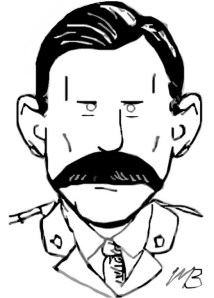
The Undeterred

Lieutenant Colonel Donald Sutherland, D.S.O.
52nd, 71st, 74th, & 160th Battalions
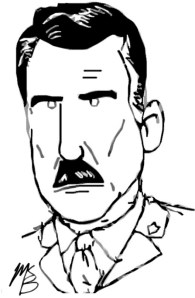
Sutherland

A man that can fight, a fighter who’s fought,
A man to whom danger to self counts for naught,
A man all the way with a conduct sheet clean,
As a man and a soldier our Colonel’s beloved.
A man; Colonel Sutherland, that’s whom I mean.

(Lieut. L. Young, 71st Bn. “Our Colonel,” Bruce in Khaki, 12 Oct 1917, 2)

Born on 3 December 1879, Donald Matheson Sutherland was a Norwich County physician, militia officer in the 24th Grey Horse and member of Loyal Orange Lodge No. 999. In September 1914, he enlisted as a captain with the 1st Battalion. Wounded during the second battle of Ypres on 24 April 1915, he was invalided to Canada. After raising the 71st Battalion from Woodstock, he again embarked for England in April 1916.
Continue reading

The Minister

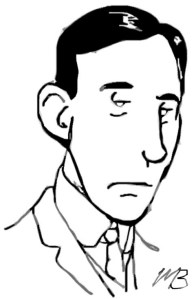
Lieutenant Colonel C. C. Ballantyne
245th (Canadian Grenadier Guards) BattalionBallantyne

Mr. HUGHES: The hon. gentleman on his return from overseas, was one of the most wrathy men I ever met.

Mr. BALLANTYNE: Disappointed.

Mr. MCMASTER: The remarks of the ex-Minister of Militia may be very interesting, but I would ask him to speak a little louder, so that we all may get the benefit of them.

Mr. HUGHES: I was saying that the present Minister of the Marine and Fisheries, on his return from England was—I will not say the maddest man, but one of the most intensely disappointed men that it has ever been my privilege to meet.

(Debates, 10 Apr 1918, 597)

Born on 9 August 1867, Charles Colquhoun Ballantyne was a Montreal industrialist and millionaire through marriage. He raised the 245th Battalion in late 1916 and departed for England with less than three-hundred volunteers in May 1917. After the breakup of his unit, Ballantyne became one of the hundreds of unemployed senior officers in London.

Continue reading

The Unionist

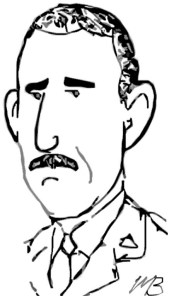
Major Richard C. Cooper
7th (1st British Columbia) BattalionRCCooper

People’s thoughts are now turning to memorials to perpetuate the memory of our fallen, but unfortunately, their thoughts are turning to stone and iron to perpetuate flesh and blood. That is wrong. It is not worthy of the men who gave their lives that we might be free. I suggest that there is a greater, nobler, finer memorial to be erected to our fallen. I suggest that education is the only possible, adequate method of perpetuating the memory of the “immortals.”

(Cooper, Debates, 10 Mar 1919, 340)

Born in Dublin, Ireland on 31 December 1881, Richard Clive Cooper was a police constable in Rhodesia and South Africa where he was associated with the imperial projects of Cecil Rhodes. After serving in the Matabele War and the Boer War, he immigrated to British Columbia in 1906. Cooper enlisted in Lieutenant Colonel Hart-McHarg’s 7th Battalion in September 1914. He fought at Second Ypres before being recalled to Canada in order to aid training and recruitment efforts.

Continue reading

The Rancher

Lieutenant Colonel Norman Lang
65th (Saskatchewan) BattalionLang

No doubt, the graves of the men who have fallen in France will be as well looked after as is possible, but those who have been over there know that numbers of men have been blown to atoms. Something should be done in their honor, something that would serve as a permanent reminder of their sacrifice.

(Col. Lang, Saskatoon Daily Star, 21 Jan 1919, 17)

Born on 4 August 1879 in Exeter, Ontario, Norman Lang was a farmer and rancher in Allan, Saskatchewan. The grey-eyed, moustachioed, six-foot-three Lang was a member of the 29th Light Horse and veteran of the Boer War. In April 1915, he was authorized to raise the 65th from the Saskatoon area.

Continue reading