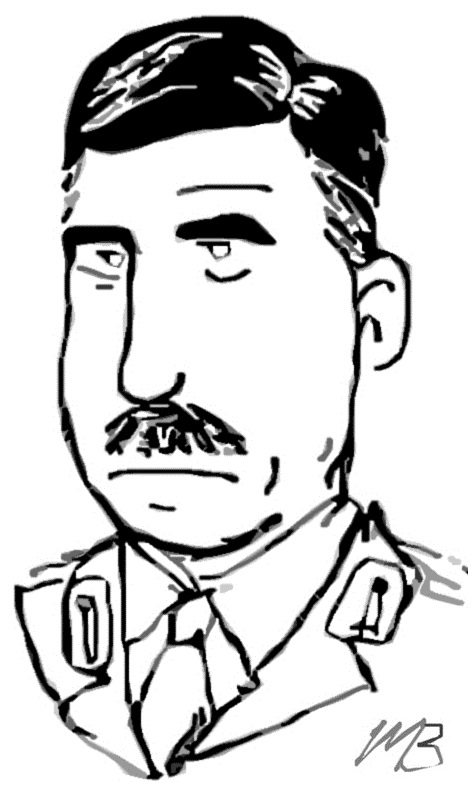
Brig. R.H. Beattie

Brigadier R.H. Beattie
Canadian Fusiliers (City of London)
13th & 14th Infantry Brigades
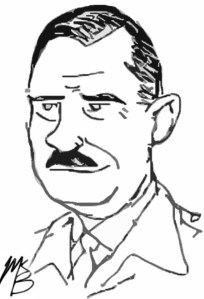
Whilst leading his company he was held up by an enemy machine-gun post. He, with a section, outflanked the post and then personally with great courage rushed it, shooting one of the enemy, taking prisoner another, and capturing a gun.

(M.C. citation, 3 Oct 1918)

Born on 30 September 1895 in London, Ontario, Russell Hilton Beattie was a decorated First World War veteran and militia officer. He went overseas as a lieutenant in the 135th Battalion and transferred to the 20th Battalion in France in February 1918. He was wounded in action during the Hundred Days’ Offensive but earned the Military Cross for conspicuous gallantry. After mobilization in September 1939, he served as chief recruiting officer for No. 1 Military District Southwestern Ontario) and barracks commandant in Windsor before taking a senior officers’ course at RMC.
Continue reading

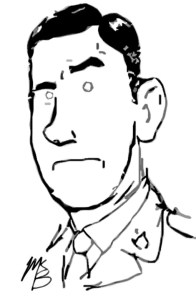
Brig. D.R. Sargent

Brigadier Roy Sargent
Canadian Scottish Regiment
6th, 13th & 14th Infantry Brigades

With a last name like Sargent—Brig. Roy Sargent seemed destined to serve in the military, and that is exactly what he did for more than 30 of his 86 years.

(Nanaimo Daily News, 7 Nov 1981, 15)

Born on 8 October 1895 in Campbellford, Ontario David Ross Sargent had commanded the Canadian Scottish Regiment as colonel until 1938, when he retired to the reserves. He had enlisted with the 53rd Battalion as a private and took a commission with the 232nd Battalion in June 1916. He served in France with the 5th Battalion and demobilized at the rank of captain. He continued militia service with the Canadian Scottish, serving as 2nd Battalion commander in 1930 before promotion to colonel of the whole regiment in 1934.

Continue reading

Maj-Gen. H.W. Foster

Major-General Harry Foster
4th Princess Louise Dragoon Guards
Highland Light Infantry of Canada
13th & 7th Infantry Brigades
4th & 1st Canadian Divisions
Foster

He was just as guilty of murder as I was at the time … or any other senior officer in the field during a battle. The difference between us was that I was on the winning side. That makes a big difference.

— Gen. Foster on Kurt Meyer

(Quoted in Tony Foster, Meeting of Generals, 1988)

Born on 2 April 1904 in Halifax, Nova Scotia, Harry Wickwire Foster left Royal Military College the in 1924 to take a commission with the Lord Strathcona’s Horse. His father, Major-General Gilbert Lafayette Foster, had been director of medical services for the Canadian army during the First World War. With the outbreak of Second World War in September 1939, Foster was appointed brigade major of the 1st Canadian Brigade in England.

Continue reading

The Liaison

Brigadier General John Embury
28th (Northwest) BattalionEmburyJFL

Words can but inadequately express our feelings. Your personality at work or at play was an inspiration to all ranks, your personal disregard of danger, your sympathy with the wounded, and your human understating of our frailties will always dwell in our memories.

(Illuminated address to Embury from 28th Bn. Officers, 1920)

John Fletcher Leopold Embury was a Regina lawyer and commanding officer of the 95th Saskatchewan Rifles. Born on 10 November 1875 in Hastings County, Ontario, he was a graduate of the University of Toronto and Osgoode Hall. In late 1914, Embury was authorized to form the 28th Battalion from the Northwest. The battalion’s official history declared, “No better choice could have been made. The colonel was a man’s man and won the confidence of all ranks…”

Continue reading