The Marksman

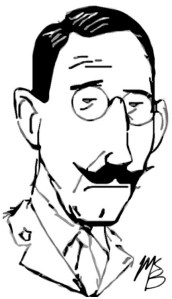
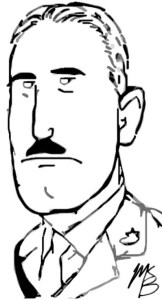
Lieutenant Colonel W. E. Forbes
145th (Kent—Westmorland) Battalion
Forbes

Shooting constituted one department in which the 145th Infantry Battalion excelled. Its subsequent success in sniping derived largely from the painstaking effort of Lt. Col. Forbes, who was—as has been noted earlier—a notable marksman, and twice a member of Canada’s Bisley Rifle Team.

So Lt. Col. Forbes offered his Battalion the benefit of more experience in musketry than the average Officer Commanding possessed.

(Pte. V.E. Goodwin , Memories of the Forgotten War, 1988, 34)

Born on 8 August 1868 in Richibucto, New Brunswick, William Ellis Forbes was a merchant and farmer with seventeen years’ experience in the 73rd Regiment. In national and international rifle contests he demonstrated excellent marksmanship abilities and competed at the Bisley shooting ranges in England.

Continue reading

The Military Scientist

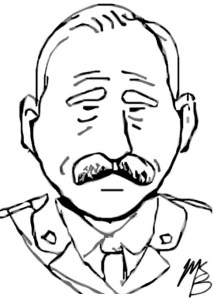
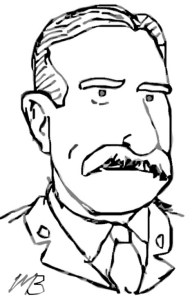
Lieutenant Colonel James Ballantine, D.S.O.
76th and 109th BattalionsBallantine

They have got a new Col. in this battalion since we came to it. His name is Ballantine, he has been to France twice, and this is his third battalion to command so he has had a little experience anyway. He seems to take a great interest in the work of the men. He says he don’t care what kind of officers he has as long as he has good N.C.O.’s and men, all that the officers are good for is figure heads in his mind.

(J. H. Bennett, 109th Bn. to Garnet Bennett [brother], 22 Nov 1916)

Born on 3 September 1876 in Georgetown, Ontario, James Ballantine was a member of the 20th Halton Rifles and received military training at Toronto, Hayland Island, Hythe and Aldershot. He fought in the Boer War and was awarded the Queen’s Medal for gallantry.

Continue reading

The Blue Blood

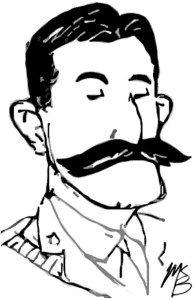
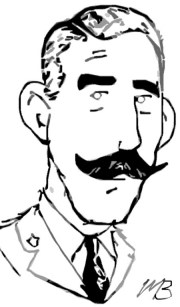
Lieutenant Colonel A. L. Bonnycastle
200th (Bonny’s Buccaneers) Battalion Bonnycastle

I am raising a battalion of stalwarts that will make the Germans hop.

(Bonnycastle, Winnipeg Tribune, 8 March 1916, 5)

Angus Lorne Bonnycastle was a former Conservative member of the Manitoba legislature (1907—1911), a Winnipeg barrister and provincial police magistrate. Born on 3 November 1873 in Campbellford, Ontario, Bonnycastle moved to Manitoba as a school teacher in 1893. He was a member of one of Ontario’s most prominent military families. His great-grand father, Sir Richard Henry Bonnycastle (1791—1847) helped to suppress the 1837 Rebellion and oversaw fortification construction in Kingston. His father Major R. H. Bonnycastle (1843—1911) had participated in the Fenian Raids and the Northwest Rebellion.

Continue reading

The Little Fellow

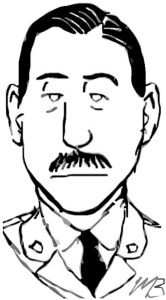
Lieutenant Colonel Frank Burton
216th (Toronto Bantams) BattalionBurton

The Bantam Battalion is no mere novelty, but will prove to be a real fighting unit, and the bantam’s motto might well be, Multum in Parvo [Much in Little], for they are every inch soldiers in breadth as well as height, and Gulliver would find them very tough Lilliputians to handle.

(Toronto Globe, 25 Feb 1916, 6)

Frank Lindsay Burton was born on 12 February 1876 in in Barrie, Ontario. After graduating from Upper Canada College he joined the 35th Simcoe Foresters. When he moved to Toronto, he served as a militia officer with the 9th Mississauga Horse. In 1915, he enlisted as a senior major with Lieutenant Colonel Sam Beckett’s 75th Battalion.

Continue reading

The Partisan

Lieutenant Colonel S. G. Robertson
17th (Nova Scotia Highlanders) BattalionRobertson

As a matter of fact Robertson was quite hopeless as a commanding officer. When I obliged to tell him so he made at least 3 answers in excuse all of which made me exclaim to him: ‘Why here, out of your own mouth, you more than ever convince me of your unfitness for command.”

(Gen. E..A. Alderson to George Perley, 12 Mar 1915)

Born on 13 September 1868 in Bothwell, Scotland, Struan Gordon Robertson was a Nova Scotia barrister, militia major, a Conservative Party activist and nominated candidate for the riding of Pictou. When Militia Minister called on militiamen from across the country to assemble at Valcartier, Quebec in August 1914, Robertson arrived with 500 Nova Scotia determined to go overseas as a unit. When Hughes derided Robertson, he complained to his friend Prime Minister Robert Borden, who was equally interested to see a full battalion representing their home province. Robertson was given command of the 17th Battalion.

Continue reading

The Boer Beater

Lieutenant Colonel P. J. Daly, D.S.O.
27th (City of Winnipeg) BattalionDaly

Mayor Davidson received a communication today from Lieut.-Col. P. J. Daly, commanding the City of Winnipeg battalion, now somewhere in France, stating that he had rounded up two more guns, making a total of six. He said he would donate them to the city, if desired. His worship promptly accepted the offer. Congratulations were sent to the officer. The guns will be placed eventually on historic spots in the city.

(Winnipeg Tribune, 9 Aug 1917, 5)

Patrick Joseph Daly took command of the 27th Battalion on 15 April 1916 following Lieutenant Colonel Irvine R. Snider’s nervous breakdown during the battle of St. Eloi. A native of Ireland, Daly had fought with the 6th Western Australian Mounted Infantry during the Boer War. He was seven times wounded in the South African campaign, nominated for a Victoria Cross and awarded the Distinguished Service Order. In one engagement, despite having both arms broken, Daly rode for a mile and captured over forty enemy prisoners.

Continue reading

The Accountant

Lieutenant Colonel Walter R. Brown, D.S.O.
26th (New Brunswick) BattalionWRBrown

I see in my mind many bright, cheery figures, some of the best of our county’s stock, soldiers every inch of them—how sorry I am they are not returning with us today, and how I feel for their people. But though they are sleeping in some military graveyard in France or Belgium, I know they are not forgotten…

(Brown to People of N.B., St. John Telegraph, 1919)

A member of the 62nd Fusiliers and Boer War veteran, Walter Richard Brown enlisted with the 26th Battalion in February 1915. He was born on 3 June 1872 in London, England. After the removal of Lieutenant Colonel James L. McAvity in May 1916 and the departure of Lieutenant Colonel A. E. G. McKenzie to an officer’s course in summer 1917, Brown assumed command of the battalion.

Continue reading

The Ross Rifleman

Lieutenant Colonel C. H. Ackerman
247th (Victoria & Haliburton) BattalionAckerman

Officer is troubled with insomnia. There is also a history of nervous symptoms following his wounds. This nervous condition is referred to in previous boards. Officer is slight in build but fairly well nourished and up to his normal weight, no organic disease.

(Ackerman, “Medical History of Invalid,” Kingston, 12 Mar 1918)

While fighting with the 2nd Battalion at Festbuert in June 1915, Lieutenant Charles Haydn Ackerman suffered a gunshot wound to the shoulder and shrapnel injuries to the scalp. Born in Port Perry on 28 July 1888, Ackerman was a manufacturer in his father’s firm and member of the 57th Regiment. He was evacuated from the trenches to England, where he was treated for his physical injuries and mental overstrain.

Continue reading

The Fisherman

Lieutenant Colonel F. P. Day
185th (Cape Breton Highlanders) and 25th Battalions Day

The war was over; I came home tired and worn-out, obsessed with one idea—I wanted rest, quiet, and peace; I wanted never to speak again without necessity or to give or receive an order. I wanted to live in the woods, and be alone along my streams.

(F. P. Day, The Autobiography of a Fisherman, 1927, 144)

When Lieutenant Colonel John Wise was wounded during the battle of Amiens on 8 August 1918, Major Frank Parker Day took command of the 25th Nova Scotia Rifles. Day had raised the 185th Highlander Battalion from Cape Breton and sailed from Halifax to England in October 1916. After the Highlanders were absorbed into the 17th Reserve Battalion, Day reverted in rank and joined the 25th on the front.

Continue reading

The Manly Man

Lieutenant Colonel A. H. Borden, D.S.O.
85th (Nova Scotia Highlanders) BattalionBorden

Oh, wha is foremaist and a’ and a’,
Oh, wha does follow the blaw, the blaw,
Colonel Borden, the king o’ us a’ hurra’,
Wi’ his hundred Pipers and a’ and a’,
His bonnet and feather he’s wavin’ high,
His prancing steed maist seems to fly.
He’ll lead us to Berlin across the Rhine,
Wi’ his 85th Highlanders bonny and fine.

(Songs of the 85th Battalion, 1917, 16)

In September 1915, Allison Hart Borden raised the 85th Nova Scotia Highlanders, nicknamed with the Gaelic motto Siol na Fear Fearail (The Breed of Manly Men). Encouraged by rapid recruitment in the province, Borden proposed a four battalion Highlander Brigade from the Maritimes. The battalions (the 85th, 185th, 193rd, 219th) departed Canada in October 1916. After arriving in England, the Brigade was broken up to the dismay and confusion of many citizens and politicians in the province.

Continue reading