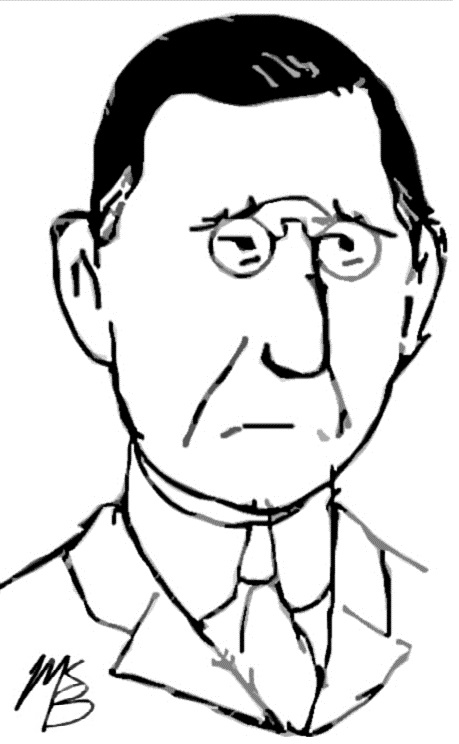
The Auditor

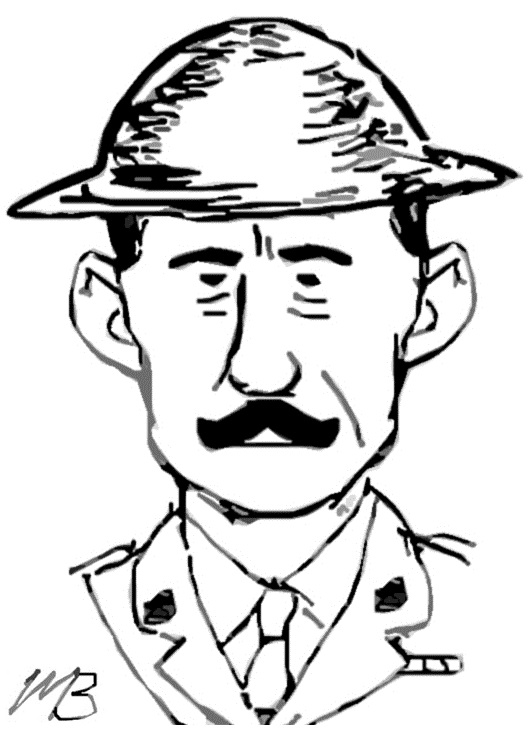
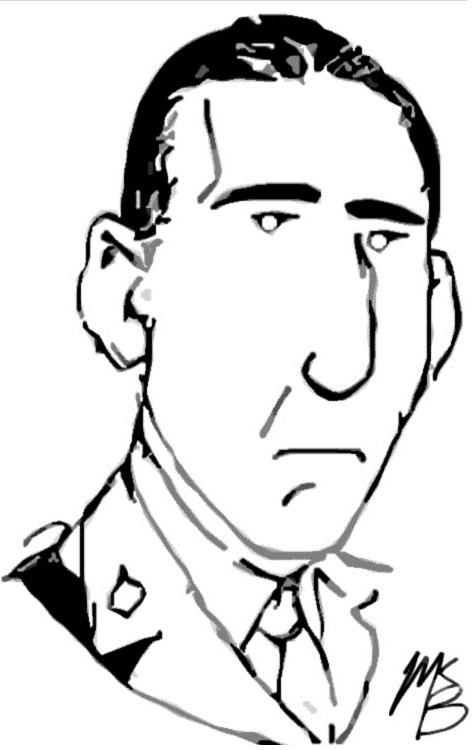
Lieutenant Colonel A. C. Kemmis
13th Canadian Mounted Rifles
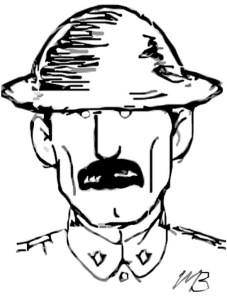
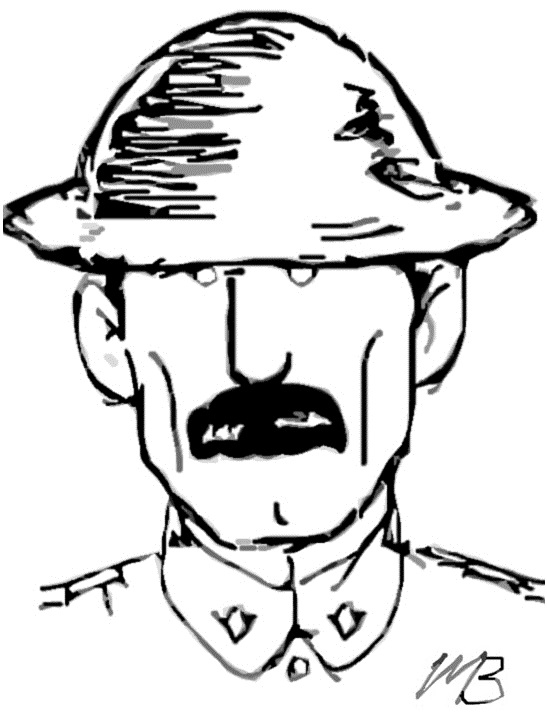
Kemmis

Confidentially Kemmis is a drunken incompetent and his appointment will be regarded [as a] joke.

(R.B. Bennett to Borden, 14 Dec 1914)

The son of a British Army officer, Arthur Charles Kemmis was born in Fredericton, New Brunswick on 10 February 1874. He spent his youth in England and Ireland before returning to Canada in the 1890s. He moved west to establish a law practice at Pincher Creek. He formed the 23rd Alberta Rangers in 1910. In December 1914, Kemmis was authorized to organize the 13th Mounted Rifles based in his hometown.
Continue reading

The Governor General

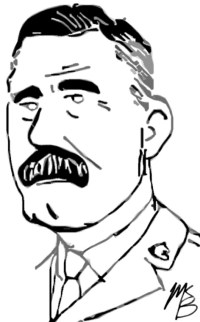
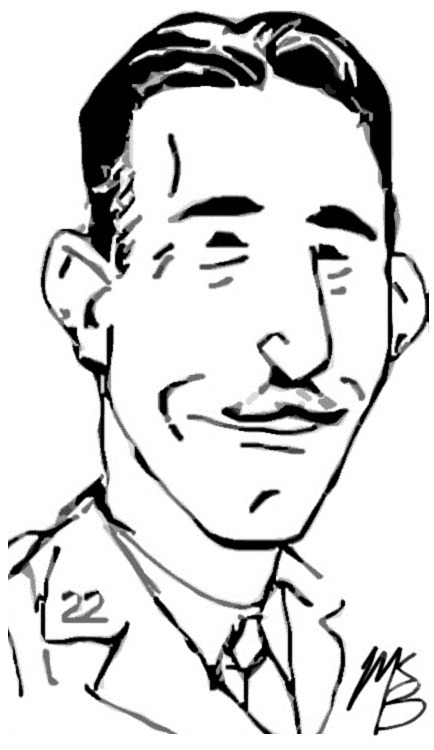
Major Georges Vanier, D.S.O., M.C.
22nd (Royal French Canadians) Battalion
Vanier

I need not tell you that after the shock of losing a leg and the consequent inaction I am not in good condition.

 I am happy at the thought that I had the courage to return to my boys in 1916 and that God gave me the strength of body and mind to do my duty under fire. It is a tremendous consolation that will comfort me until my dying day.

 (Vanier to Mother, 13 May 1919)

Georges-Philéas Vanier was one of Canada’s most well-known veterans of the First World War. He became a high-ranking military officer, diplomat and 19th Governor General of Canada. Born in Montreal on 23 April 1888, Vanier was a graduate of Université Laval and a lawyer. In early 1915, he helped organize the 22nd Battalion under the command of F. M. Gaudet. After four years in the trenches, he had been shell shocked, multiple times wounded and lost his right leg.

Continue reading

The Banker’s Son

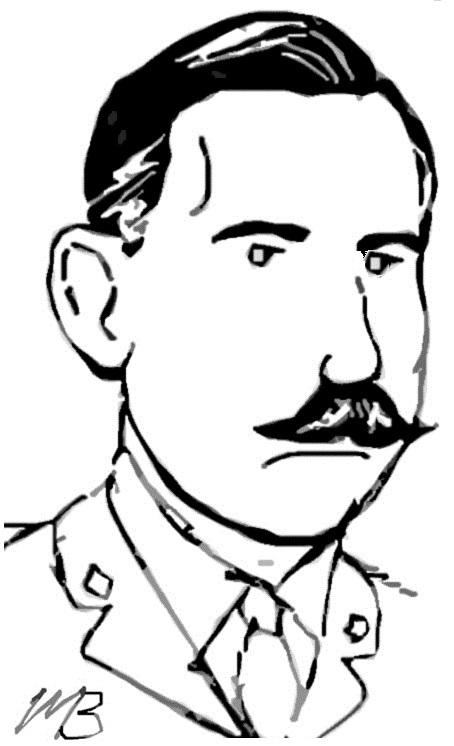
Lieutenant Colonel Hugh F. Osler
174th (Cameron Highlanders) Battalion
Osler

It makes me mad to see hundreds of fit men, a great many of whom can undoubtedly be spared, walking about and going to picture shows, without any thought of enlisting, when ten thousand of their fellow Canadians are either giving up their lives or being wounded every month.

(Hugh Osler to Edmund Osler, 8 Nov 1916)

Born in Toronto on 17 November 1881, Hugh Farquharson Osler was the son of Edmund Boyd Osler (1845—1924), prominent financier, banker and Tory politician. The elder Osler was Conservative MP for Toronto West between 1896 and 1917. After graduating from the Royal Military College, Hugh moved to Winnipeg where he worked for a corporate investment firm.

Continue reading

The Athlete

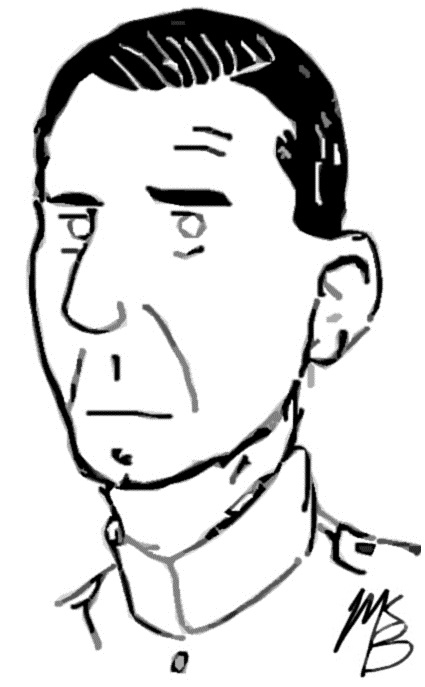
Lieutenant Colonel C. W. MacLean
207th (MacLean’s Athletes) Battalion
MacLeanCW

We are about to enter into that phase of our career for which we were organized. Our next step takes us overseas where we shall await the call that sends us to the front. When the call comes—it will find us ready and eager, and fit—due to the hard work and enthusiasm of every member of the Battalion.

(MacLean, The Whiz Bang, 18 Nov 1916, No. 20, 1)

Born in Lachine, Quebec on 18 November 1876, Charles Wesley MacLean was a farmer in Pointe Claire and mayor of Brockville. A member of the 13th Scottish Light Dragoons, he first raised the 2nd Reserve Park, C.A.S.C., which he took to England in May 1915. After returning back to Canada, in February 1916 he was authorized to organize the 207th Battalion from Ottawa-Carleton. A noted athlete, football player, swimmer and champion oarsman before the war, MacLean encouraged sports and competition for the 207th.

Continue reading

The Francophone

Brigadier General Tommy Tremblay
22nd (Royal French Canadians) Battalion
Tremblay

I am confident that the French Canadians will defend all their trenches with fierce vigour and will hold on at any price, even the price of death. Let us not forget that we represent an entire race and that many things—the very honour of French Canada—depend upon the manner in which we conduct ourselves. Our ancestors bequeathed to us a brave and glorious past that we must respect and equal. Let us uphold our beautiful old traditions.

 (Tremblay, Diary, 1916)

Thomas-Louis Tremblay would prove to be the 22nd Battalion’s most famous commanding officer. Notorious for his strict discipline, he was determined to prove the only all French-Canadian unit serving in the field was the finest in the CEF. Born in Chicoutimi, Quebec on 16 May 1886, he was a graduate of the Royal Military College, a civil engineer and member of the 1st Canadian Field Artillery.

Continue reading

The Customs Collector

Lieutenant Colonel A. B. Carey, D.S.O
102nd and 54th (Kootenay) Battalion
Carey

When his battalion was held up by intense machine-gun fire in front of a village, he organized a party from his reserve company and, under cover of the smoke from a derelict tank that was on fire, he personally led the party and rushed a wood, capturing sixteen machine guns, and routed the enemy, who retired on a broad front. He then pushed on his battalion and took the village with a rush. His example of personal gallantry, and his quick appreciation of the situation and rapid action, enabled this important result to be so successfully obtained.

(Carey, D.S.O. Bar citation, London Gazette, 7 Nov 1918, 13132)

A graduate of the University of Wisconsin, Alfred Blake Carey served in the 2nd Wisconsin Volunteers during the Spanish American War and the Remington Guards during the Boer War. He was born Blenheim, Ontario on 3 June 1881 and later worked as a civil engineer in British Columbia. In September 1915, he enlisted as a major with Lorne Ross’ 67th Pioneer Battalion. Continue reading

The Forger

Lieutenant Colonel Onésime Readman
167th (Canadien-Français) Battalion

Readman

 As to Col. Readman, he thought he was sincere and a man who had a clear past. Colonel Readman was a man who had offered to do his bit for his country and this should be weighed in the sentence, and if he had not received what was due him, he should get it from the Government and he hoped he would be given full justice.

(Quebec Telegraph, 22 Apr 1918, 1)

 In August 1914, Onésime Readman enlisted to defend King and Country; after charges of corruption and forgery four years later, he was forced to fight against the Crown in a Quebec courtroom. Born on 4 June 1877, Readman was a flavouring extracts manufacturer and militia officer. Shortly before the outbreak of the First World War, he assumed command of the 4th (Chasseurs Canadiens) Regiment.

Continue reading

The Orangeman

Lieutenant Colonel W. T. Edgecombe
183rd (Orange) Battalion
Edgecombe

The pursuit of Brother Edgecombe is one of the most contemptible things that has happened in the politics of any Province. 

It is just another instance of the implacability of political leaders. They expect men to violate their consciences, to ignore their convictions, to surrender their own views on public questions for the good of the party.

 (Winnipeg Free Press, 17 Feb 1915, 22)

William Thomas Edgecombe was a Winnipeg city alderman, Grand Master of the Manitoba Loyal Orange Lodge. He was born in Harbor Grace, Newfoundland on 15 August 1868. He held various positions in publishing, engraving and banking before moving to Winnipeg in 1893. Although not active in the militia, Edgecombe was selected to raise the 183rd Battalion.

Continue reading

The Neuro-Psychiatrist

Lieutenant Colonel E. G. Mason
50th (Mason’s Man-Eaters) Battalion

Mason

To add to our woe the last day of the Battle of Ancre Heights, our beloved Colonel Mason was evacuated to England, victim of the cruel weather, the unbelievably vile conditions in the front line, and the physical demands and mental stress made on men of great responsibility under fire.

(Victor Wheeler, The 50th Battalion in No Man’s Land, 31)

Born on 26 October 1874 in Hamilton, Ontario, Edward George Mason was a surgeon and physician in Calgary. He graduated from McGill University in 1902 and moved west to establish a practice in Alberta. A noted football player and militiaman, he was appointed to organize the 50th Battalion in November 1914.

Continue reading

The Anti-Intellectual

Lieutenant Colonel Thomas Lennox, M.P.P.
208th (Irish Fusiliers) BattalionLennox

It is hard to think that we must make this sacrifice to help the slackers to get a higher education. Any of my men are willing, and I am willing, to go and die for those who cannot go, but I would hate like the dickens to go and die for the fellow with the creased trousers and silk stockings.

(Lennox, Toronto Star, 6 Nov 1916, 4.)

Thomas Herbert Lennox was the Conservative member of the Ontario legislature for York North from 1905 to 1923. Born on 7 April 1869 in Simcoe County, Ontario, to an Irish immigrant father, Lennox was proud of his ancestry and a member of Loyal Orange Lodge No. 643.

Continue reading