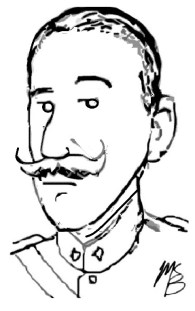
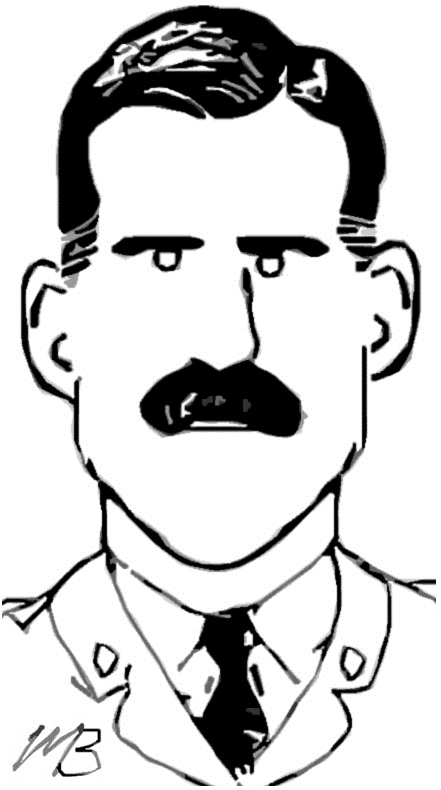
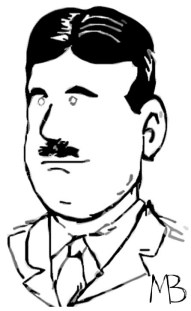
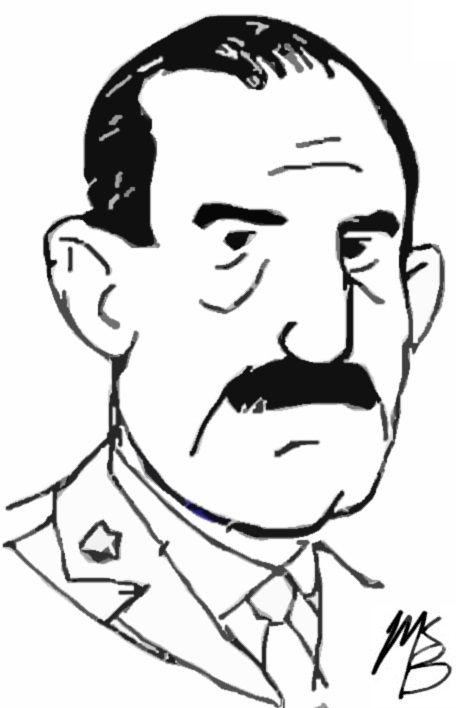
The Anti-German

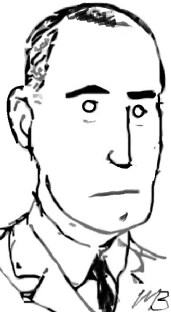
Lieutenant Colonel W.M.O. Lochead
118th (North Waterloo) Battalion
Lochead

Give us leaders! Men of ability. Soldiers who know what soldiering is. We deem it unwise to hand our bodies over to the keeping of a four-month recruit. If you want to accomplish results in recruiting, get a competent soldier at the head of the regiment.

(Berlin Trade and Labour Council, 1915)

William Merton Overton Lochead was a leading figure in the Berlin business community and insurance firm manger. He was born on 10 January 1874 in Camden Township, Ontario and graduated from Queen’s University. Although he had limited experience in the militia, Lochead was selected to raise the 118th Battalion from Berlin, Ontario due to his reputation for business management and organization. Continue reading
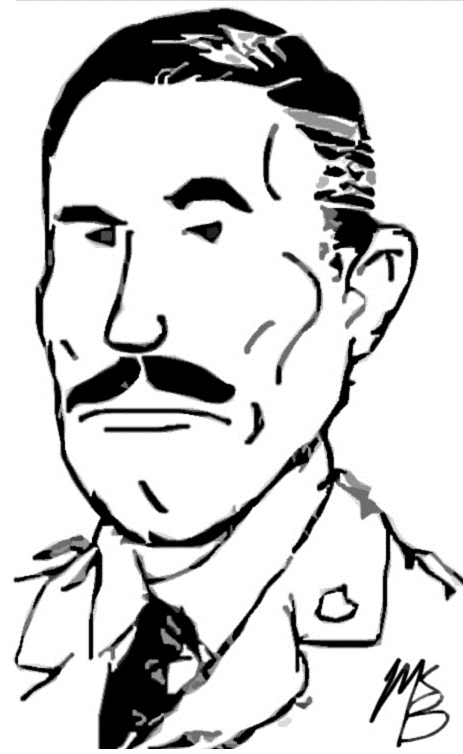
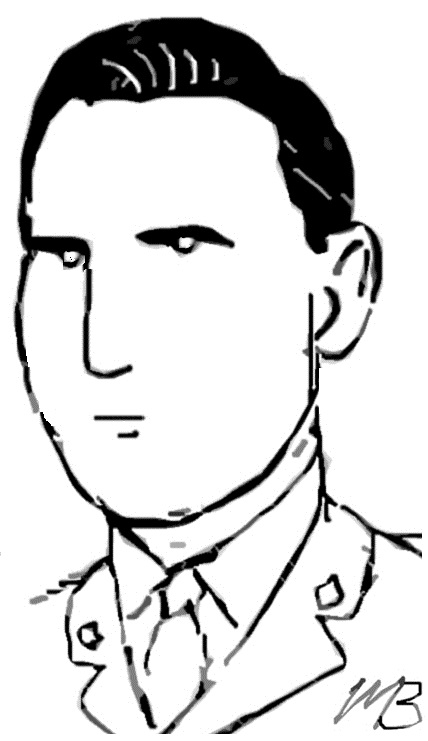
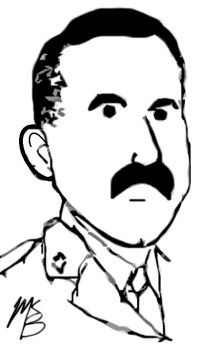
Lt. Col. Spencer

Lieutenant Colonel Nelson Spencer
175th (Medicine Hat) and 31st Battalions

What happened to Colonel Spencer will happen, more or less decisively, to Government candidates throughout the prairie Provinces…

 And Colonel Spencer stands quite as high in the estimation of the voters in his district as Government candidates generally can stand in the opinions of their respective communities. If he could not save his deposit, it is a bad look out for them if the conditions of the contest are the same.

 (Edmonton Bulletin, 2 Jul 1921, 7)

Born in New Brunswick on 7 December 1876, Nelson Spencer was a Conservative politician in Alberta and member of the provincial legislature (1913—1921). He belonged to the 21st Alberta Hussars and raised the 175th Battalion from his riding in early 1916. In response to questions about Spencer’s competency, Sir Sam Hughes replied, “He as all the necessary qualities to become a most efficient officer, and is rapidly acquiring the necessary military training.”

Continue reading

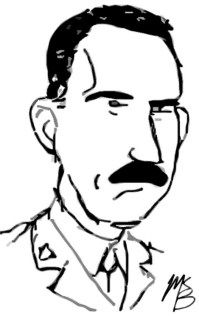
Lt. Col. Ryan

Lieutenant Colonel Robert H. Ryan
6th Canadian Mounted RiflesRyan

Ryan, who was already a nervous wreck as a result of harrowing experience in the trenches, was demoralized completely by the new tragedy. He came to London unmindful of everything, and disregarded the order for his return to the front. The sequel came in the Gazette’s announcement he had been dismissed by court-martial.

(Washington Post, 5 Nov 1915, 6)

It does seem darned shame that a man like this, although he was a good fellow and a good officer should get these ghost stores of himself put into the papers. It makes the whole thing into a screaming farce.

(Gen. John Carson to Sam Hughes, 18 Dec 1915)

Following a court martial for disobeying orders, Robert Holden Ryan was stripped of command of the 6th Canadian Mounted Rifles, cashiered from the CEF and sent home in disgrace. A sympathetic article in the Washington Post called Ryan’s dismissal “one of the most tragic stories of the war.” The real story was not so simple.

Continue reading

The Cashiered

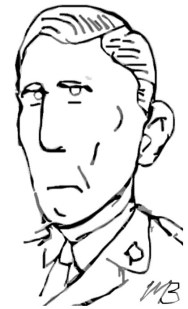
Lieutenant Colonel Tancrède Pagnuelo
206th (Canadien-Français) Battalion
Pagnuelo

I know I deserve to be punished for a breach of discipline, but all I ask from you, gentlemen, is not to be prevented from doing what I wanted to do, namely, going to the Front. If you dismiss me from the service it will be quite impossible for a commanding officer to join the ranks as a private.

(Court martial of Lt. Col. Pagnuelo, Dec 1916)

Born in 1870, Tancrède Pagnuelo was a Montreal barrister and Conservative Party activist. He had unsuccessfully contested the riding of St. James in the 1900 federal election. A reserve officer with the 85th Regiment, Pagnuelo was appointed to raise the 206th Battalion from the districts of Beauharnois, Laprairie and Terrebonne in early 1916. He would prove to be one of the more unfortunate choices.

Continue reading

The Social Drinker

Lieutenant Colonel J. C. L. Bott
2nd Canadian Mounted RiflesBott

I was not drunk on the 3rd of Oct 1916 … I had nothing to drink since 12:30pm on that day. I had a drink in the morning with Major Laws and I had three more … I brought a bottle of whiskey on the morning in question … As a rule I take about five drinks a day. Spread out through the day. I never have a drink alone.

(Lt. Col. Bott, general court martial, 7 Nov 1916)

Born in Marden, Wiltshire, England on 24 August 1872, John Cecil Latham Bott was a professional British soldier and cavalryman. He was a member of the 20th Hussars from 1895 to 1909, and served in Egypt and South Africa. He immigrated to Vernon, British Columbia some years after the Boer War and helped to organize the 30th Horse, which he commanded at the outbreak of the First World War.

Continue reading

Lt. Col. Rose

Lieutenant Colonel Hugh A. Rose
98th (Lincoln & Welland) Battalion
Rose

This is a great and inspiring cause, that of fostering peace and goodwill between two great nations, and will serve as an example to all the countries of the world. No better time could have been chosen for the launching of such a movement. The Kellogg Peace Pact has lately been ratified and confirmed by the leading powers of the world.

 (Rose’s speech on International Peace, Gardener’s Chronicle of America, 1929, 363)

Hugh Alexander Rose was born on 12 April 1881 in Welland, Ontario. He joined the 44th Regiment in 1897, rising to the rank of lieutenant colonel. After the outbreak of the Great War, Rose and his militiamen were tasked with guarding the Welland Canal. In November 1915, he was authorized to organize the 98th Battalion. Continue reading

Lt. Col. McPhee

Lieutenant Colonel Jack McPhee
177th (Simcoe Foresters) Battalion

Knowing the Colonel slightly, we were affected by that indefinable quality of true manliness which he radiated. The affection was contagious. Doubtless it affected thousands.

(Northern Advance, 7 Dec 1922, 2)

After returning home in March 1916 from one year in the trenches, Captain John Bingham McPhee married Eva Hamlin Harrison. Instead of a honeymoon, he organized the 177th Battalion from Simcoe County. Born in Barrie, Canada West on 26 March 1865, McPhee was an accountant with twenty-two years’ experience in the 35th Regiment. He had enlisted as a paymaster with J.A.W. Allan’s 20th Battalion and served on the front until he was recalled to command the new battalion.

Continue reading

Lt. Col. Ralston

Lieutenant Colonel J.L. Ralston
85th (Nova Scotia Highlanders) Battalion
Ralston

An extremely reliable and determined Officer. He is cheerful, conscientious and tactful, with plenty of energy and drive. Well-balanced and a man of the World with plenty of ability. He learns readily, and is good at imparting knowledge. He has imagination and initiative and handles troops well.

(Senior Officer’s Course, 6 Mar 1918)

Born in Amherst on 27 September 1881, James Layton Ralston was a law graduate from Dalhousie University and Liberal member of the Nova Scotia House of Assembly (1911–1920). He enlisted as a lieutenant in Allison Hart Borden’s 85th Battalion, and twice commanded the unit in the field during summer 1917 and the latter half of 1918. Multiple times wounded in action, Ralston won the Distinguished Service Order and Bar for great pluck and leadership.

Continue reading

The Executioner

Lieutenant Colonel A.J. McCausland
74th (Peel & York) Battalion

The accused No. 1 Fuehrer Adolf Schicklegruber, alias Adolf Hitler, Elite Guard, Berlin, Germany, a soldier of the Third Reich, is charged with: Murder, rape, theft and sadistic crimes against humanity … The accused was tried before the court of public opinion on this 28th day of April, 1945. The court found the accused guilty of all charges and sentenced him to be taken out and hanged until he is dead and may God have mercy on his soul.

-Maj. A.J. McCausland

(Brantford Expositor, 1 May 1945, 5)

A Toronto native, Alan Joseph McCausland was born on 9 June 1887. He enlisted as a private in the Queen’s Own Rifles in 1903, and at the outbreak of the war was a militia captain with the 36th Peel Regiment. At the age of twenty-eight, he was one of the youngest men appointed to battalion command when authorized to raise the 74th from Peel and York counties. He sailed overseas in March 1916, and his unit provided reinforcements for Ontario battalions at the front.

At the end of the Second World War, McCausland had the distinction of announcing the death sentence for an effigy of Adolf Hitler in Brantford, Ontario just days before the real Hitler killed himself. Continue reading

Lt. Col. Sparling

Lieutenant Colonel H.C. Sparling
73rd (Royal Highlanders of Canada) Battalion
Sparling

The dissolution of the battalion caused the greatest regret and depression among all ranks, and the officers, who had witness the splendid work of the men in the Bn. during the last four months, could only express the highest admiration for the way all N.C.O’s and men carried out their duties during that time, with the knowledge of the possible dissolution of the battalion.

(Sparling, 73rd War Diary, 19 Apr 1917, 36)

Herbert Cosford Sparling was born in Kerrwood, Ontario on 6 February 1880. Previously a member of the Mississauga Horse, Sparling had moved to Ottawa shortly before the First World War. He enlisted as senior major in Peers Davidson’s 73rd Battalion, which deployed to France in March 1916 as part of the 12th Infantry Brigade, 4th Division. Sparling assumed command in December 1916, but the battalion was removed from the line on 9 April 1917 just before the battle of Vimy Ridge. Continue reading