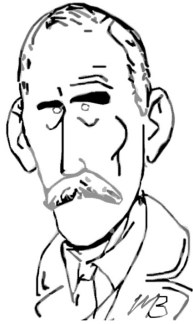
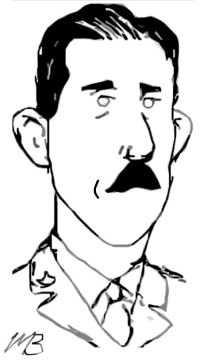
Lt. Col. McLelan

Lieutenant Colonel A. W. McLelan
121st (Western Irish) Battalion
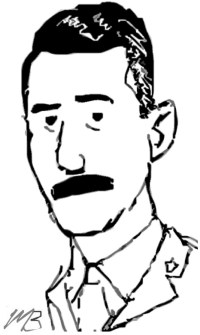
McLelan

Col. McLelan’s plan is this: All officers enter his regiment as lieutenants. They are given fullest opportunities for displaying their ability, and according to merit the senior appointments, such as those of field officers and captains of companies, are granted… Men who have captains and field officers’ certificates are placed on the same basin as the other officers and must qualify in this competitive sense for the senior rankings.

 “I think this is the only way in which real efficiency can be arrived at,” said Lieut.-Col. McLelan this morning. “My officers will know that they must make good, and it keys everyone of them up to do his best.”

 (Vancouver World, 19 Jan 1916, 15)

Archibald Woodbury McLelan was a fifth-generation Canadian of Irish ancestry. He was born on 26 August 1884 in Londonderry, Nova Scotia. McLelan’s namesake was his grandfather (1824—1890), the Lieutenant Governor of the province between 1888 and 1890. In the first Canadian parliament, the elder McLelan had sat as an anti-confederation member until an appointment to the Senate in 1869.
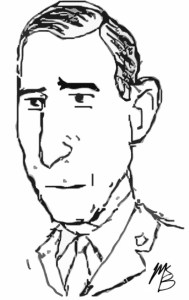
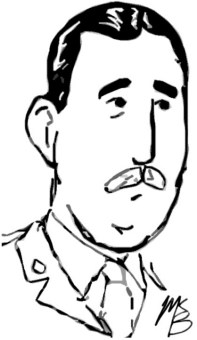
Continue reading

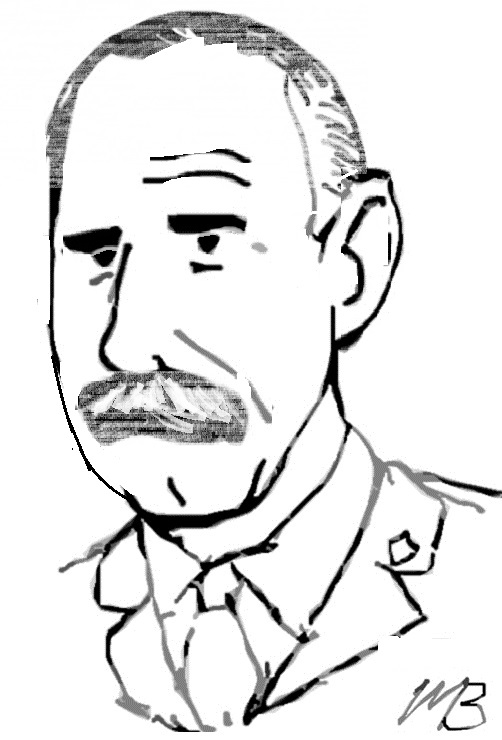
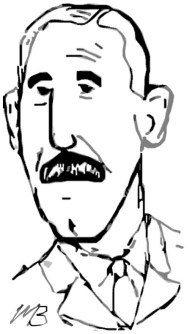
Lt. Col. Moodie

Lieutenant Colonel R.R. Moodie
205th (Hamilton Tigers) Battalion

He is suffering from neurasthenia with insomnia, loss of appetite, general debility, severe headaches, nervous chills and constant pain in temporal region and back of neck. Mental concentration is impossible, and he is easily worried over trifles.

(Proceedings of Medical Board, 3 Sept 1916)

Born in Hamilton, Ontario on 6 August 1884, Robert Roy Moodie was a knitting manufacturer, prominent sportsman and president of the city’s Tiger Football club. A member of the 91st militia and the Canadian Field Artillery, Moodie first joined Lieutenant Colonel Walter Stewart’s 86th Machine Gun Battalion at the rank of major in October 1915. By early 1916, he had received authorization to raise a sportsmen’s battalion from Hamilton, the 205th Tigers, which took its nickname from the city’s sports team.

Continue reading

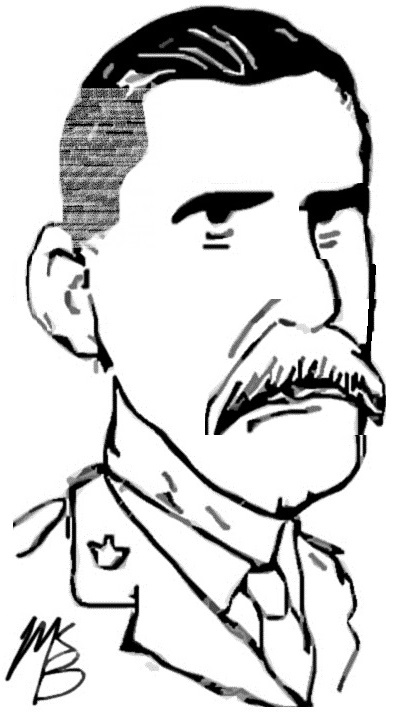
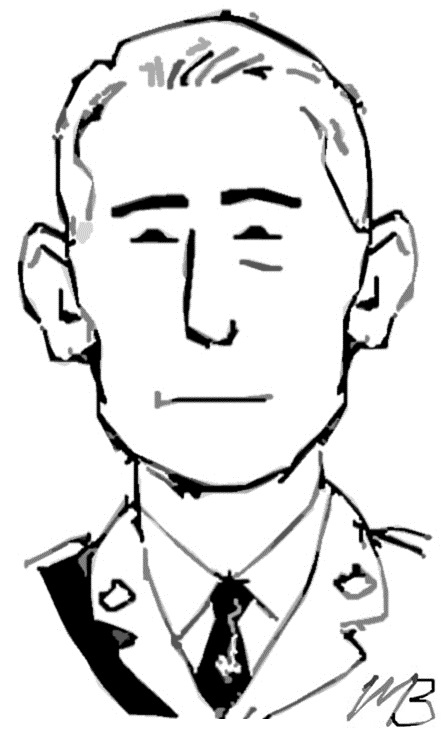
Lt. Col. Rexford

Lieutenant Colonel I.P. Rexford
87th (Canadian Grenadier Guards) Battalion
Rexford

As a Rotarian who has held for the last 35 years the classification of “corporate executor” in the Rotary Club of Montreal, I was horrified to read in an article in THE ROTARIAN for October a recommendation by the author that a person should designate his wife as sole executrix to avoid the coast of a bond and “keep the commission in the family.”

 Surely the author must know of the many tragedies which have followed where a man has named his wife as sole executrix, a person usually entirely without experience in administrating an estate and managing investments.

 (Rexford, “Re: Making a Will”, The Rotarian, Jan 1950, 55)

Born on 14 September 1884 in Quebec, Irving Putnam Rexford was a Royal Trust Company manager and member of the Rotary Club with ten years’ experience in the Canadian Grenadier Guards. In September 1915, he joined the 87th Battalion organized by Colonel Frank Meighen.

Continue reading

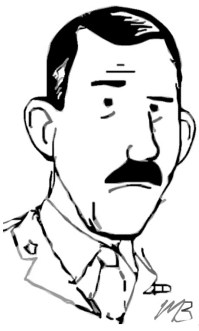
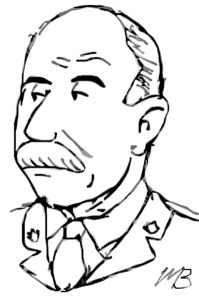
Lt. Col. Ketcheson

Lieutenant Colonel W.G. Ketcheson
80th (Hastings) Battalion
Ketcheson

While not possessed of a very high academic education, Lieut. Col. Ketcheson has the qualities most essential in a Commanding Officer, i.e. – the ability to handle men and a strong personality.

 (80th Bn. inspection report, 1916)

Born on 29 March 1862 in Hastings County, Canada West, William Gilbert Ketcheson was a member of an old United Empire Loyalist family. His ancestor, Colonel William Ketcheson (1759—1848) had immigrated to Hastings County after the American Revolution and later served in the War of 1812. With 8 children, 71 grandchildren and 59 great-grandchildren, many of his descendants assumed prominent positions in the county.

Continue reading

Lt. Col. Pelly

Lieutenant Colonel Raymond T. Pelly
Princess Patricia’s Canadian Light Infantry
Pelly

Pelly always was a nervous temperament and the trenches came harder on him than on some others but you are quite wrong in imagining he is not full of courage for I know him to be. And at Frise when H.Q. was shelled he absolutely refused to go into the cellars until the last servant had taken to his hiding place.

(Agar Adamson to wife, 2 Jan 1916)

Raymond Theodore Pelly was born on 30 July 1881 in Woodford England. He served with the Royal North Lancashire Regiment from 1900 to 1914. As a member of the Governor General of Canada’s staff, in August 1914, he enlisted as a major with PPCLI under Colonel Francis Farquhar, who was killed by a sniper in March 1915.

Continue reading

Lt. Col. Worsnop

Lieutenant Colonel Charlie Worsnop
50th & 75th Battalions

Worsnop

Major Worsnop, who is heavy and strong in physique, was a source of strength to any forward line, and one of his most notable achievements was to kick off, catch the ball on the bounce, touch down, and kick the goal.

(Vancouver World, 31 Jan 1916, 2)

Born on 5 August 1879 in Philadelphia, Pennsylvania, Charles Benson Worsnop was the son of British Colonel Charles Arthur Benson. Due to his connection with British museums of science and art, his father had travelled to Philadelphia for the 1876 Centennial Exposition and stayed for five years before moving to Canada. The younger Worsnop grew up in British Columbia and joined the 6th Regiment. A noted Vancouver sportsman, the six-foot-three Worsnop excelled as the city’s rugby captain and later team coach.

Continue reading

Lt. Col. Kirkpatrick

Lieutenant Colonel J.R. Kirkpatrick
55th (New Brunswick and P.E.I.) Battalion
Kirkpatrick

Some of the advantages of a machine gun are, that while equal to that of sixty men that it occupies only about a yard of space, and owing to its size can readily be concealed. It can be easily and rapidly moved from one position to another by a few men; it can be and has been handled with deadly effect by two men; it is capable of firing from 350 to 600 rounds per minute, and an object on which a machine gun is successfully trained cannot fail to be totally annihilated in a very short space of time.

(Lt. Col. Kirkpatrick, Daily Gleaner, 21 Jul 1915, 5)

Born on 18 December 1863 in Debec Junction, New Brunswick, James Renfrew Kirkpatrick was a farmer and long-time militiaman. He had served for nearly thirty years in the 67th Carleton Light Infantry. As commanding officer of regiment, he was one of many senior militia officers at Valcartier in August 1914 hoping for a posting to one of the overseas battalions. He sailed with First Contingent to England but was struck off strength as a surplus officer in December 1914.

Continue reading

Lt. Col. Reed

Lieutenant Colonel Le Grande Reed
170th (Mississauga Horse) Battalion

During the last few months the streets of Toronto have been overrun with thousands of untrained men in uniforms accosting with such manner and expressions as have aroused constant indignation. These men perforce of circumstances untutored in their duties, have done their best. I claim that there is not one civilian man in each thousand in Toronto who has not been most strongly and continuously urged to join the colours.

(Reed to Gen. Logie, 26 June 1916)

Days after the declaration of war against Germany, Toronto insurance broker Le Grand Reed joined the 9th Mississauga Horse. He worked through the local recruiting depot until December 1915 when he was authorized to organize the 170th Battalion from the Ontario capital. A native of Toronto, Reed was born on 8 October 1876.

Continue reading

Lt. Col. Street

Lieutenant Colonel D.R. Street
77th (Ottawa) Battalion
Street

I merely add without comment, we hear that the men of the 77th battalion in Ottawa looted the Parliament Buildings the night of the fire. I am prepared to say this—I never thought it worth mentioning it, but my attention was brought to it yesterday–that the men of the 77th, as well as the Engineers, conducted themselves in the most orderly and becoming manner on that night…

 (Sam Hughes, Debates, 16 Feb 1916, 855)

Douglas Richmond Street was a member of the Governor General’s Foot Guards and director of the Ottawa Electric & Gas Company. He was born on 19 June 1864 in Fredericton, New Brunswick. In spring 1915, he was selected to raise a battalion from the Ottawa area.

Continue reading