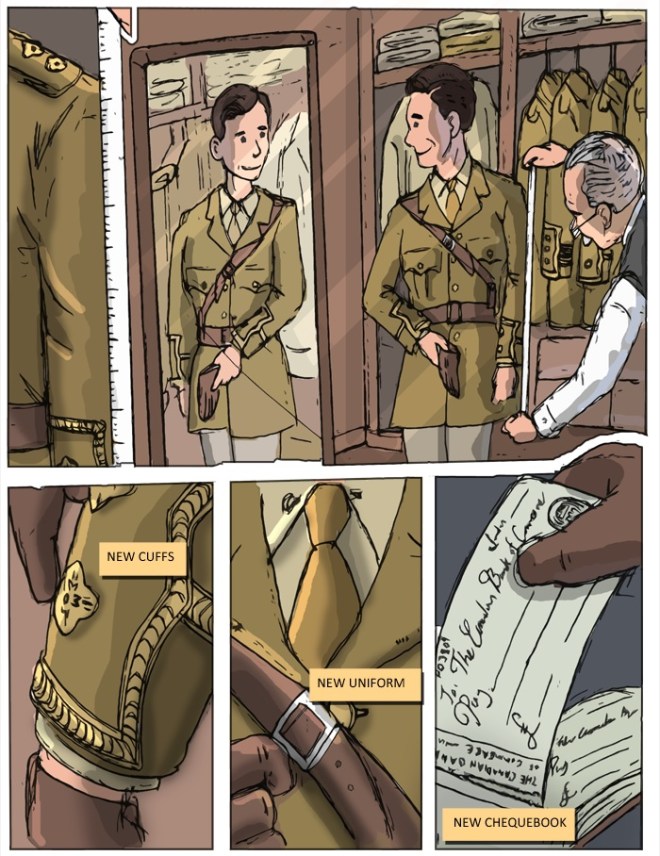
The Son-in-Law

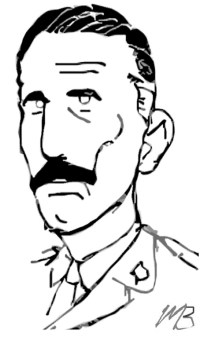
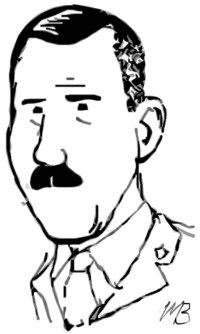
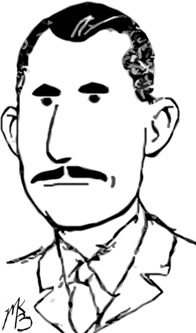
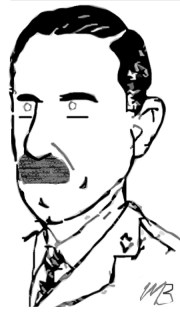
Lieutenant Colonel Byron M. Green
164th (Halton and Dufferin) Battalion
BMGreen

Gen. Hughes was a fine martial figure in his uniform, and his girlish looking daughter looked even slighter than she would have done under other circumstances … “This is my girl – and she’s sent her husband to the front.”

I didn’t have to send him – he went himself,” Mrs. Green quickly retorted evidently jealous for the patriotism of her husband and the general smiled an indulgent acquiescence.

 (Toronto World, 7 Sept 1915)

Byron Malcolm Green was the son-in-law of Minister of Militia, Sir Sam Hughes. He was born in Leeds County, Ontario on 10 January 1886 and married Hughes’ daughter, Roby Mary Caroline, in October 1912. He was a banker, accountant, and stock broker with financial ties to Montreal, Toronto, and New York. In 1915, he enlisted as a lieutenant with the 36th Battalion. Continue reading
Lt. Col. A.D. Cameron

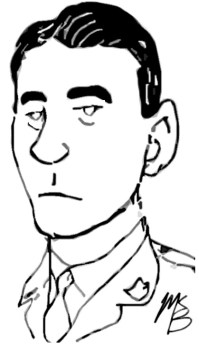
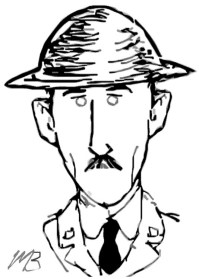
Lieutenant Colonel A.D. Cameron, D.S.O., M.C.
38th (Cameron Highlanders) Battalion

Cameron

He states when breaking horse on Salisbury Plains, horse threw its head up hitting him on nose. This was painful for some time, but was not treated. Since that time he has noticed that breathing through nose has been difficult.

(Medical History of an Invalid, 18 March 1919)

Born in Shanghai, China on 18 April 1891, Alexander Douglas Cameron was professional soldier with the Canadian Permanent Force. He joined Lord Strathcona’s Horse in October 1914, and despite an injury to the face from a horse, went to France with LdSH in May 1915.

Continue reading

Lt. Col. Nelles

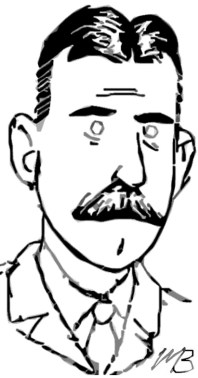
Lieutenant Colonel S.B. Nelles
152nd (Weyburn-Estevan) Battalion
NellesSB

The commanding officer, Lieut. Colonel Stephen B. Nelles has had long experience. He is earnest, but inclined to be slow; conscientious, but rather lacking in energy.

 (Brig. Gen. John Hughes, Inspection Report, 23 Sept 1916)

Stephen Bell Nelles was born in Grimsby, Ontario on 20 January 1871. In 1905, he moved to west where he worked for Canada Permanent Mortgage Company in Winnipeg and Sun Life in Regina. He had been a member of the militia since 1890; serving in the Queen’s Own Rifles and 90th Winnipeg Rifles and the 95th Saskatchewan Rifles.

Continue reading

Lt. Col. Mackay

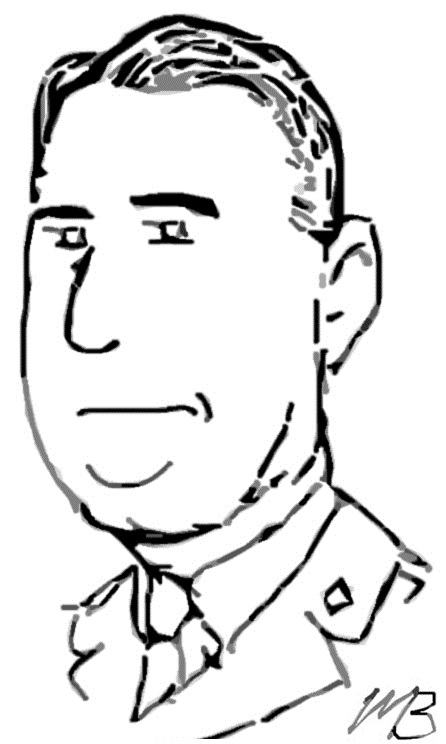
Lieutenant Colonel Joseph Mackay
225th (Kootenay) Battalion
JMackay

Col. Mackay says that he made the appointment solely upon the merits of the applicant, and that no appointments he has made, or may in future make, will be upon any other basis than that of proven merit, and that all commissions o be issued, excepting the staff, in the 225th battalion, will be of the rank of lieutenant, the promotions to the higher ranks to be made after fitness and competency has been demonstrated by service.

(Lethbridge Herald, 28 Mar 1916, 4)

A native of Ireland, Joseph Mackay was born in Londonderry on 16 September 1865. After immigrating to Kingston, Ontario with his family as a boy, MacKay moved to Carleton Place. He joined the 42nd Battalion, Lanark and Renfrew Regiment and rose to become its commanding officer in 1898. He was succeeded by Lennox Irving in 1901 and retired to British Columbia. Continue reading

The Publisher

Lieutenant Colonel R.F. Parkinson, D.S.O.
38th (Ottawa) Battalion
Parkingson

He was never too busy to find a job for a serviceman in need and dipped generously into his pocket times without number to tide a less fortunate comrade over a thin day. Even in recent years, “burned out” veterans who found themselves hard up had the habit of coming around the office to make a touch from

(Ottawa Journal, 4 Jan 1946)

Born on 1 January 1883 in Woodstock, Ontario, Robert Francis Parkinson was a newspaper publisher and managing director of the Ottawa Journal. He first joined the 22nd Oxford Rifles and then the 43rd Duke of Cornwall’s Own Rifles when he moved to Ottawa in 1908 to join the staff of the Ottawa Journal.

Continue reading

Maj. Eaton

Major R.B. Eaton, M.P.P.
50th (Calgary) Battalion

Eaton

An exploding shell failed to wake me from my stupor but left me unable to sit down in the morning. Be it to the everlasting credit of my Acting O.C., Major R. B. Eaton who, after listening to my story, and knowing my record as a signaler and guide, not only exonerated me of the charge of Disobedience, but sent me back to a rest camp at Bouzincourt for two unforgettable weeks.

(Victor Wheeler, The 50th Battalion in No Man’s Land, 29)

Robert Berry Eaton was born in Turo, Nova Scotia on 5 August 1871. After serving in the Boer War, he settled in the North West Territories to become a farmer. He was elected to Alberta legislature in 1913 as the Liberal representative for Hand Hills. In January 1915, he enlisted in the 50th Battalion under the command of Lieutenant Colonel E. G. Mason.

Continue reading

Lt. Col. Lightfoot

Lieutenant Colonel James Lightfoot
222nd (Manitoba Tigers) Battalion

Major Lightfoot led the front line of his battalion, the 10th.

“Come on, boys,” he said, “remember you are Canadians.” The line advanced with great spirit, less than two thousand Canadians against a hundred thousand Germans. It was the biggest bluff in history but it won. On and on went the Canadians, 10th and Highlanders, one moment with the bayonet the next moment firing. The Germans, who were busy digging in south of the wood, saw the Canadians coming in the twilight, and only waited to fire a few shots and then they started to run. Lightfoot was down, but the line went on.

(J.A. Currie, The Red Watch, 1916, 222)

Born on 12 August 1879 in Aston, Cheshire, England, James Lightfoot was a soldier and Boer War veteran. He served with the Imperial Yeomanry and the Scottish Horse during the South Africa campaign. He immigrated to Manitoba in 1905, became a prominent Winnipeg citizen and established the city’s first taxi company.

Continue reading

Lt. Col. Rowland

Lieutenant Colonel T.P.T. Rowland
119th (Algoma) Battalion

Battalions on all sides of the 119th have been broken up and merged into other Battalions. But the 119th remains a unit and retains its name, its number, and its identity … The great pity of it is that the battalion cannot be kept together, that those, whom I might call the “Charter Members,” cannot continue together, go to the front together, and fight together. This is, however, impossible.

(Lt. Col. Rowland, The Sault Daily Star, 27 Dec 1916, 4)

Thomas Percival Turton Rowland was born on 10 April 1875 in Niagara-on-the-Lake, Ontario. He was a lawyer in Sault Ste. Marie with seven years in the Queen’s Own Rifles and two years in the 51st Soo Regiment. Beginning in November 1915, he organized the 119th Battalion from Algoma and Manitoulin Island. The unit provided reinforcement drafts in England from August 1916 until it was absorbed by the 8th Reserve Battalion in April 1918.

Continue reading

Dishonoured Cheques

Lieutenant Ronald John Beck
8th Reserve Battalion

In conclusion, I would like to say that I have no one to blame but myself. It was caused by two things: Drink and women. I never knew the taste of liquor until I went to France. I still wish to stay in the army in any capacity whatsoever.

(Lt. R.J. Beck, court martial, 7 Jan 1918)

Beck comic page 1
Continue reading

Lt. Col. Willets

Lieutenant Colonel C.R.E. Willets, D.S.O.
Royal Canadian Regiment

Willets

For conspicuous gallantry and devotion to duty. He went forward to the front line under very heavy fire and organized the defence of the position with great skill. He has at all times displayed the greatest courage and initiative.

(Willets, D.S.O. citation, 26 July 1917)

Born in Windsor, Nova Scotia on 21 May 1880, Charles Richard Edward Willets had left the Royal Military College early to serve in South Africa in 1901. After five years with the South African Constabulary, he was gazetted as a lieutenant in the Royal Canadian Regiment.

Continue reading