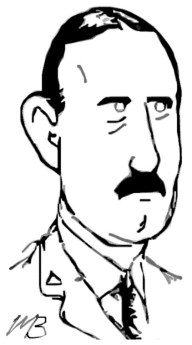
Col. MacDonald

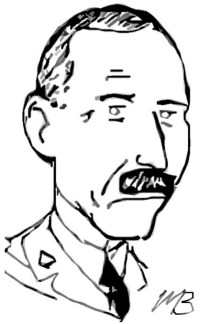
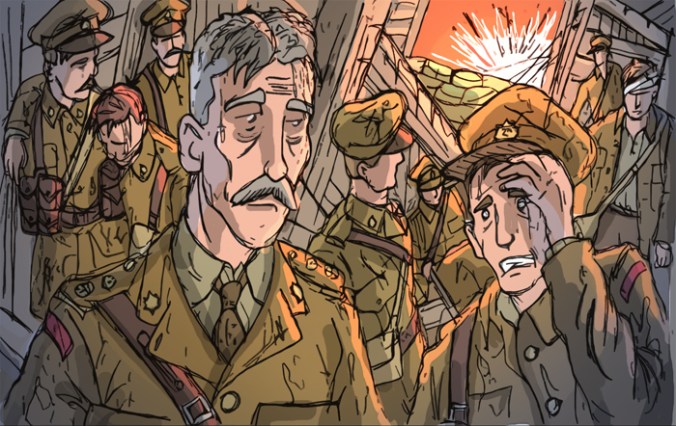
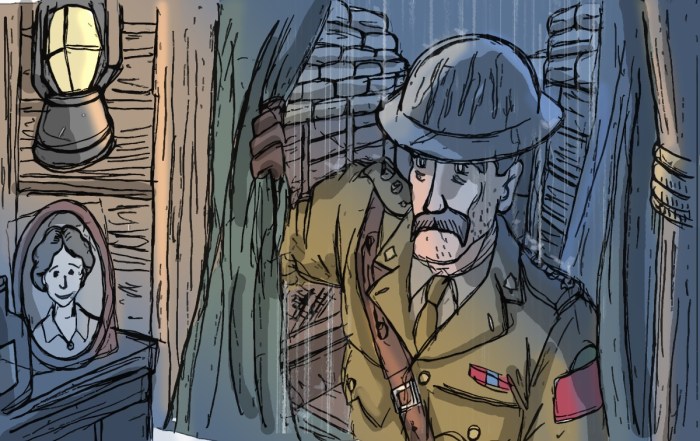
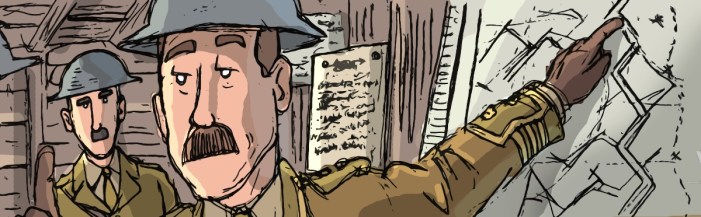
Colonel George MacDonald
12th Canadian Mounted Rifles
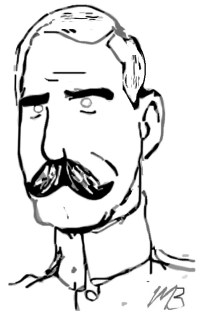
A quiet, soldierly old gentleman, caring little or nothing about the limelight of public life, he numbered many friends in his personal circle, and probably more among the pensioners and the war-wrecked wounded with whom his postwar medical duties brought him in close touch.

 (Calgary Albertan, 6 Nov 1933, 4)

George MacDonald was an Alberta physician born in Aberdeen, Scotland on 22 September 1863. He immigrated to Canada as a child and graduated with a medical degree from McGill in 1889. He then travelled west and attempted prospecting during the Klondike Gold Rush. He settled down into a medical practice in Calgary in 1900. As commanding officer of 15th Light Horse he was appointed to raise the 12th Canadian Mounted Rifles in November 1914.
Continue reading

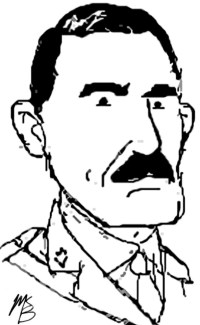
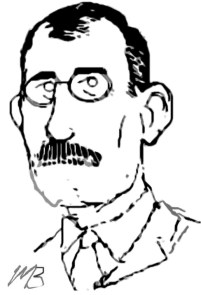
Lt. Col. Ripley

Lieutenant Colonel Blair Ripley
1st Canadian Railway Troops

Ripley

“Whatever do you want to write about me for?” asked a tall man with benign expression, his kind eyes glinting humorously behind glasses. “I’m retired.”

(Interview with Gwen Cash, Time Colonist, 22 Jan 1950)

Blair Ripley was a Canadian Pacific Railway civil engineer born in Oxford, Nova Scotia on 28 August 1880. He worked on railways across the west and designed the Lethbridge Viaduct. By the outbreak of the war he was completing the North Toronto Grade Separation. In June 1916, he was assigned to take his railway and bridge building expertise to the front when appointed to raise No. 1 Construction Battalion.

Continue reading

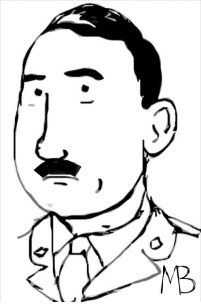
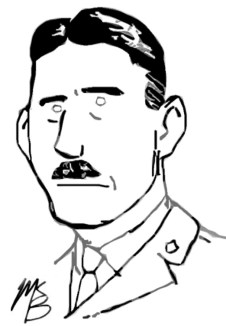
Lt. Col. Jones

Lieutenant Colonel L.E. Jones, D.S.O.
18th (Western Ontario) Battalion

Jones LE

Jones is quite a sport with a forte in the baseball line. This year he is manager of the Varsity nine and his eagle eye is scanning the horizon for recruits. He is just quiet enough to be rated “a good fellow,” without an enemy around the institution.

 (Torontonensis, 1900, 53)

Louis Elgin Jones was born in Elgin County, Ontario on 2 November 1877. A graduate of the University of Toronto, he was a mathematics teacher, civil engineer, and member of the 27th Regiment. In November 1914, Jones joined the 18th Battalion as a captain.

Continue reading

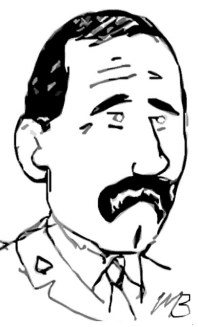
The Widower

Lieutenant Colonel H.L. Milligan, D.S.O.
18th (Western Ontario) Battalion

Milligan

I met Colonel Milligan recently, and am advised that he is not physically fit to return to his duties, and have lost his wife and daughter in the last few months, I hope you will grant him this extension of leave.

(J.E. Armstrong to militia minister, 18 Jan 1917)

Henry Linton Milligan succeeded Lieutenant Colonel Ernest S. Wigle as commander of the 18th Battalion on 8 July 1916. A native of Scotland, he was born on 8 April 1872. A member of the 26th Regiment, he joined the 18th at the rank of major in October 1914. He remained in command until just after the battle of the Somme.

Continue reading

The Other Ranker

Lieutenant Colonel Dick Worrall, D.S.O., M.C.
14th (Royal Montreal Regiment) Battalion

Worrall

He advanced his line half a mile and under heavy fire maintained his position all day. The following day, though his left was exposed to withering machine gun and artillery fire, he captured a village, taking prisoners a whole battalion. Still pushing on, he took the final objective, and established his position, having advanced some 5,000 yards from the jumping off line. He displayed fine courage and leadership.

(Worrall D.S.O. Citation, London Gazette, 11 Jan 1919, 1605)

Richard Worrall was born in Woolwich, England on 8 July 1890. He served for eight years in the Dorsetshire Regiment before emigrating to the United States. He seemed to have joined the US Army but evidently deserted to fight for Canada at the outbreak of the Great War. He was one of the very few men to enlist as a private and rise through the ranks to command an infantry battalion.

Continue reading

Lt. Col. McCombe

Lieutenant Colonel Gault McCombe, D.S.O.
14th (Royal Montreal Regiment) Battalion

McCombe

On page 439 of the last Militia List you have shown Captain G. McCombe in list of deaths as killed in action. I am glad to advise you that Captain McCombe is very much alive. He was slightly wounded, returned to England on sick leave, but he is now, and has been for some time, back in France with his regiment the 14th Battalion.

 (Col. John Carson to Militia Council, 27 Sept 1915)

A native of Ireland, Gault McCombe was born on 16 March 1885. He immigrated with his family to Canada in 1890.  A fourteen-year militia officer with the Victoria Rifles of Canada, he joined the 14th Battalion as captain in September 1914. In late 1915, his name was mistakenly included in a casualty list of deaths at the front, causing much confusion for his family when newspapers requested a photograph for the obituary. McCombe’s brother wrote to the militia records office, explaining, “I have just received a Christmas card from my brother, and he was then in London on a holiday, so he is still in the land of the living as far as we know.”

Continue reading

Lt. Col. Fisher

Lieutenant Colonel Frank Fisher
23rd (Westmount Rifles) & 14th (Royal Montreal Regiment)

Fisher

[Fisher] was not a success when he previously commanded this Battalion and also, that having been to the front in command of a service Battalion and having been returned, that he will not command respect and that the Battalion will suffer.

 (Report of Gen. E.C. Ashton, 21 Apr 1916)

Frank William Fisher was born in Yorkshire, England on 7 July 1868 and emigrated to Canada as a teenager. With twenty-five years in the militia, he had been the commanding officer of the 3rd Victoria Rifles until retirement in 1912. In late 1914, Fisher organized the 23rd Battalion from Quebec City. After it was designated a reserve battalion on arrival in England, Fisher proceeded to France as second-in-command with the 14th Battalion.

Continue reading

Lt. Col. Burland

Lieutenant Colonel Watty Burland
14th (Royal Montreal Regiment) Battalion

Burland

A cablegram was yesterday received by Mr. B. S. Burland from his brother, Lt. Col. “Watty” Burland senior major and second in command of the 14th Battalion, stating that he had come through the fighting at Langemarcke without injury. Lt. Col. Burland’s cable was brief, but to the point, simply saying, “Pulled through all right.”

 (Montreal Gazette, 4 May 1915, 4)

William Watt Burland was born on 9 September 1877 in Montreal. He had joined the Victoria Rifles of Canada in 1894 and become commanding officer in 1912. He joined the 14th Battalion as second-in-command with the rank of lieutenant colonel. Although he made it through the second battle of Ypres uninjured, he was wounded less than a month later on 10 May 1915.

Continue reading

3rd Infantry Battalion

3rd (Toronto Regiment) Battalion
1st Canadian Division

3rd Bn 1

Robert Rennie was the first 3rd Battalion CO, from September 1914 to November1915, when he was promoted to command the 4th Infantry Brigade.

3rd Bn 2

William D. Allan commanded the 3rd Battalion until September 1916 when he feel deadly ill following a shell splinter wound. His parents returned with the body for burial in Toronto’s Mount Pleasant Cemetery, making him one of the few Canadians buried at home even though he died overseas.

3rd Bn 3

An original officer with the 3rd Battalion, Robert B. Rogers took over after Allan’s death. He remained in command until the end of the war.

2nd Infantry Battalion

2nd (Central Ontario) Battalion
1st Canadian Division

2nd BN 1 A

David Watson was the first 2nd Battalion CO, from September 1914 to August 1915, when he was promoted to command the 5th Infantry Brigade.

2nd Swift

Albert E. Swift commanded the 2nd Battalion until November 1916, about when he learned that his wife had been killed by runaway horses in Quebec. Swift was appointed to command the 14th Infantry Brigade.

2nd Yates

Wilton Yates briefly command the 2nd Battalion until December 1916. While on a training course, Yates suffered severe head injuries when he was in an accident with an overturned bus.

2nd Clark

Robert Percy Clark transferred to the 2nd from command of the 14th Battalion. He relinquished command in May 1917.

2nd McLaughlin

Lorne McLaughlin commanded the 2nd Battalion from May 1917 until 30 August 1918, when he suffered a gunshot wound to the leg. He resumed command from October until the end of the war.

2nd Vanderwater

Roscoe Vanderwater temporary took over the 2nd when McLaughlin was wounded for the month of September 1918.