The Swede

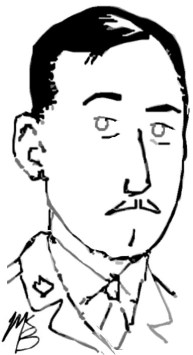
Lieutenant Colonel Harry F. Meurling, M.C.
2nd Motor Machine Gun Brigade
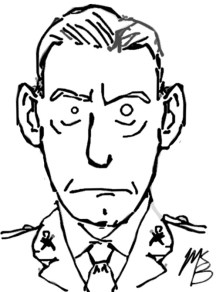
Meurling

I was in command of the 2nd M.M.G. Bge. at the time, and I had as 2ic a man by the name of Mureling [sic], he was not a Canadian, and spoke very broken English, which was very hard to understand, and he was a most objectionable fellow indeed, how ever he got where he was is more than I can tell.

(Col. W.J.A. Lalor to Col Snelgrove, 18 Dec 1936)

Harry Frederick Victor Meurling was a Swedish civil engineer born on 23 April 1875. When he enlisted with the 5th Canadian Mounted Rifles in May 1915 he cited military experience in the Swedish Royal Navy and the Belgian Congo. Of his time serving the notorious central African regime of King Leopold, Meurling stated in 1922: “Many mistakes were made, the blame for which were more rightly laid to human nature than on him in particular, and history, I am sure will only remember him as a man with a great vision and the courage to carry it out.” Continue reading
The Veteran Advocate

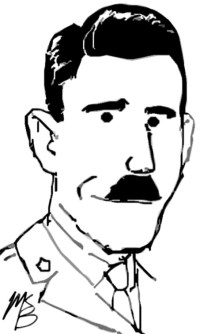
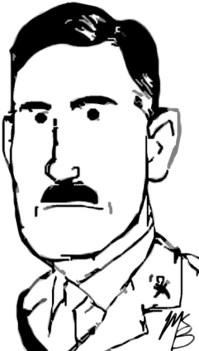
Lieutenant Colonel W.K. Walker, D.S.O., M.C.
1st Motor Machine Gun Brigade

I am not opposed to the Vimy Ridge Memorial and plan to be present at the unveiling in July … I am, however, opposed to extravagant war memorials. Particularly when so many of our fine men, who gave their all in the war, are still in need. Anyway, these war memorials will probably only be destroyed in the next war.

(Lt. Col. W.K. Walker, Ottawa Citizen, 11 April 1936, 16)

Born in Cleator Moor, England on 12 July 1888, William Keating Walker was a Church of England missionary living in British Columbia. On the outbreak of the war, despite having no  active military service, he first joined Elliott’s Horse, a small privately raised unit of veteran soldiers. Although many volunteers intended to join their old British regiments on arrival to England, Walker vowed, “I was a Canadian by adoption; a Canadian I would remain, and as a Canadian I would fight.” He was commissioned with the Royal Canadian Dragoons in November 1914. 

Continue reading

Lt. Col. Wilkin

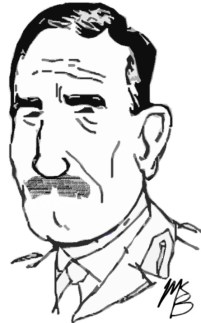
Lieutenant Colonel F.A. Wilkin, M.C.
1st Motor Machine Gun Brigade
Wilkin

Has headaches – nearly constant and at times severe. States that his memory and thinking and reasoning power become very poor after he has been at work a few hours. Insomnia.

 (Medical Board Report of Lt Col. Wilkin, 28 Sept 1918)

Born in Yokohama, Japan on 8 July 1872, Francis Alfred Wilkin was an Alberta land surveyor and member of the Corps of Guides. He joined the Canadian Motor Machine Gun Brigade in January 1915 as a lieutenant and succeeded Lieutenant Colonel Raymond Brutinel as commanding officer in October 1916. Worn down after long service, he was replaced in March 1918 by Major William Keating Walker.

Continue reading

Lt. Col. MacLeod

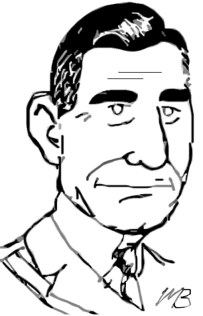
Lieutenant Colonel G.W. MacLeod
Royal Canadian Regiment
MacLeodGW

He was the only officer without previous training before the war to ever hold command of the R.C.R.’s and according to stories told by other officers of the C.E.F., the appointment of a “civilian” colonel was deeply resented by the regular officers of the regiment …

(Edmonton Journal, 18 Apr 1933, 26)

Born in Parkhill, Ontario on 2 February 1888, George Waters MacLeod was an Edmonton civil engineer with no militia experience when he enlisted as a lieutenant in the 49th Battalion in July 1915. He went to France as a captain in October and within six months had been promoted to major. By mid-1918, he had transferred to the Canadian Machine Gun Corps and then served as acting commanding officer of the Royal Canadian Regiment for the final month of the war.

Continue reading

Lt. Col. Newcomen

Lieutenant Colonel T. Newcomen
Royal Canadian Dragoons

Examination of this officer to-day brings out the facts, that he cannot sleep at nights, that he has violent fits of temper, that he has very great trouble in concentrating his mind on any problems, and that he is restless and irritable. He himself fears that if these symptoms continue and increase their results may be very serious to him.

(Neurological Report on Lt. Col. Newcomen, 22 Sept 1923)

Terence Robert Gleadowe Newcomen was a professional British Army officers born in County Longford, Ireland on 18 November 1883. He had enlisted at seventeen during the Boer War and was commissioned in the 5th Battalion, the Royal Irish Regiment in 1901. Posted to Canada on an exchange program to train officers since 1912, he was commissioned a lieutenant in the Royal Canadian Dragoons in September 1914.

Continue reading

Lt. Col. Scroggie

Lieutenant Colonel J.A. Scroggie, D.S.O., M.C.
16th (Canadian Scottish) Battalion

Some correspondents have stated that trench warfare days were days of monotony broken by half-hours of Hell. While that is exaggerated it is in a sense true.

(Lt. Col. Scroggie speech, Kingston Standard, 7 Mar 1922, 2)

Born in Scotland on 4 August 1890, James Austin Scroggie immigrated to Canada in 1911 and took up fruit farming in British Columbia. He enlisted with the 30th Battalion as a private in November 1914, and joined the 16th Battalion in the field on a reinforcement draft six months later. Having proven himself as the NCO leader of the bombing section, he was commissioned a lieutenant on 12 May 1916. By the end of the war, he was twice-wounded, three-times mentioned in dispatches, and earned the Military Cross and two Bars.

Continue reading

Lt. Col. Semmens

Lieutenant Colonel J.N. Semmens
78th (Winnipeg Grenadiers) Battalion

 it will act like a wild tornado to fan the flame of anger that burns within us now when we see the cryptic phrase, “Remember Hong Kong.” That anger is not alone aimed at the Japanese but at anything that impedes or hampers the all-out effort of this country of ours. To the Winnipeg Grenadiers it means grim preparedness.

(Col. Semmens, Ottawa Citizen, 11 Mar 1942, 3)

Born in Toronto on 7 October 1879, John Nelson Semmens was a Winnipeg architect and militia captain in the Winnipeg Grenadiers. He first joined the 100th Battalion under the command of fellow architect Lieutenant Colonel J.B. Mitchell before transferring to the 78th to act as second-in-command. He assumed temporary command during Battle of Passchendaele until Lieutenant Colonel James Kirkcaldy recovered from his wound in March 1918.

Continue reading

Maj. Gen. Burstall

Major General Sir Henry Burstall
2nd Canadian Division
Burstall

General Sir H.E. Burstall who commanded the Canadian artillery in the late war, was reputed to have an iron nerve, and, in action, to have been one of the coolest men in the army. Nothing, it was said of him so quickly aroused his anger as to see a man give way to fear, even momentary fear, and he seldom let such action pass in silence.

 (Vancouver Daily World, 28 Oct 1922, 22)

Born on 26 August 1870 in Sillery, Quebec, Henry Edward Burstall was a graduate of the Royal Military College, Boer War veteran and Permanent Force artillery officer. He commanded the 1st Division Artillery from September 1914 until September 1915 when he was elevated to GOC of the Royal Canadian Artillery Corps. In December 1916, Burstall replaced Major General Richard Turner of the 2nd Canadian Division.

Continue reading

Lt. Col. Worthington

Lieutenant Colonel E.B. Worthington
17th Reserve Battalion

I do not believe that you could have searched your entire county and selected a better man than Colonel E. B. Worthington. A Sherbrooke boy from A to Z, a man who served his (our) country with dignity and distinction; a soldier who was an honor to the (our) dear old British flag; a man that no one can point their finger of scorn at; a man who will make a politician — No, No, a thousand times No — but a man who will make a statesman, an honorable Christian man who will represent the constituency with dignity.

(Letter to Sherbrooke Daily Record, 28 Oct 1925, 12)

Born on 1 December 1860 in Sherbrooke, Canada East, Edward Bruen Worthington was a notary, municipal official, former mayor of Sherbrooke, and long serving militia officer having first joined as a bugler in 1877. He was former commanding officer of the 53rd Sherbrooke Regiment, organized the 11th Hussars, and commanded the Eastern Townships Mounted Brigade since 1911. In January 1915, he replaced Lieutenant Colonel Struan G. Robertson in command of the 17th (Reserve) Battalion in England.

Continue reading

Lt. Col. Sissons

Lieutenant Colonel Frank O. Sissons
1st Mounted Rifles Brigade
Sissons

Col. Sissons is a real westerner in every sense of the word.

(Edmonton Bulletin, 14 Nov 1914, 1)

Born in Burnside, Manitoba on 23 March 1868, Frank Ogletree Sissons was a militia officer, rancher, and landowner in Medicine Hat. He had created the 21st Hussars in 1908 and with the formation of the Canadian Mounted Rifles in November 1914, Sissons was initially given command of the 3rd CMR. The militia council had selected Colonel Victor Williams to command the 1st CMR Brigade, but militia minister Sam Hughes favoured Sissons to represent the West. He was appointed brigade commander in March 1915.

Continue reading