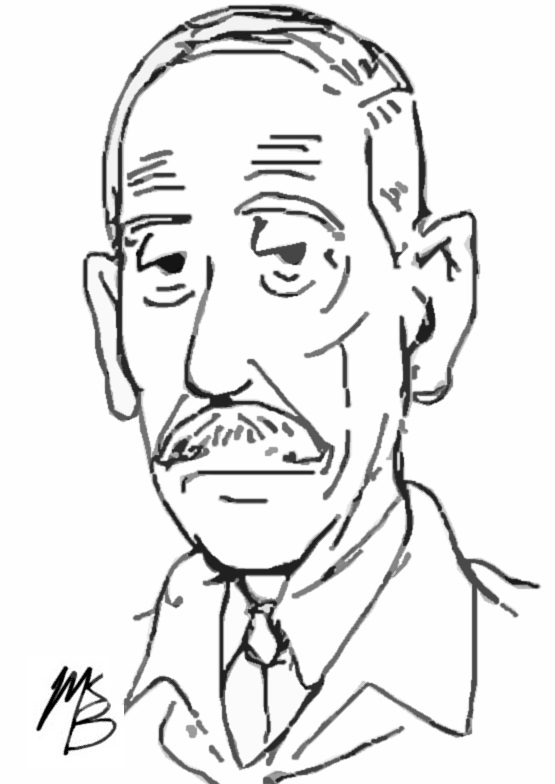
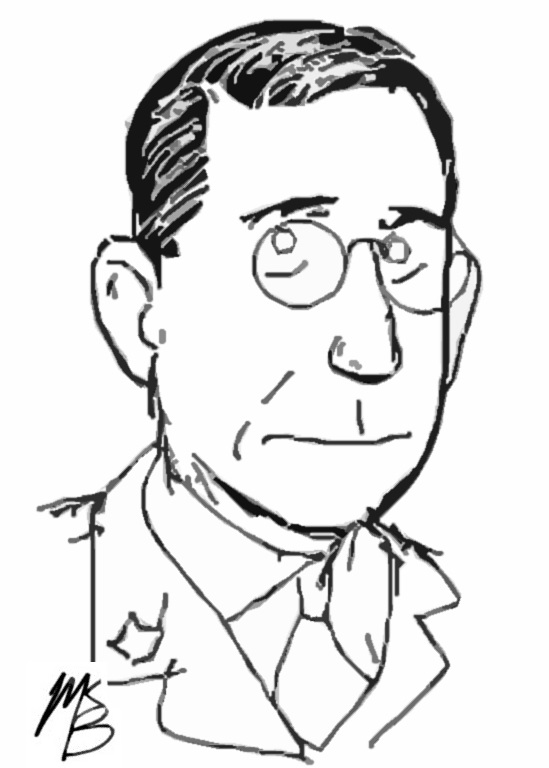
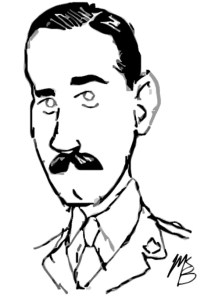
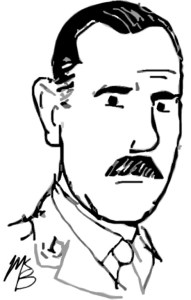
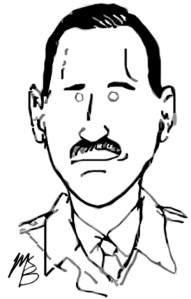
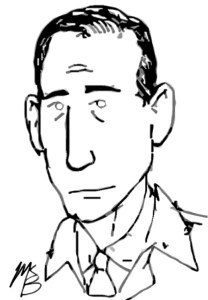
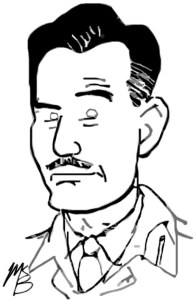
Lt-Col. J.G. Robertson

Lieutenant-Colonel J.G. Robertson
Regina Rifle Regiment

Canada can be assured that the English people and also the American forces have a high realization of the support by Canada to the war cause. Best of all, I may add, is the thorough respect for the Canadian fighters wherever they are found.

(Quoted in Regina Leader-Post, 9 Aug 1944, 3)

Born on 1 September 1890 in Churchville, Nova Scotia, John Gordon Robertson moved to Saskatchewan after graduating from McGill University with an agricultural degree and specialty in animal husbandry in 1912. He enlisted with the 195th Battalion in December 1915 and joined the 44th Battalion as a reinforcement officer in France a year later. He suffered a serious shell wound in March 1917 at Vimy Ridge, which left him hospitalized for a year. On return home, in 1919, he was appointed provincial livestock commissioner for Saskatchewan.

Continue reading

Lt-Col. L.R. Fulton

Lieutenant-Colonel Lockie Fulton
Royal Winnipeg Rifles

I don’t want to say its the most important thing to ever happen to me in my life, but I’m not sure what beat it … It certainly should be something that is studied and something that people always remember … We went into it knowing it was going to be the experiences of our lives, and that maybe we wouldn’t have it for too much longer.

(Quoted in Winnipeg Sun, 5 Jun 2004, 6)

Born on 31 March 1917 in Gladstone, Manitoba, Lockhart Ross Fulton was a farmer and member of the 12th Manitoba Dragoons since the age of 16. In 1940, he joined the Royal Winnipeg Rifles which went overseas in August 1941. After years training in England, Fulton was promoted to major landed on D-Day as commander of “D” Company. “It was something to see those bullets skipping at you like stones across the water,” he recalled on the fiftieth anniversary of the invasion. “I though it I jumped high enough. I might not get hit.”

Continue reading

Lt-Col. J.M. Meldram

Lieutenant-Colonel Jack Meldram
Royal Winnipeg Rifles

His friends will remember that Jack left a very lucrative job in New York—an executive position that carried real money—to return to Canada and offer his services … As second-in-command of the Winnipeg Rifles his talents have full scope and it is not hard to predict a brilliant future.

(Times Colonist, 19 Oct 1942, 15)

Born on 24 July 1900 in Victoria, British Columbia, John McIntosh Meldram worked as advertising manager for the National Cabon Company in New York City. First commissioned in the Vancouver Regiment in 1927, he returned to Canada in 1940 to join the Queen’s York Rangers (1st American Regiment) in Toronto. By 1942, he had been appointed second-in-command of the Royal Winnipeg Rifles under Lieutenant-Colonel W.J. Moogk, who he succeeded in command in November.

Continue reading

Lt-Col. W.J. Moogk

Lieutenant-Colonel W.J. Moogk
Royal Winnipeg Rifles

For a long time, people here considered us a rowdy crowd of over-paid, over-sexed soldiers … At one time we had higher figures in crime and venereal disease in the Canadian army than all the rest, with only one-third the number of people the others had.

(Quoted in North Bay Nugget, 16 Dec 1952, 5)

Born on 18 August 1910 in Waterloo, Ontario, Willis John Moogk graduated from RMC in 1934 and immediately took a commission with the Royal Canadian Regiment, explaining his motivation: “he had become used to eating three meals a day.” He served as adjutant when the RCR went overseas in December 1939 and was promoted to major six months later. Four of his children would be born in England while he was stationed there with his wife.

Continue reading

Brig. T.G. Gibson

Brigadier T. Graeme Gibson
Royal Winnipeg Rifles
9th, 3rd, 2nd & 7th Infantry Brigades

We in Canada inherited the regimental system and reaped its benefits in World War II and Korea … In our regiments from coast to coast, the system kept the militia alive for more than a century in peacetime and provided a warm human environment to the Canadian fighting man in the brutal adversities of war.

(T. Graeme Gibson, National Post, 5 May 1973, 36)

Born on 26 April 1908 in Toronto, Thomas Graeme Gibson joined the Queen’s Own Rifles in 1925 and became a Permanent Force officer with the Royal Canadian Regiment in 1931. He attended the war staff college at Camberley, England and first served as liaison staff officer with the 2nd Canadian Division in 1940. Following general staff duties with 2nd Infantry Brigade he was appointed commanding officer of the Royal Winnipeg Rifles in January 1942. He succeeded two First World War veterans twenty years’ his senior.

Continue reading

Lt-Col. W.J. Bingham

Lieutenant-Colonel Bill Bingham
Royal Winnipeg Rifles

[H]e was struck in the right upper frontal region by a fragment of shell … septic brain matter was exuding from the wound and X-Rays showed many fragments of bone in neighborhood of wood. On Oct 15th he was trephined and a perforated metal tube introduced. He has made an excellent recovery.

(Personnel file, medial board report, 13 Oct 1915)

Born on 7 September 1890 in Altemont, Manitoba, William John Bingham was a farmer and First World War veteran twice awarded the Military Cross. He enlisted with the 32nd Battalion out of Winnipeg in December 1914. He joined the 10th Battalion in France as a reinforcement officer following the Second Battle of Ypres. Within a month he had been promoted to captain but would be invalided with a serious head wound in October 1915.

Continue reading

Lt-Col. J.K. Bell

Lieutenant-Colonel John K. Bell
Royal Winnipeg Rifles

Symptoms at present time are similar to those which first appeared. They first appeared in the Winter of 1916-17 got progressively worse until the following summer … In 1910 he had another nervous breakdown after overwork.

(Neurological Report, 8 Mar 1919)

Born on 23 May 1886 in Aberdeen, Scotland, John Kidd Bell was a University of Glasgow educated solicitor in Winnipeg and First World War veteran. Having moved to Canada shortly before the war, he volunteered as a lieutenant with the 8th Battalion in September 1914. Gassed and captured at the Second Battle of Ypres in April 1915, he spent the next two and a half years in a German prison camp.

Continue reading

Lt-Col. D.S.F. Bult-Francis

Lieutenant-Colonel Denny Bult-Francis
8th Reconnaissance Regiment (14th Hussars)
BultFrancis

The Dieppe raid was not a failure, but will go down in history as one of the great battles of the present war, not compared to the African struggle but as a necessary part of the Allied victory.

(quoted in Montreal Gazette, 24 Nov 1942, 4)

Born in Highgate, England on 28 August 1910, Dennis Scott Fead Bult-Francis was a former member of the British Army and the Palestine Police Force. He moved to Montreal in 1939 and joined the Black Watch on the outbreak of war. Overseas in 1941, he transferred to the newly formed 8th Reconnaissance Regiment. He participated in the Dieppe Raid of 19 August 1942 as a liaison officer to Major-General Ham Roberts.

Continue reading

Lt-Col. J.F. Merner

Lieutenant-Colonel Butch Merner
8th Reconnaissance Regiment (14th Hussars)
Merner

At this time of the year two things are inevitable, the after-festivities hangover and the CO’s more or less heartening message. Of the two my words are probably the more cheerful, as the hangover one can’t avoid, but this message need not be read. For those of you who have got this far it is obvious that you have nothing else to do so you might as well continue to the bitter end.

(Recce Zeitung, 1 Jan 1946, 2)

Born in Toronto in 1918, John Ford Merner was an original squadron commander in the 8th Reconnaissance Regiment and second-in-command during the Northwest Europe campaign. He served as acting commanding officer during absences of Lieutenant-Colonel B.M Alway and took over shortly before VE-Day. Before repatriation in late April 1945, Alway assured the unit his successor was “an experienced soldier who had been with the Regiment since its inception.”

Continue reading

Lt-Col. B.M. Alway

Lieutenant-Colonel Mowbray Alway
8th Reconnaissance Regiment (14th Hussars)
Alway

If I should not see you all again in a theatre of Operations, I ask that when you get back to “civvy street,” if you should at anytime see me, please let out a “yell” or make yourself known in some manner. If I recognise you I will do the same.

(Alway farewell address, war diary, 27 Apr 1945)

Born on 15 November 1910 in Hamilton, Ontario, Bruce Mowbray Alway was a graduate of the city’s Collegiate Institution and worked for a bank then a steel company. Although a member of the Royal Hamilton Light Infantry since 1935, he transferred to the newly formed 8th Reconnaissance Regiment in the January 1941. Just over three years later, he succeeded Lieutenant-Colonel F.A. Vokes, who had been assigned to the 9th Armoured (British Columbia Dragoons) Regiment in the Italian theatre.

Continue reading