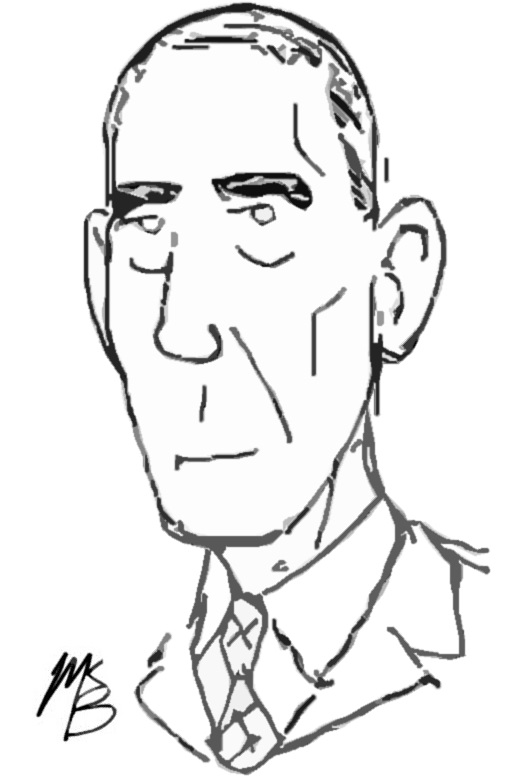
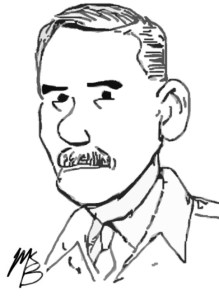
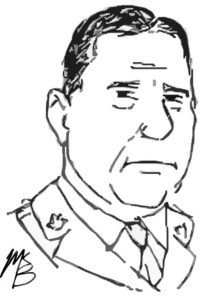
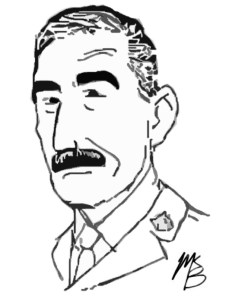
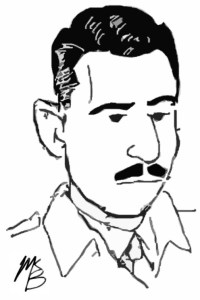
Lt-Col. S.M. Lett

Lieutenant-Colonel Steve Lett
Queen’s Own Rifles

Sleep is the thing we run short of most. The actual fighting isn’t so bad … we can all take that … but it’s being in before your own guns that’s tough. When they fire—and they’re firing a lot of the time—they practically blow you our of your own slit trenches. That’s not conducive to sleep, this moaning, whining and roaring which at times never ends. But the lads are in good spirits.

(Quoted in Toronto Star, 14 Jul 1944, 2)

Born on 27 July 1909 in Cobourg, Ontario, Stephen MacLeod Lett worked in the lumber industry in Toronto and Northern Ontario. He served as second-in-command of the Queen’s Own Rifles at D-Day and succeeded Lieutenant-Colonel Jock Spragge on his promotion to brigadier at the end of August 1944. He would be one of the few infantry commanding officers to remain in command through the latter phase of the Northwest Europe campaign from the end of the Normandy operation to the surrender of Germany.

Continue reading

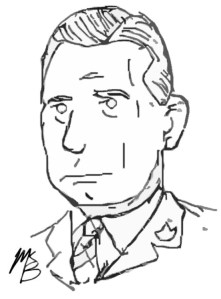
Brig. J.G. Spragge

Brigadier Jock Spragge
Queen’s Own Rifles
7th Infantry Brigade

Then I saw it was the Colonel. I gave him plain hell … I told him he should be back at Battalion HQ, not up at the front with us—the last line between our forces and the enemy. He was too good and too necessary to be killed or wounded … [he] said ‘Charlie, it’s such a sad day. We’ve lost so many good me.’ He said goodnight and turned away, but not before I saw the tears in his eyes. Jock Spragge was all man. He was not one of the spit’n’polish professional types, but as a fighter he was the best.

(C.C. Martin, Battle Diary, 15-16)

Born on 20 May 1907 in Ottawa, John Godfrey Spragge was a sportsman, former Toronto banker, industrialist, and businessman in London, Ontario. He had joined the Queen’s Own Rifles as a private in 1925 and took a commission a year later. He returned to Toronto with the outbreak of the war when the regiment mobilized for active service. Before the QOR went overseas in July 1941, Spragge became second-in-command and succeeded Lieutenant-Colonel Harry Mackendrick in April 1942.

Continue reading

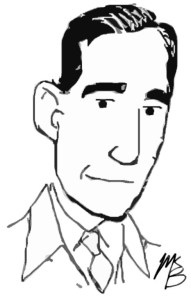
Lt-Col. H.C. Mackendrick

Lieutenant-Colonel Harry Mackendrick
Queen’s Own Rifles

This Officer was gassed with enemy gas while in support near Lens at 2 am on 5.9.17. He suffered from vomiting, blepharitis & conjunctivitis, sore throat, constriction of chest & cough … Sleep is greatly disturbed, waking with terrors; is nervous & has trembling spells & slight tremor.

(Personnel file, medical report, 1917)

Born on 30 August 1895 in Galt, Ontario, Harry Crane Mackendrick was a University of Toronto graduate and First World War veteran. He was commissioned with the UofT officer training corps and joined the 111th Battalion in January 1916. He went to France as a reinforcement officer for the 4th Battalion but suffered mustard gas burns in September 1917. He was admitted to a casualty clearing station where his father, a doctor attached to with the Royal Army Medical Corps, happened to be stationed.

Continue reading

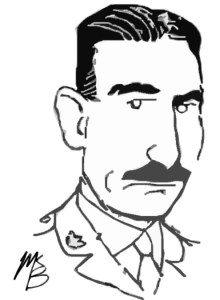
Lt-Col. I.M. Macdonell

Lieutenant-Colonel Ian Macdonell
Queen’s Own Rifles

I don’t propose to be an alarmist … we must admit there is no point in us being ostriches. We are not preparing for what the Germans might do but for what we know they can do. Until we get organized there is no use in even giving an alarm, for nothing can be done.

(Kingston Whig-Standard, 29 Apr 1943, 2)

Born on 8 August 1895 in Toronto, Ian McLean Macdonell was a lawyer, former city alderman, and judge of the County Court of York. He was commissioned with the 41st Battery in December 1915 and deployed to France with the 11th Brigade, Canadian Field Artillery in July 1916. He was wounded in December 1917 and ended the war as staff captain with the 1st Canadian Division. He began a law practice in Toronto in 1920 and joined the Queen’s Own Rifles. After rising through the commissioned ranks, became commanding officer in April 1939.

Continue reading

Lt-Col. C.M. Wightman

Lieutenant-Colonel Cy Wightman
Canadian Scottish Regiment

As an officer before and during World War II, as a CO, as a Trustee, and as Honorary Colonel, he was a tower of strength to the Regiment over many years. He was a positive influence on all those who shared his company.

(Reg Roy, Ready for the Fray, 502)

Born on 26 November 1905 in Ongar, Essex, England and educated in Victoria, British Columbia, Cyril Marriott Wightman was football player, journalist, and advertising manager for the Daily Colonist. A longtime member of the Canadian Scottish, he reverted to the rank of captain to go overseas with the battalion in August 1941. By the D-Day landings, Wightman served as second-in-command but was put out of action when an enemy shell hit battalion headquarters on 26 June 1944.

Continue reading

Lt-Col. L.S. Henderson

Lieutenant-Colonel Larry Henderson
Canadian Scottish Regiment

Our line in this war is not like the lines veterans of the last war in France knew. We live in slit trenches. The same old scenes, though, prevail I am sure … Just now it is quiet except for our occasional shelling, and once in a while the cry of “stretcher-bearer,” the smell of dead cattle, patrols sneaking back just at daybreak, etc., so I guess it’s pretty much the same old war.

(Henderson, Time Colonist, 25 Aug 1944, 10)

Born on 18 July 1908 in Vernon, British Columbia, Lawrence Sinclair Henderson was a rugby player and commissioned officer in the Canadian Scottish since 1928. He served as a company commander at D-Day and earned the Distinguished Service Order at Hill 168 near Falaise for “courage and leadership under heavy fire.” He temporarily took command of the battalion in December 1944 when Major A.H. Plows was injured in a motor accident. He assumed command again in February 1945 when Lieutenant-Colonel D.G. Crofton was severely wounded.

Continue reading

Lt-Col. D.G. Crofton

Lieutenant-Colonel Des Crofton
Canadian Scottish Regiment

Lieutenant-Colonel Crofton remained seriously wounded in this exposed position for twelve hours when he was finally evacuated by our Medical Officer. Throughout these actions in Holland Lieutenant-Colonel Crofton’s fearless leadership, gallantry and devotion to duty were an inspiration to all ranks and in no small measure influenced the tide of battle. His splendid part in the liberation of Holland was in keeping with the highest traditions of the Canadian Army and of the Regiment he so faithfully commanded.

(Bronze Lion citation, 22 Dec 1945)

Born on 10 July 1905 in Ganges, British Columbia, Desmond Gerald Crofton was a sportsman and tennis player. Commissioned with the Canadian Scottish Regiment since the late 1920s, he went overseas as a platoon leader in August 1941. He commanded “C” Company in the D-Day landings and became second-in-command during the Normandy campaign. At the end of August, he succeeded Lieutenant-Colonel R.M. Lendrum on his transfer to command the Royal Regiment of Canada.

Continue reading

Brig. F.N. Cabeldu

Brigadier Fred Cabeldu
Canadian Scottish Regiment
4th Infantry Brigade

The steadiness and high morale of the 1st Battalion, The Canadian Scottish Regiment can be attributed to Lieutenant-Colonel Cabeldu’s calm handling of every emergency, his tireless devotion to duty and inspiring leadership under the most trying circumstances.

(D.S.O. citation, 31 Aug 1944)

Born in October 1905 in Hampton Wick, Middlesex, England, Frederick Norman Cabeldu grew up in Japan and was educated in Victoria, British Columbia. A partner in an investment firm in civilian life, he was commissioned in the Canadian Scottish Regiment in 1926 and rose to major. He became acting commanding officer in the absence of Lieutenant-Colonel Doug Macbeth in April 1943, and officially took over in August. Ten months later he led the battalion in the D-Day landings of 6 June 1944.

Continue reading

Lt-Col. J.D. Macbeth

Lieutenant-Colonel Doug Macbeth
Canadian Scottish Regiment

But I’d much sooner be dead honorably, than beaten to death in a concentration camp, or have you in one because I wouldn’t take the chance. I’m not going to take foolish risks, but I’m going to do my job for my men, for my unit and for my home. It’s not an adventure. It’s a serious job … I’ll be back this time, too, mum darling. I have to get the lads home too, don’t I? So please don’t worry.

(J.D. Macbeth to Madge MacBeth, 1940)

Born on 28 September 1901 in Detroit, Michigan, John Douglas Macbeth had ancestors and relatives on both sides of his family who fought in every war in North America up to the Fenian Raids, the Riel Rebellion, and the Civil War. “With such a record,” his mother, American-Canadian author Madge Macbeth, wrote, “what chance had I, as a cowardly, peace-loving person, to wean Douglas away from a military career?”

Continue reading

Lt-Col. R.G.L. Parker

Lieutenant-Colonel R.G.L. Parker
Canadian Scottish Regiment

Strength, courage, knowledge, these three things
Stand out upon our Athlone crest;
No better man can there be found
To teach us this with all his best

(Athlone school pupil tribute, Vancouver Sun, 14 Feb 1961, 31)

Born on 11 May 1898 in Stockton, Warwickshire, England, Richard Gilbert Lewes Parker was a rugby player, grammar schoolteacher in Duncan, British Columbia and commanding officer of the 2nd Battalion, Canadian Scottish since 1939. He had enlisted with the 48th Battalion in May 1915 and went to France in March 1916 and transferred to the 29th Battalion in May 1917. He was twice wounded in action and ended the war as a cadet with the Royal Air Force.

Continue reading