The Rancher

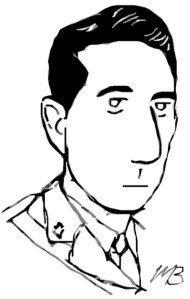
Lieutenant Colonel Norman Lang
65th (Saskatchewan) BattalionLang
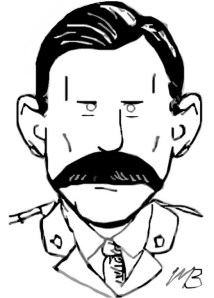
No doubt, the graves of the men who have fallen in France will be as well looked after as is possible, but those who have been over there know that numbers of men have been blown to atoms. Something should be done in their honor, something that would serve as a permanent reminder of their sacrifice.

(Col. Lang, Saskatoon Daily Star, 21 Jan 1919, 17)

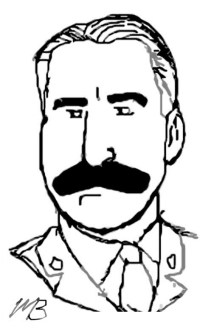
Born on 4 August 1879 in Exeter, Ontario, Norman Lang was a farmer and rancher in Allan, Saskatchewan. The grey-eyed, moustachioed, six-foot-three Lang was a member of the 29th Light Horse and veteran of the Boer War. In April 1915, he was authorized to raise the 65th from the Saskatoon area.
Continue reading

The Moustache

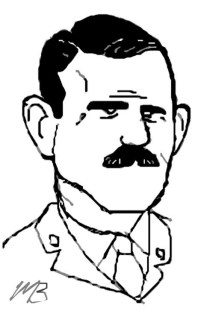
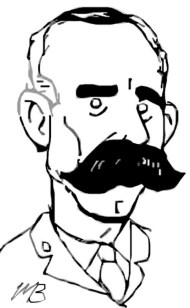
Lieutenant Colonel W. C. G. Armstrong
56th (Calgary) Battalion

WArmstrong

Troops In Garrison Promise Fresh Attack Tonight On “Suspicious” Hotels
OFFICERS ARE POWERLESS

The attack followed those of Thursday night, when two cafes belonging to the White Lunch company were demolished. The attack tonight is expected upon other hotels whose managers have expressed sympathy with owners of structures already destroyed. When the attack was made on the Riverside hotel last night. Lieut-Col. Armstrong, commanding the 56th battalion rushed to the scene of activities, but he was unable to persuade the men to quit.

(Winnipeg Tribune, 12 Feb 1916, 1)

William Charles Gordon Armstrong was a Calgary civic leader and founder of the 103rd (Calgary Rifles) Regiment. Born on 2 November 1865 in Sleaford, England, Armstrong immigrated to western Canada in 1892. He was a land surveyor, investor, city councillor and capitalist. After serving several years in the 15th Light Horse, he created the 103rd Regiment on 1 April 1910.

Continue reading

The Clergyman

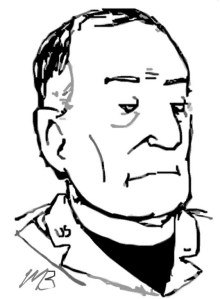
Lieutenant Colonel Rev. C. S. Bullock
237th (New Brunswick Americans) BattalionBullock

Just to fight on until at last is ended
The war with all its horrors and its pain—
To see triumphant that which I defended
And find in loss the truer greater gain
To know that men still count that death is better
Than life, if lived on suppliant’s bended knee
And give their all to snap the bounds that fetter
Then smile at Death because their souls are free

(Bullock, The Rotarian, Dec 1942, 59)

Reverend Charles Seymour Bullock was an American Unitarian minister in the Ottawa Church of Our Father at the outbreak of the First World War. Born in Cold Spring, New York on 13 February 1867, Bullock had been a chaplain in the First Illinois Cavalry during the Spanish-American War. In 1912, he accepted a position with the Unitarian Church in Ottawa. An admirer of Canada, Bullock, strongly supported the war effort against Germany, becoming involved in fundraising and recruitment.

Continue reading

The Cavalryman

Lieutenant Colonel Sam Beckett †
75th (Mississauga) BattalionSBeckett

Col. Beckett ranked with the few most prominent and able military officers which Toronto and even Canada has produced in the present struggle abroad. That he was efficient and an authority on military tactics, particularly cavalry manoeuvers was attested when he was chosen one of the few officers who left here commanding battalions to take his regiment to France. He had innumerable friends in Toronto.

(Toronto World, 5 March 1917, 1)

Lieutenant Colonel Samuel Gustavus Beckett of the 75th Battalion was killed in action during a March 1917 trench raid near Vimy Ridge. Born on 2 December 1869 in Toronto, Beckett was a partner in an architect firm with fellow Lt. Colonel W. C. V. Chadwick of the 124th Battalion. A student of military history and expert on the cavalry tactics of American Confederate General Stonewall Jackson, Beckett had been involved in the Canadian militia since 1893. At the outbreak of the war, he was commanding officer of the 9th Mississauga Horse.

Continue reading

The Ice Man

Lieutenant Colonel H. Marino Hannesson
223rd (Canadian Scandinavians) BattalionHannesson

Col. Hannesson thinks we should have a Canadian flag. He sets forth the case for it in much the same way we have seen it stated with monotonous repetition over a course of several years. The agitation comes from the same small source but sustained as it has been by a clique that arrogates to Itself the shaping of Canada’s destiny, nothing comes of It. It is a babbling stream that never lengthens, never widens, never rises. The people of Canada, broadly speaking, have taken no interest in it.

(Winnipeg Tribune, 24 Jan 1928, 9)

Born in Iceland on 27 November 1884, Hannes Marino Hannesson immigrated with his family to Manitoba in 1886. A graduate of the University of Manitoba, Hannesson practiced law in Winnipeg and Selkirk at the outbreak of the First World War. A member of the 90th Winnipeg Rifles, he enlisted as an officer with Lieutenant Colonel Hans Albrechtsen’s 223rd Battalion in March 1916.

Continue reading

The Mercenary

Lieutenant Colonel Wade L. Jolly
97th (American Legion) BattalionJolly

I am an American though having sworn allegiance to His Majesty King George, and I most respectfully submit that the treatment I have received since I have been in the Canadian Expeditionary Force in England has been a burning disgrace.

(Court martial of Lt. Col. Jolly, 23 Aug 1917)

Born on 18 January 1878 in Iowa, Wade Lytton Jolly was an American soldier, adventurer and businessman. At the age of 19, he enlisted to fight in the Spanish-American War. In 1899, he joined the United States Marine Corps. Serving for fourteen years, he saw action in many overseas military campaigns including China and Panama. During the Boxer Rebellion, Jolly distinguished himself in several acts of “conspicuous gallantry.” His superior, Major Littleton Walker, enthused, “The reports of Mr. Jolly’s conduct are most flattering and they come in from all sides. This is the second time I have had occasion to make special mention of this young officer during the week.”

Continue reading

The Grandson

Lieutenant Colonel J.A.R. de Salaberry
230th (Voltigeurs Canadiens-Français) BattalionDe Salaberry

I thought the name DeSalaberry would thrill the people of Quebec, but let us be frank and tell the story… he was practically assaulted by the parish priest… I thought the grandson of the hero of Chateauguay was entitled to some recognition and he got it. But everywhere there was a hidden hand.

(Sam Hughes, Debates, 8 April 1918, 411)

Joseph Alexandre René de Salaberry was the grandson of Charles de Salaberry, the famous War of 1812 military leader. During the American invasion of Lower Canada in 1813, Colonel de Salaberry led the Canadien militia defence of Montreal. For his victory at Chateauguay, he became a celebrated war hero in the history of Quebec.

Born on 2 July 1870 in Chambly, Quebec, J.A.R. de Salaberry was a graduate of Laval University, a lawyer and advocate with the King’s Counsel. At the outbreak of the First World War, he enlisted at Valcartier in the 2nd Battalion. Following frontline service in France, de Salaberry returned to Canada in order to recruit a French Canadian unit.

Continue reading

The Professor

It seems fitting to begin this project with Professor P. G. C. Campbell of the 253rd Battalion, a man who understood the value of historical inquiry.

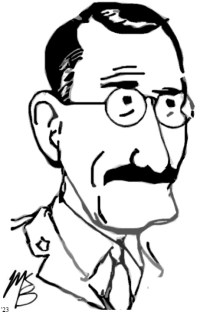
Lieutenant Colonel P. G. C. Campbell
253rd (Queen’s University) Highland Battalion
PGC campbell

We moderns, however go with magnifying glass and dissecting knife to the past, attempting to discover how our forebears lived and thought, and ever present in our researches is the question, how do these things throw light on ourselves; to what extent can we trace a continuity of process between the past and the present?

(P.G.C. Campbell, “Early Roman Religion,” Queen’s Quarterly, 1909, 58)

Percy Gerald Cadogan Campbell was a professor of Romance languages and French at Queen’s University in Kingston, Ontario from 1902 until his retirement in 1949. The son of a Scottish Anglican chaplain, Campbell was born on 8 January 1878 in Calais, France. After graduating from Balliol College, Oxford, he moved to Canada to take a teaching position at Queen’s. In Kingston, Campbell joined the 14th Militia Rifles (The Princess of Wales’ Own), rising to the rank of major.

Continue reading

Colonels of the Canadian Expeditionary Force

In mobilizing the Canadian Expeditionary Force, Minister of the Militia Sam Hughes called on hundreds of prominent citizens to raise volunteer battalions from their home counties. Militia leaders, lawyers, Tory politicians and businessmen answered the call. The battalion system was fraught with competition, corruption and partisanship. At the same time, the recruitment strategy reflected the Canadian political culture of the early 20th Century. Community leaders with close connections to the militia, politics and business, staked their personal and professional reputations to gather local volunteers for overseas service. Many of the middle-aged colonels fully expected to lead their men on the battlefields of France. Most were disappointed and humiliated when British and Canadian military officials broke up the battalions and sent the former commanders packing.

Continue reading