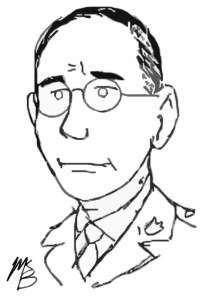
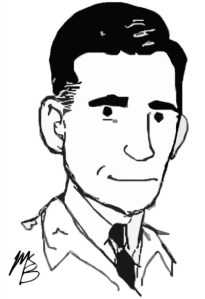
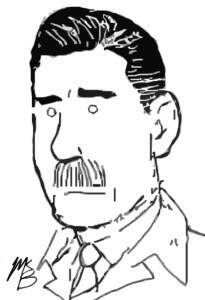
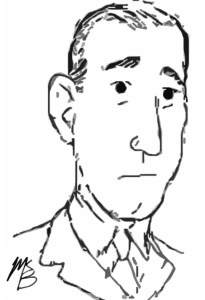
Lt-Col. R.A. Keane

Lieutenant-Colonel Bob Keane
Lake Superior Regiment
It is very difficult to speak upon an occasion like this; one just doesn’t know what can possibly be said about the boys that are gone. I was with the unit when we received our first casualty on the continent and have been with you ever since. It gets tougher and tougher as time goes on accepting these casualties. With the memory of our comrades still fresh, let us remember the mothers, wives, sweethearts and families of the boys, and do what we can to lighten their load.

(Keane, war diary, 18 March 1945)

Born on 14 May 1914 in Fort William, Ontario, Robert Angus Keane was a hockey player, real estate agent and a commissioned officer in the Lake Superior Regiment since 1935. He became battalion adjutant after mobilization in 1940 and went overseas with the Cameron Highlanders in 1941. Although he rejoined the LSR in January 1942 when it converted to motorized infantry, he went to the United States for parachute training while the regiment embarked for England.
Continue reading

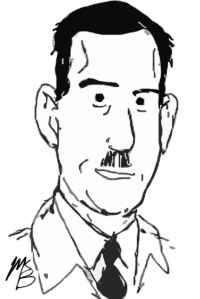
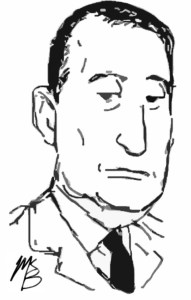
Lt-Col. J.E.V. Murrell

Lieutenant-Colonel J.E.V. Murrell
Lake Superior Regiment

They immediately came under a great deal of fire. Snipers were everywhere. Control was lost and the coy was pinned down … At that time the C.O., Lt-Col. J.E.V. Murrell, arrived on the scene … The C.O., on hearing some of the wounded in the wheatfield, yelled “Follow me” to a group of men across the road and dashed, disregarding the sniper fire, into the field and with the help of other men who followed him in, evacuated the wounded to a safer spot.

(War diary, 9 August 1944)

Born in Southend-On-Sea, England on 24 September 1904, James Edward Victor Murrell was a constructor contractor and adjutant in the Lake Superior Regiment, which he had joined in 1923. When the unit mobilized in 1940, he was acting second-in-command and after it converted to motorized infantry he led the battalion overseas in August 1942. When Lieutenant-Colonel H. Cook returned home due to ill health, command instead went to Lieutenant-Colonel W.T. Ibbott of the Westminster Regiment. Murrell remained second-in-command as more original officers were transferred.

Continue reading

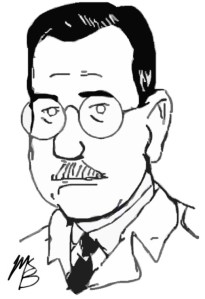
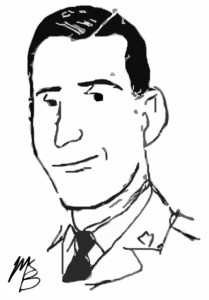
Lt-Col. W.T. Ibbott

Lieutenant-Colonel W.T. Ibbott
Lake Superior Regiment

Offr of medium height and stocky build who has a pleasant personality and good military bearing. He impressed the Board as possessing aggressiveness, drive, leadership and alertness. Having requested the interview, he willingly discussed his case …

He states that he has had many promises of promotion by his former Comds which have not been implemented and has a keen sense of disappointment.

(Survey and Classification Board report, 1945)

Born in Lancashire, England on 13 March 1894, Walter Taylor Ibbott was a Vancouver insurance agent and adjutant in the Westminster Regiment. He had served with the 13th Battalion in France where he was wounded, earned the Military Medal, and demobilized as a lieutenant. After the Westminster Regiment arrived in the United Kingdom, in January 1942 Ibbott was promoted to second-in-command.

Continue reading

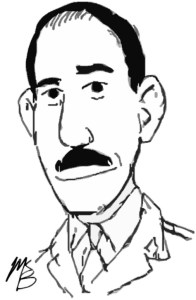
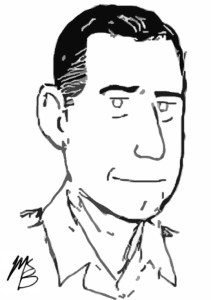
Lt-Col. H. Cook

Lieutenant-Colonel Herb Cook
Lake Superior Regiment

They are commanded by Lieut.-Col. Hebert Cook of Port Arthur, a veteran of the last war and a contractor in civil life. He is quiet, has a mild twinkle in his eye and is possessed of a subtle wit.

(Evening Citizen, 2 May 1941, 2)

Born in Manchester, England on 19 September 1891, Herbert Cook was a construction contractor in Port Arthur, Ontario. During the First World War veteran, he served in France with the 52nd Battalion, which was perpetuated by the Lake Superior Regiment after the war. He assumed in 1938 and mobilized with the battalion in May 1940. An inspection report described him as “A quiet spoken but apparently capable man to whom this battalion, I think, may be safely entrusted.”

Continue reading

Lt-Col. J.W. Toogood

Lieutenant-Colonel Johnny Toogood
28th Armoured Regiment (B.C. Regiment)

A friendly little Vancouver newspaperman with a grin as broad as the Pacific and a shock of hair as unruly as the snow on Mount Seymour is today leading British Columbia’s oldest regiment back home—the DCOR’s

(Vancouver Sun, 28 Jan 1946, 10)

Born in London, England on 24 January 1914, John William Toogood was an employee of the Vancouver Sun when he enlisted as a second lieutenant with the British Columbia Regiment (Duke of Connaught’s Own) in August 1939. He rose to squadron commander during the Normandy campaign and received the Silver Star from the U.S. government for his actions at Falaise in August 1944. He temporary took over during the battle after the death of Lieutenant-Colonel Don Worthington. Toogood served throughout the fighting reportedly without suffering a scratch and assumed command as lieutenant-colonel after VE-Day. 

Continue reading

Lt-Col. A.G. Chubb

Lieutenant-Colonel Gerry Chubb
28th Armoured Regiment (B.C. Regiment)

Unshaven and covered with Booth’s blood I arose … to find the Corps Commander in his enormous armoured car staring—or is the word glaring—at me … I explained the situation and his reply was “Armoured regiment are never out of communication,” with which profound remark he drove away.

(Chubb to Reg Roy quoted in 1944: the Canadians in Normandy, 276)

Born on 16 July 1913 in Rossland, British Columbia, Arthur Gerald Chubb was a graduate of RMC and Permanent Force officer in the Lord Strathcona’s Horse since 1936. He attended the war staff college at Camberley, England before assignment back to Canada in 1943 on staff with RMC. He returned overseas to be brigade major of the 4th Armoured Brigade. During the Normandy campaign, on 14 August 1944, Chubb recovered the body of Brigadier Leslie Booth from the wreckage of his destroyed tank. A week earlier Lieutenant-Colonel D.G. Worthington of the 28th Armoured Regiment had been killed and at the end of the month Chubb became acting second-in-command.

Continue reading

Lt-Col. C.E. Parish

Lieutenant-Colonel C.E. Parish
28th Armoured Regiment (B.C. Regiment)

The Regiment received a staggering blow on 9 August 1944. We lost our Commanding Officer, the Adjutant, all the Squadron Commanders and the Rear Link Capts of each Squadron, plus six Subalterns, and 101 Other Ranks wounded or missing. With this, also came the loss of 46 tanks, which left us hardly a nucleus with which to build another Regiment … Casualties have not been light, but that must be expected in a war of this kind.

(War diary, August 1944)

Born on 29 August 1906 in Wentworth, Ontario, Charles Ernest Parish was a graduate of McGill University, and a Montreal engineer. He was commissioned into the Wentworth Regiment in 1932 before transferring to the Canadian Grenadier Guards three years later. In September 1943, he transferred from the 22nd Armoured Regiment to the 28th (B.C. Regiment) as second-in-command under Lieutenant-Colonel D.G. Worthington. He assumed command on 9 August 1944 following Worthington’s death in Operation Totalize.

Continue reading

Lt-Col. D.G. Worthington

Lieutenant-Colonel Don Worthington
28th Armoured Regiment (B.C. Regiment)

Lt.-Col. Worthington was a fearless, inspiring figure as he moved around the fire-swept square on foot, encouraging the men and organizing the defense … In the afternoon, he was hit by shrapnel when he was out on the perimeter trying to point targets for Canadian artillery. But he carried on. Late in the day he was killed and his regiment’s tribute to him is—there could not be a better commanding officer.

(Ross Munro, Vancouver Province, 4 Dec 1944)

Born on 3 March 1913 in Vancouver, Donald Grant Worthington attended the University of British Columbia and worked as a pharmacist with his brother Jack in the family business. A captain in the British Columbia Regiment since 1934, he mobilized with the unit in May 1940 alongside his younger brother. He went overseas with an advance party of the now redesignated 28th Armoured Regiment and in early 1943 gained combat experience serving the in North African campaign.

Continue reading

Lt-Col. C.E. Bailey

Lieutenant-Colonel Charlie Bailey
28th Armoured Regiment (B.C. Regiment)

For conspicuous gallantry and devotion to duty on numerous occasions. He has displayed the greatest gallantry and initiative in the performance of various duties, establishing ammunition and ration dumps, leading parties across “No Man’s Land” under heavy fire, attacking and gaining objectives at critical moments, and successfully resisting hostile counterattacks.

(M.C. Bar citation, 25 Aug 1917)

Born on 19 October 1895 in Kamloops, British Columbia, Charles Edward Bailey was a construction engineer, president of the longshoremen’s union, and highly decorated First World War veteran with two Military Crosses and the Distinguished Service Order. He enlisted with the 131st Battalion and went to France as a reinforcement officer for the 47th Battalion. Twice wounded in action, he ended the war at the rank of major in the Canadian Machine Gun Corps. He mobilized in June 1940 as second-in-command of the British Columbia Regiment.

Continue reading

Lt-Col. G. Carmichael

Lieutenant-Colonel G. Carmichael
28th Armoured Regiment (B.C. Regiment)

The “search for talent” is still on. The ranks are being combed for “Officer Material.” There will be many of the Iron Dukes among the classes that graduate from Brockville with the King’s Commission in the weeks to come. Men who are young—men who are bright, are the ones that are needed.

(Cpl. T.J. Kennan, war diary, Mar 1942)

Born on 9 October 1893 in Newcastle, England, Gordon Carmichael was a banker and decorated First World War veteran. He had enlisted as a private in 1915, earned a field commission with the 7th Battalion in 1917, and then transferred to the Royal Flying Corps in 1918. He ended the war with a Military Cross for bravery and rejoined the British Columbia Regiment in the postwar militia. He assumed command in November 1939 when Lieutenant-Colonel H.E. Molson reverted in rank to join the PPCLI.

Continue reading