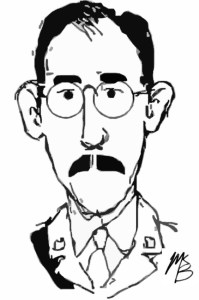
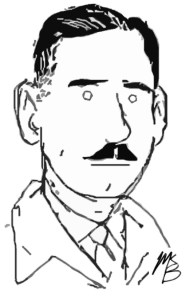
Lt-Col. A.F. Coffin

Lieutenant-Colonel Bert Coffin
Argyll and Sutherland Highlanders of Canada
His calm manner and complete disregard for personal safety set a splendid example for all ranks of his battalion. There can be no doubt that this officer has been a major factor in the consistent success of both regiments with which he served. His leadership and bravery under fire has been an inspiration to all ranks under his command.

(D.S.O. citation, 1948)

Born on 16 March 1910 in Stirling, Alberta, Albert Frank Coffin was a Medicine Hat pharmacist. He volunteered with the South Alberta Regiment in 1940, which converted armour in February 1942 and was then re-designated the 29th Armoured Reconnaissance Regiment a year later. He served as second-in-command throughout the Normandy campaign under Lieutenant-Colonel G.D. Wotherspoon and led the regiment in several operations in Northwest Europe.
Continue reading

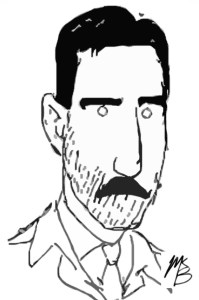
Lt-Col. F.E. Wigle

Lieutenant-Colonel Fred Wigle
Argyll and Sutherland Highlanders of Canada

Colonel Wigle had only been with the Battalion two and a half months, but in that short period of time had taken the Argylls through some of the bitterest fighting of the war. He had distinguished himself through his coolness, courage and methodical, hard work. In the ten weeks he spent as C.O. of the Argylls he had been awarded the Order of the British Empire and the Distinguished service Order, a rare honour, indeed, over such a short period of time. Every member of the unit was deeply shocked at the news of the death.

(War diary, 14 Apr 1945)

Born on 11 July 1913 in Hamilton, Ontario, Frederick Ernest Wigle was graduate of McGill University, a football player, coach and a sales executive. He grandfather, Colonel Ernest Wigle had commanded the 18th Battalion during the First World War. Wigle volunteered with the Canadian Armoured Corps in May 1941 and was commissioned in the 6th Duke of Connaught’s Royal Canadian Hussars. He went overseas as captain and staff officer in the 5th Armoured Division in November 1941. Following promotions and staff postings in England, he joined the 4th Armoured Division as chief of staff in August 1944 during the Normandy campaign.

Continue reading

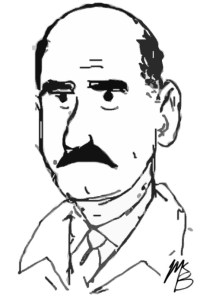
Lt-Col. J.D. Stewart

Lieutenant-Colonel Dave Stewart
Argyll and Sutherland Highlanders of Canada

I was concerned when I got into battle that I would be able to stand it. I was; it didn’t bother me too much, and I was able to stand it very well. There was a rule that in action, steel helmets had to be worn. I adhered to it, except for myself where I figured that the psychological effect of my going around with the shells flying and my wearing a soft hat, would be great for morale, and it was.

(Quoted in Robert L. Fraser, Black Yesterdays)

Born on 21 August 1909 in Georgetown, Prince Edward Island, John David Stewart was a businessman and member of the Prince Edward Island Highlanders since 1928. On mobilization in 1939, he transferred to the North Nova Scotia Highlanders, went overseas as major and company commander in July 1941. and became second-in-command a year later. On September 1943 he was appointed commanding officer of the Argyll and Sutherland Highlanders of Canada, succeeding Major A.J. Hay who had taken the battalion overseas two months earlier.

Continue reading

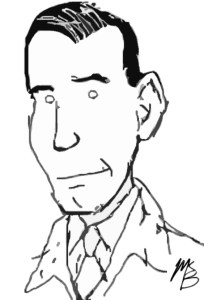
Lt-Col. I.M.R. Sinclair

Lieutenant-Colonel Ian Sinclair
Argyll and Sutherland Highlanders of Canada

I thought my nerves might give if I ever ran into an affair of that sort, but something seemed to change in me and I saw without any particular sensation things happen, which in my previous state of mind would have driven me mad. One of my men actually did go crazy this morning after we got out. Every battalion in the division suffered about as much and the whole is pretty wrecked.

(Sinclair to mother, 28 Apr 1915)

Born in Toronto on 16 June 1891, Ian MacIntosh Roe Sinclair was a decorated First World War veteran, four times wounded in action, twice mentioned in dispatches and awarded the Distinguished Service Order and the Military Cross. He had sailed for England as a subaltern with the 13th Battalion in October 1914. Almost five years later, he returned to Canada at the head of that battalion. He became temporary commanding officer during the fighting at Canal du Nord in September/October 1918, and then again from February 1919 until demobilization.

Continue reading

Lt-Col. T.W. Greenfield

Lieutenant-Colonel T.W. Greenfield
Argyll and Sutherland Highlanders of Canada

Boxing is a grand sport. It builds men up to withstand terrific punishment without flinching.

(North Bay Nugget, 22 Jan 1942, 8)

Born in Worcestershire, England on 27 August 1892, Thomas William Greenfield assumed command of Argyll and Sutherland Highlanders of Canada in October 1938. A First World War veteran, he had enlisted with the 49th Battalion out of Edmonton, earned a commission overseas and rejoined the battalion in France in November 1917. He was severely wounded at Cambrai a year later.

Continue reading

Lt-Col. A.J. Hay

Lieutenant-Colonel Art Hay
Argyll and Sutherland Highlanders of Canada
Algonquin Regiment

I knew when we landed in Normandy last July that I had with me the “fightingest” outfit in the Canadian Army and you have exceeded all my expectations. Though, to my bitter regret, I was not able to be with you after the middle of August last year, my thoughts and heart at least went with you.

(Hay, Teepee Tabloid, 19 Jul 1945, 2)

Born on 8 April 1909 in Killarney, Manitoba, Arthur John Hay was a Hamilton salesman and adjutant for Argyll and Sutherland Highlanders of Canada (Princess Louise’s). In September 1941, the battalion was dispatched for garrison duty in Jamacia, where Hay acted as instructor at the island’s tactical school. In May 1943, the A&S Highlanders were recalled to Canada in preparation of overseas service. As First World War veteran Lieutenant-Colonel Ian Sinclair was overage, Hay led the battalion to the United Kingdom in August 1943.

Continue reading