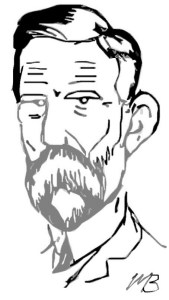
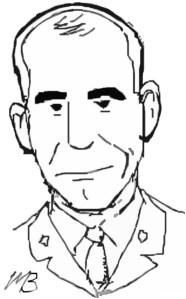
Lt. Col. Towers

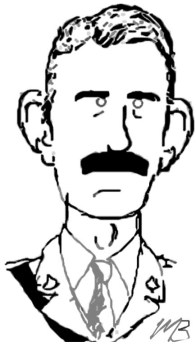
Lieutenant Colonel Robert I. Towers
70th (London) Battalion
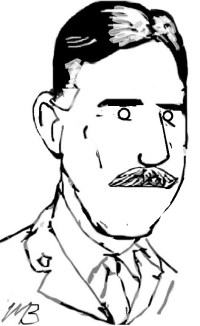
Towers

Lieut.-Col. Robert I. Towers, K.C., a member of the legal firm of Galt, Gooderham & Towers, died by his own hand in a room in a downtown hotel last night. With a bullet wound through the head the lifeless body of Col. Towers was found in the bathroom by the house detective. With one emptied chamber, a .22 calibre revolver lay at the colonel’s side.

(Toronto Star, 11 April 1930, 13)

A native of Sarnia, Robert Irwin Towers was born on 29 October 1876. He was one of the foremost lawyers in western Ontario, particularly concerning mining, admiralty and maritime law. As the retired commanding officer of the 27th (St. Clair Borderers) Regiment, Towers was appointed to raise the 70th Battalion from Essex, Kent, Lambton and Middlesex counties in summer 1915. Continue reading
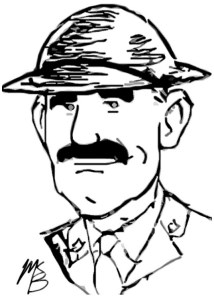
Lt. Col. Keegan

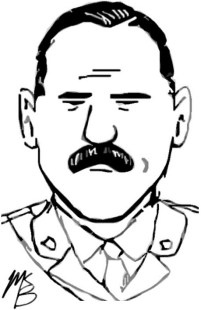
Lieutenant Colonel H.L. Keegan, D.S.O.
47th (Western Ontario) Battalion
Keegan

For conspicuous gallantry and devotion to duty during an attack. In conjunction with another battalion he stormed and successfully captured enemy positions through uncut wire. Throughout the engagement, fought with his right flank exposed, he displayed marked courage and cheerfulness, and in face of the greatest difficulties advanced and held ground gained for three days.

(Keegan D.S.O. citation, London Gazette, 2 Dec 1918, 14213)

Herbert Leo Keegan assumed command of the 47th Battalion after Lieutenant Colonel Ralph Webb lost his leg in battle on 22 April 1918. A native Irish Catholic, Keegan was born in on 3 February 1888. He had previously belonged to the Connaught Rangers before moving to Canada to work for the Department of Agriculture. In November 1914, he enlisted as a captain with the 50th Battalion in Calgary.

Continue reading

Lt. Col. Edwards

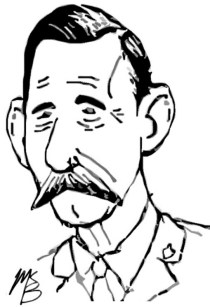
Lieutenant Colonel C.M. Edwards, D.S.O.
38th (Ottawa) Battalion
Edwards

“Where’s your uniform, Colonel?” asked a reporter as he spotted the light gray suit among the red tabs and brass of the inspection party.

 “I guess it’s scattered around among these gentleman,” answered the Colonel, “you know you can’t draw the old age pension and wear a uniform too… The only thing I hated to give up was the kilt,” said Col. Edwards turning away “I really miss that.”

 (Ottawa Citizen, 26 Aug 1957, 3)

Cameron MacPherson Edwards was a Ottawa wealthy lumberman with seventeen-years’ service in the 43rd Regiment. He was born in North Nation Mills, Quebec on 28 September 1881. One of the youngest colonels in France, Edwards was mentioned three times in dispatches and received two Bars to his Distinguished Service Order. Continue reading

Lt. Col. MacFarlane

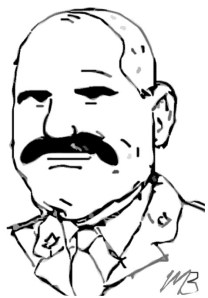
Lieutenant Colonel R. Alex MacFarlane
58th (Central Ontario) Battalion
Macfarlane

He performed this task with great skill and daring, personally killing two of the enemy. During a subsequent operation he made a reconnaissance forward of his battalion, in which he surprised an enemy machine-gun post; he killed one of the crew and took four other prisoners. Throughout these operations he showed sound judgment, courage and skill.

(MacFarlane, D.S.O. Bar Citation, 11 Jan 1919)

Robert Alexander MacFarlane rose from a lieutenant in the 58th Battalion to command the unit from January 1918 to demobilization. A prewar member of the 77th Regiment, he was born in Montreal on 15 August 1889. MacFarlane was three times wounded in action, five-times mentioned in dispatches and won the Distinguished Service Order and two Bars.

Continue reading

Lt. Col. Fearman

Lieutenant Colonel G.D. Fearman
120th (City of Hamilton) Battalion

Fearman

This Officer is still suffering from the above debility. In addition the worry incidental to rearrangement of his Unit and its breaking up prevented him taking his previous three weeks leave and rather increased the condition. At present he suffers from insomnia being awake from 1 to 4 almost every morning. His condition persists without definite signs and his general condition has depreciated.

 (Proceedings of a Medical Board, 7 Feb 1917)

Born on 21 August 1867 in Hamilton, Ontario, George Douglas Fearman was an accountant with twenty-six years’ experience in the 13th Royal Regiment. When authorized to raise the 120th Battalion in November 1915, he expressed dissatisfaction with the indifferent attitude of the Government in the poor response to appeals for recruits.

Continue reading

Lt. Col. Pratt

Lieutenant Colonel Arthur C. Pratt, MPP
133rd (Norfolk’s Own) Battalion
Pratt

One of my sergeants put it cleverly when he said that, while the Canadians make the best fighting men in the world, they are not soldiers, and he was right when he said it. The Canadian fighters are citizens. The war was merely an interlude in their citizenry. During the fighting they bore all manner of hardship because they were part of the fighting but when the fighting had ended they unconsciously became citizens again and not amendable to the strict discipline of military life. They wanted to get back to the life to which they belonged.

(Pratt, Toronto Star, 19 March 1919)

Arthur Clarence Pratt was a Conservative member of the Ontario legislature for Norfolk South from 1905 to 1919. He was born 6 February 1871 in Lynedoch, Ontario. In November 1915, he joined with Hal B. Donly, his Liberal opponent from the June 1914 provincial election, to raise the 133rd Battalion from Norfolk County.

Continue reading

Lt. Col. Arthurs, M.P.

Lieutenant Colonel James Arthurs, M.P.
162nd (Timber Wolves) BattalionArthurs

But they wanted to go. One member of this House, Col. Arthurs—I read the most touching letter I have seen for many a day—is in the trenches. He had reduced his rank and gone over in spite of his son’s remonstrance from the trenches ordering his dad to get out.

(Sam Hughes, Debates, 6 Feb 1917, 574)

James Arthurs was a hardware merchant, self-styled gentleman and Conservative MP for Parry Sound (1908—1935). He was born on 3 October 1866 in Toronto. He raised the 162nd Battalion from his home county and proceeded to England in November 1916. Despite age restrictions on senior officers, the fifty-year old Arthurs reverted to captain and joined the 1st Battalion on the front in February 1917.

Continue reading

Lt. Col. Hamilton

Lieutenant Colonel Fred Hamilton
126th (Peel) Battalionhamilton

I am quite sure that the officer commanding the Peel battalion, Colonel Hamilton, who has returned home, never thought that the breaking up of his battalion was any stain upon his military record. It was a policy adopted for military reasons, and a great many battalions had to come under the rule.

 (Blain, Debates, 13 Jul 1917, 3377)

Frederick John Hamilton was a municipal politician, member of Orange Lodge No. 163 and militia major. Born on 14 July 1869 in Port Credit, Ontario, he was a six-term town alderman with twenty years’ experience in the 36th Regiment. In early 1916, he was authorized to raise the 126th Battalion from Peel County.

Continue reading

Hon. Col. Cockshutt, M.P

Honorary Colonel W. F. Cockshutt, M.P.WFCockshutt&
Lieutenant Colonel M. E. B. Cutcliffe
125th (38th Regiment Dufferin Rifles) BattalionCutcliffe

The voluntary system as carried out, I think, has been a great credit to our people.

If it failed in any place, it failed because it was not pushed with sufficient vigour by the natural leaders of the people. And who are those leaders? The members of this House. The man who represents a constituency in this House is the first citizen in his riding, and he is the man who should have taken responsibility for recruiting in that riding.

(Cockshutt, Debates, 22 Jun 1917, 2601)

Authorized in November 1915, the 125th Battalion was initially to be raised by William Foster Cockshutt, Conservative MP for Brantford (1904—1908, 1911—1921). Recognizing his own limitations and lack of military experience, the sixty year-old parliamentarian turned over leadership to Captain Mostyn Elton Bluett Cutcliffe, senior officer of Dufferin Rifles.

Continue reading

The Chief

Lieutenant Colonel A. T. Thompson
114th (Brock’s Rangers) Battalionthompson

The ancestors of these men fought for Great Britain in every battle on the Niagara frontier in the War of 1812, and were with General Brock in large numbers when he fell at Queenstown Heights. To this day they venerate his memory, and the name for which I ask, Brock’s Rangers would greatly add to our prestige with them, and gratify them exceedingly.

(A.T. Thompson to Militia Department, 25 Mar 1916)

 Andrew Thorburn Thompson was editor of the Canadian Military Gazette and Liberal MP for Haldimand and Monck (1900—1904). Born on 27 May 1870 in Indiana, Ontario he belonged to a prominent Ontario Liberal Party. His father had been a provincial politician and his grandfather had fought in the War of 1812. A member of the 37th Haldimand Rifles since 1893, Thompson took command of the 114th Battalion after the death of the original colonel, E. S. Baxter on 15 February 1916.

Continue reading