The Toothless

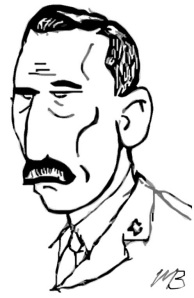
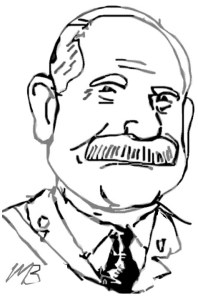
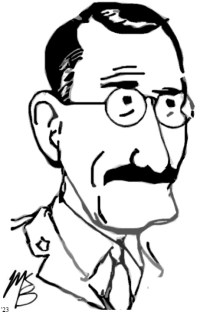
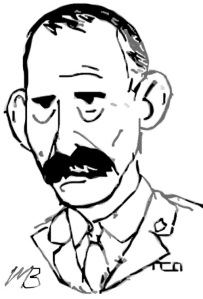
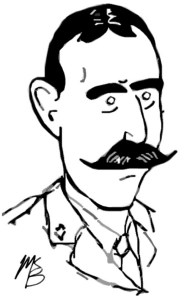
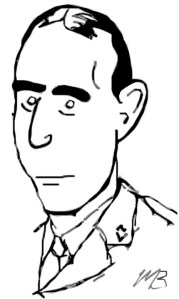
Major John L. Youngs, M.C.
110th (Perth) BattalionYoungs
On August 15th, last, patient presented with very severe form of Trench Mouth. I extracted the four worst teeth and treated the balance. Teeth responded splendidly to treatment and became quite tight. On Sept. 4th, a lower denture was inserted and patient discharged.

Today, I find the natural teeth quite firm, and practically satisfactory. His denture is fairly satisfactory but I think as good as the average lower denture.

(Medical History of Invalid, 11 Dec 1917)

Lieutenant John Lant Youngs was a Stratford building contractor and member of the 28th Regiment. He was born on 11 December 1873 in Oxford County, Ontario. He served as company second-in-command to Captain T. G. Delamere when both enlisted with the 1st Battalion in September 1914.
Continue reading

The Brantford Brothers

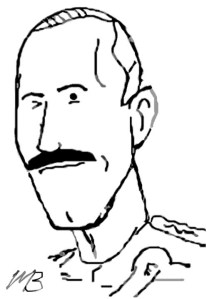
Brigadier General Dr. E. C. AshtonDrAshron

I picked out Col. Ashton as a fighting officer. I did not know what he was as a medical officer but I knew he was a good fighting officer.
(Sam Hughe
s, Debates, 6 Feb 1917)

Major A. Nelles Ashton
36th Battalion

ANAshton

Like his brother, he is every inch a soldier.
(Brantford Expositor, Dec 1915, 5)

Ernest Charles Ashton and Alfred Nelles Ashton served in the 38th (Dufferin Rifles) Regiment for a combined forty years. Born on 28 October 1874, E. C. Ashton was the regiment’s commanding officer and a prominent doctor in Brantford. His younger brother, A. N. Ashton, born on 14 March 1879, was principal of the Mohawk Institution. Their father, Rev. Robert Ashton (1843—1930), was chaplain of the Dufferin Rifles and long-time superintendent of the Mohawk Institution.

Continue reading

The Gassed

Lieutenant Colonel C. F. Bick
37th (Northern Ontario) BattalionBick

His heart is intermitting. He is very nervous. There is a fine tremor over the entire body. Insomnia. He is easily startled by the slightest noise. He wakes up several times during the night.

(Proceedings of Medical Board, Exhibition Camp, 12 Apr 1917)

Born on 1 December 1866 in Berkeley, England, Charles Frederick Bick was a building contractor with thirty-four years’ experience in the Canadian militia. He immigrated to Canada at the age of four. Bick served for four years with the 10th Royal Grenadiers in Toronto before moving to Cannington in 1885. He joined the 34th Ontario Regiment as a private and rose through the ranks to become commanding officer in 1913.

Continue reading

The One-Eyed

Lieutenant Colonel Herbert Buller, D.S.O. †
Princess Patricia’s Canadian Light Infantry Buller

The question of the command of the battalion is now, I am glad to be able to tell you, admirably settled in the appointment of Buller with the temporary rank of Lieut.-Colonel. Although Farquhar can never be replaced, Buller will make a splendid commanding officer. He has, as of course you know, the absolute confidence of us all and is eminently qualified for the arduous duties which lie before him.

(Maj. Gault to Sam Hughes, 20 Apr 1915)

Hebert Cecil Buller succeeded Lieutenant Colonel F. D. Farquhar as commander of Princess Patricia’s Canadian Light Infantry on 21 March 1915. The son of British Admiral Alexander Buller, he was born in 1881 in England. He joined the Rifle Brigade in 1900 and later became aide-de-camp to Governor General of Canada Prince Arthur, Duke of Connaught. In August 1914, Buller joined P.P.C.L.I. as the battalion adjutant.

Continue reading

The Princess & The Guardsman

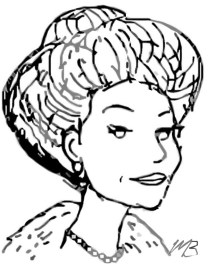
Colonel-in-Chief Princess Patricia of Connaught
PrincessPat&
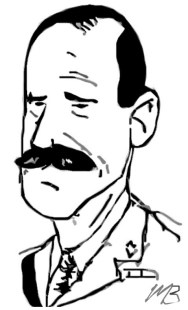
Lieutenant Colonel F. D. Farquhar, D.S.O. †
Princess Patricia’s Canadian Light InfantryFarquhar

So poor Francis Farquhar is dead; killed, as he would have wished it himself, in action, fighting for his own dear country and her Allies.

(London Times, 30 Mar 1915, 14)

Francis Douglas Farquhar was a Coldstream Guard and military secretary to the Governor General of Canada Prince Arthur, Duke of Connaught. Born on 1 September 1874 in England, Farquhar had been a professional soldier and veteran of the Boer War and Somaliland.

Continue reading

The Unpopular

Lieutenant Colonel W. H. Floyd
139th (Northumberland) BattalionFloyd

You asked me about our friend Floyd. He was at West Sandling when I left. When he gave us his farewell address he asked if any of the boys on parade would give him a set of badges and there was not one stepped out and he did not get a cheer from his Battalion, although he felt pretty bad as he wiped the tears from his eyes when he said good-bye to his Battalion. I guess he was ashamed of himself as he had as good boys as any that came overseas, only they were not handled right

(Ptv. Robert Franklin, 139th Bn. to Moses Marsden, 2 Mar 1917)

Born on 7 November 1860 in Cobourg, Canada West, William Herbert Floyd joined the 40th Regiment as a mess boy at the age of nine; he retired as the commanding officer forty years later in 1909. In his civilian life, Floyd was a dealer of men’s shoes and clothing lines. He was closely involved in municipal affairs and served one term as Cobourg mayor in 1903. In early 1916, the fifty-five year old militia officer was appointed to raise the 139th from Northumberland County.

Continue reading

The Professor

It seems fitting to begin this project with Professor P. G. C. Campbell of the 253rd Battalion, a man who understood the value of historical inquiry.

Lieutenant Colonel P. G. C. Campbell
253rd (Queen’s University) Highland Battalion
PGC campbell

We moderns, however go with magnifying glass and dissecting knife to the past, attempting to discover how our forebears lived and thought, and ever present in our researches is the question, how do these things throw light on ourselves; to what extent can we trace a continuity of process between the past and the present?

(P.G.C. Campbell, “Early Roman Religion,” Queen’s Quarterly, 1909, 58)

Percy Gerald Cadogan Campbell was a professor of Romance languages and French at Queen’s University in Kingston, Ontario from 1902 until his retirement in 1949. The son of a Scottish Anglican chaplain, Campbell was born on 8 January 1878 in Calais, France. After graduating from Balliol College, Oxford, he moved to Canada to take a teaching position at Queen’s. In Kingston, Campbell joined the 14th Militia Rifles (The Princess of Wales’ Own), rising to the rank of major.

Continue reading