The Lil’ Colonel

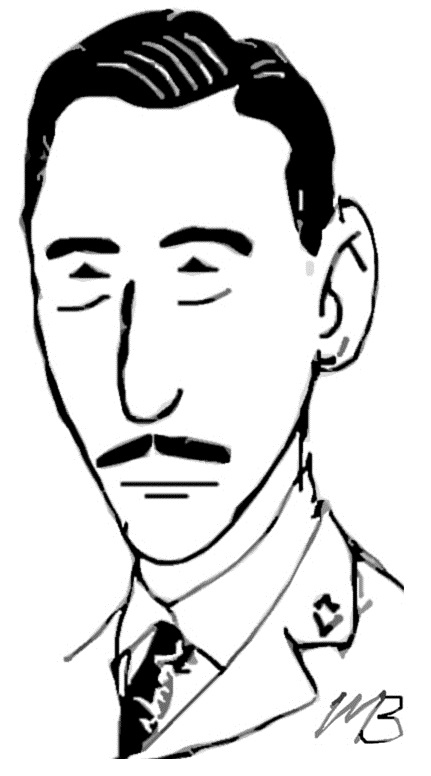
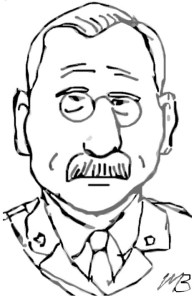
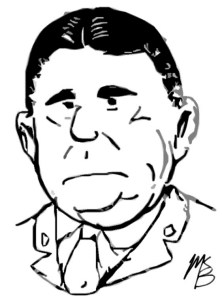
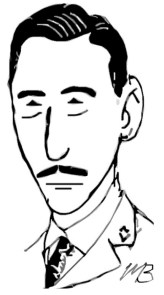
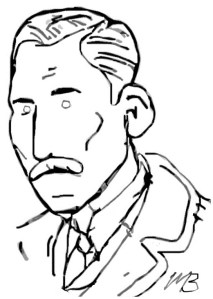
Lieutenant Colonel W. Rae, D.S.O.
4th (Central Ontario) Battalion Rae
A battalion of infantry is a chameleon, ceaselessly changing its colour to suit the changing complexions of its commanding officers. The Fourth Canadian Battalion followed the rule.

But the madness of the Fourth appears to have been an intermittent fever. Birchall engendered it, Colquhoun advertised it, Rae damped down the fire. For with the coming of Rae we first discern another element creeping in, which seems as difficult to mix with the rugged abandon of the early days as oil with water—the element of cold discipline.

(Lieut. Pedley, Only This, 1999, 18)

A native of Scotland, William Rae was born on 15 January 1883 in Aberdeen. He immigrated to Canada in 1907, moved to British Columbia and joined the 72nd Seaforth Highlanders Regiment. At the outbreak of the Great War, the five-foot-six Scotsman enlisted with the 16th Battalion. Rae fought at Second Ypres during the German gas attack and was the only company commander in the 16th to survive the battle. By June 1916, he had transferred to the 4th Battalion in order to take command from Lieutenant Colonel Malcolm Colquhoun.
Continue reading

The Hometown Hero

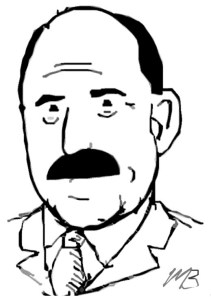
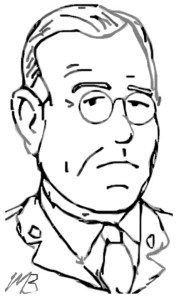
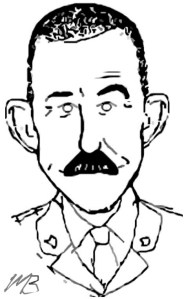
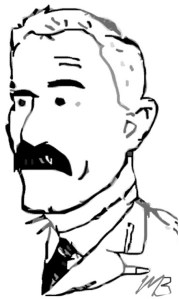
Colonel Mac Colquhoun, D.S.O.
4th (Central Ontario) BattalionColquhoun

People here have quite a different opinion of the Canadians now. They want to have the Canadians in the fighting all the time. We are classed now among the very best troops.

(Colquhoun to Wife, Apr 1915, History of Brant County, 1920, 451)

Born in Mulmur, Ontario on 13 April 1869, Malcolm Alexander Colquhoun was a Brantford contractor and captain with the 38th Dufferin Rifles. In August 1914, he enlisted in Lieutenant Colonel Robert Hodgetts Labatt’s 4th Battalion. In command of “B” Company at Second Ypres, he was one of the only officers in the entire battalion to emerge unwounded from the battle. Describing the fighting to his wife, Colquhoun wrote, “To put it plainly, it was a perfect hell.”

Continue reading

The Fearless

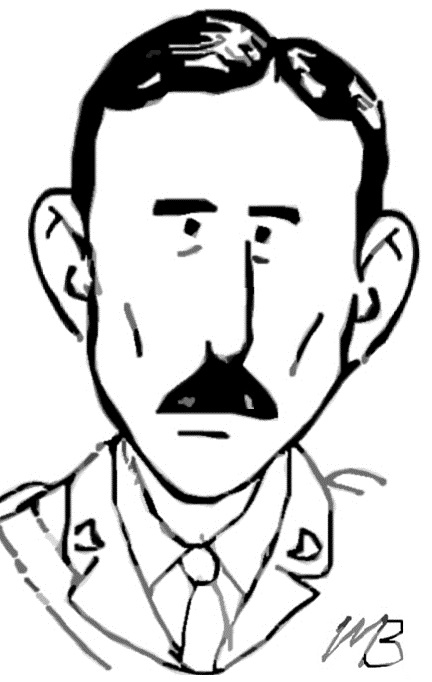
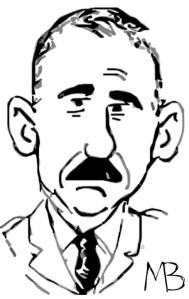
Lieutenant Colonel Arthur Birchall †
4th (Central Ontario) Battalion Birchall

A few years ago it was thought that a soldier was a machine, and should never be allowed to think for himself; the South African War altered all that, as far as our Army was concerned; the soldier is now taught to use his brains and to take advantage of ground and cover, with results which have been amply justified during the present war. In other words, our men are regarded as intelligent human beings.

(Birchall, Rapid Training of a Company for War, 1915, 29)

Arthur Percival Dearman Birchall was one of three CEF colonels killed in action during the second battle of Ypres in April 1915. Born on 3 July 1877 in Gloucester, England, Birchall was a professional soldier and fourteen-year veteran with the British Army. Before the World War, he participated in an officer exchange program with the Canadian militia and relocated to western Canada. As a military instructor, he attempted to transform citizen militiamen into effective soldiers prepared for war.

Continue reading

The Pensioner

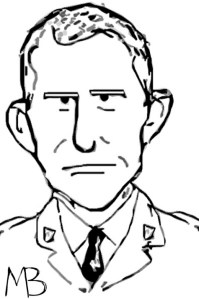
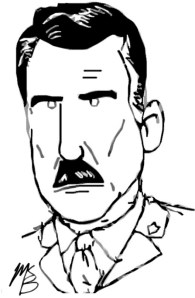
Lieutenant Colonel R. H. Labatt
4th (Central Ontario) Battalion
Labatt

He was prominent in all manly sports, and for years a member of the champion Tiger football team. A successful oarsman and canoeist, Chairman of the Hamilton Club, an organization of outstanding ability, both in military life and in sport. His passing will be regretted by a very large circle. Personally he was the soul of honour and loved by all his friends.

(Trinity College School Record, 1919, 33)

Born on 24 Feb 1864 in London, Canada West, Robert Hodgetts Labatt was a member of the famous Canadian brewing family. A long time militiaman, he had volunteered as a private during the 1885 Northwest Rebellion. In August 1914, he was appointed commander of the 4th Battalion when the First Contingent assembled at Valcartier.

Continue reading

The Reverter

Lieutenant Colonel G. F. McFarland
147th (Grey) BattalionGFMcFarland

Away over in the Hun lines I could hear male voices singing Christmas Carols very melodiously….

Just about dawn one of our snipers saw a Hun making his way overland from one trench to the other, evidently thinking the light was not yet good enough for rifle-fire. Our fellow “drilled” him clean, and was heard to remark as he ejected the empty shell: “Merry Christmas, Fritz, you …!

(McFarland, Diary, 25 December 1917)

Born in Markdale, Ontario, on 30 June 1880, George Franklin McFarland was a Toronto barrister and member of the 31st Militia Regiment. He graduated with a law degree from the University of Toronto in 1905. In early 1916, McFarland was appointed commander of the 147th Battalion, based in Owen Sound.

Continue reading

A Coroner, a Doctor and a Mailman

Lieutenant Colonel Dr. Robert G. C. Kelly
&
Lieutenant Colonel Dr. Thomas P. BradleyTPBradley &
Major W. W. MacVicarMacVicar149th (Lambton’s) Battalion

He had previously been in good health with heart in normal condition, and medical opinion was that his death was probably caused by fatigue and strain in connection with organization of 149th Battalion.

(Lt.-Col. Kelly, Circumstances of Death, 1915)

Born on Christmas Day 1869, Dr. Robert George Campbell Kelly was a physician and associate coroner in Lambton County, Ontario. As commanding officer of the 27th (St. Clair Borderers) Regiment, he offered to raise an overseas battalion from his home county in November 1915. He had belonged to the militia since 1885.

Continue reading

The Overlooked

Lieutenant Colonel Adam Weir   Weir&
Major Andy M. MoffatMoffat160th (Bruce) Battalion

But still in England? Mustering as much good grace as possible we have finally given up all hope and desire to read the future. It is the third X mas in khaki for most of us, each having left a little farther up the beach of army life. Shall we continue? We cannot possibly go much further without slipping over the edge into life in France.

(Editorial, “Bruce in Khaki,” 1 Jan 1918, 98)

Adam Weir was a manufacturer in Port Credit and a twenty-four year member of the 32nd (Bruce) Regiment. He was born on 21 November 1863 in Aberfoyle, Canada West. In December 1915, Wier was appointed to raise the 160th Battalion from Bruce County. Well respected as a militiaman and civic leader, Weir, a local newspaper observed, “is regarded as a most capable officer, and is remembered here for his fine soldiering abilities.”

Continue reading

The Undeterred

Lieutenant Colonel Donald Sutherland, D.S.O.
52nd, 71st, 74th, & 160th Battalions
Sutherland

A man that can fight, a fighter who’s fought,
A man to whom danger to self counts for naught,
A man all the way with a conduct sheet clean,
As a man and a soldier our Colonel’s beloved.
A man; Colonel Sutherland, that’s whom I mean.

(Lieut. L. Young, 71st Bn. “Our Colonel,” Bruce in Khaki, 12 Oct 1917, 2)

Born on 3 December 1879, Donald Matheson Sutherland was a Norwich County physician, militia officer in the 24th Grey Horse and member of Loyal Orange Lodge No. 999. In September 1914, he enlisted as a captain with the 1st Battalion. Wounded during the second battle of Ypres on 24 April 1915, he was invalided to Canada. After raising the 71st Battalion from Woodstock, he again embarked for England in April 1916.

Continue reading

The Mayor

Lieutenant Colonel C. M. R. Graham, D.S.O.
142nd (London’s Own) BattalionCGraham

“I wish to emphatically deny that the 142nd London Battalion was concerned in the recent alleged incident at the ceremonial parade before Sir Sam Hughes.”- Col. Graham

The above disclaimer refers to the “booing” that it is said, broke from the ranks of the London brigade as they passed the saluting base for the second time.

(“142nd Did Not ‘Boo’ Sir Sam,” Toronto Globe, 13 July 1916, 2)

Born on 16 March 1866, Charles Milton Richardson Graham was three-term Conservative mayor of London, Ontario from 1911 to 1914 and raised the 142nd Battalion from his hometown. Although noted for his bravery overseas, Graham was also the centre of scandal due to his unethical conduct and abuse of power.

Continue reading

The Dentist

 Lieutenant Colonel E. F. Armstrong
159th (1st Algonquins) Battalion
EFArmstrong

I feel a little timid, but I know that you, Sir [Speaker of the House], are very sympathetic towards a young member who has had very little experience in public speaking and is addressing this House for the first time. But I am sent here by people of the north…

(Armstrong’s maiden speech, Debates, 22 Feb 1926, 1234)

Born 14 July 1878 in Flesherton, Ontario, Ernest Frederick Armstrong was a dental surgeon and mining prospector. He moved north as a young man and became an early settler of Cobalt. In the small mining community, he set up a dental practice and became chief magistrate.

Continue reading