The Homesteader

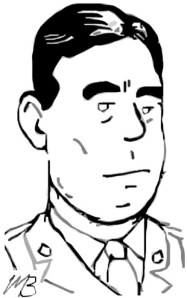
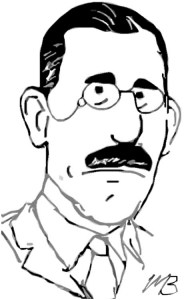
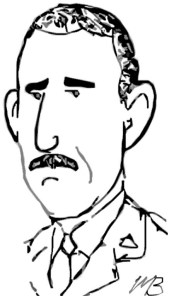
Lieutenant Colonel E. C. J. L. Henniker
103rd (Vancouver Island Timber Wolves) Battalion Henniker
This country has a great future before it most certainly, but only those who are healthy and strong, both mentally and physically, ought to be allowed to come out and help people it.

The wild free life of the North-West, untrammeled by social fads, has its attractions, but to be able to really enjoy it, or I should be better within the truth if I write, to endure it, one must have plenty of grit, and some education leading up to it, otherwise dire discouragement and failure, may be the result.

(Homesteader, Canadian Life As I Found It, 1908, preface)

Edward Constant Joseph Lelievre Henniker was born on 28 March 1875 in Dinan, France. Henniker immigrated from England to Canada with his wife and six-month old son in 1904. The twenty-nine year old immigrant settled in Saskatchewan to build a homestead on a ranch outside of Tessier. His wife Mabel later collected letters she had written home in a book about the young family’s experiences on the prairies, Canadian Life As I Found It: Four Years’ Homesteading in the North-West Territories.
Continue reading

The Animal Lover

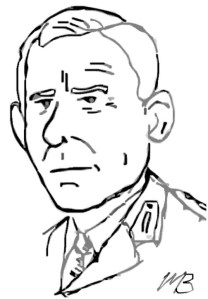
Lieutenant Colonel R. C. Andros, D.S.O.
1st Canadian Mounted RiflesAndros

His nervous condition is only fair he has been in trenches steadily for 33 months and is tired physically and mentally. Treatment in this country will not improve this man’s condition. The Board therefore recommends – Invaliding to Canada.

(Medical Board Report, I.D.O.E. Hospital, 1 June 1918)

Born on 7 February 1871 in Port Hope, Ontario, Ralph Craven Andros was a former North West Mounted Policeman and member of the 20th Border Horse Hussars. After his tour of duty in the NWMP, Andros moved to Montana and built a horse ranch near Fort Benton. He retired in 1910 and moved to British Columbia. In November 1914, he enlisted with the 1st Canadian Mounted Rifles.

Continue reading

The Unionist

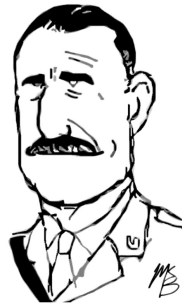
Major Richard C. Cooper
7th (1st British Columbia) BattalionRCCooper

People’s thoughts are now turning to memorials to perpetuate the memory of our fallen, but unfortunately, their thoughts are turning to stone and iron to perpetuate flesh and blood. That is wrong. It is not worthy of the men who gave their lives that we might be free. I suggest that there is a greater, nobler, finer memorial to be erected to our fallen. I suggest that education is the only possible, adequate method of perpetuating the memory of the “immortals.”

(Cooper, Debates, 10 Mar 1919, 340)

Born in Dublin, Ireland on 31 December 1881, Richard Clive Cooper was a police constable in Rhodesia and South Africa where he was associated with the imperial projects of Cecil Rhodes. After serving in the Matabele War and the Boer War, he immigrated to British Columbia in 1906. Cooper enlisted in Lieutenant Colonel Hart-McHarg’s 7th Battalion in September 1914. He fought at Second Ypres before being recalled to Canada in order to aid training and recruitment efforts.

Continue reading

The Rifleman

Lieutenant Colonel W. Hart-McHarg †
7th (1st British Columbia) BattalionHart-McHarg

There was much gloom and sorrow among the British Columbians that night for they all loved their colonel and they knew that there was very little hope for him. He died the following day at Poperinghe. Thus died one of the bravest of the Canadians, a splendid soldier, the champion sharpshooter of America, for that matter of the world. He had always displayed great coolness and daring, and British Columbia will always cherish and revere his name.

(Col. Currie, 15th Bn. The Red Watch, 1916, 233)

William Frederick Richard Hart-McHarg was one of three CEF colonels killed in action at the second battle of Ypres on 24 April 1915. A veteran of the Boer War, he was serving as second-in-command of the 6th Regiment at the outbreak of the Great War. The militia colonel, J. H. D. Hulme, stepped aside in order for Major Hart-McHarg to organize the 7th Battalion at Valcartier. Puzzled why Hulme would miss “the chance of a lifetime,” Hart-McHarg reasoned, “But with me it is different. I have only a couple of years to live in any case.”

Continue reading

The Railway Tycoon

Brigadier General Jack Stewart, D.S.O.
239th (Railway Construction) Battalion

JWStewart

Stewart ran up railways with a rapidity that astounded the authorities… If I had been Prime Minister, he would have found a seat in the British House of Peers, the only recognition adequate to his vast services to the Empire in her worst hour of peril.

(T.P. O’Connor- Irish-Nationalist MP for Liverpool Scotland)

Responding to the critical Allied need for rail support in France, the Canadian government authorized the creation of several battalions designated for railway construction. In May 1916, noted Vancouver railway builder, John William Stewart began recruiting for the 239th Battalion. Born on 12 December 1865 in Sutherland, Scotland, Stewart moved to Canada in 1882. Rising from a poor immigrant labourer, Stewart became a very successful railway manger and contractor in western Canada and Montana.

Continue reading