The Liberal

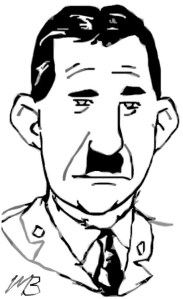
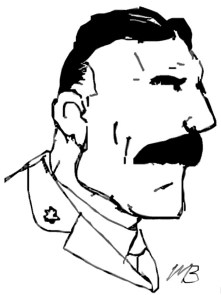
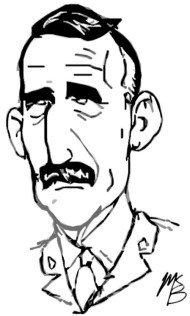
Lieutenant Colonel George B. McLeod
63rd (Edmonton) BattalionGBMcLeod
Every consideration should be given to the question of sentiment and it is well to encourage the idea of community of interest among the people of a certain locality. If a certain battalion is known as an Edmonton battalion, or an Alberta battalion… those who remain behind and those who have gone forward, have an interest in what that battalion is doing that he otherwise would not have had, and ignoring of that fact has tended very greatly against rapid recruiting in many parts of the country.

(Frank Oliver, Debates, 8 May 1916, 3589)

George Brown McLeod was born in Guelph, Ontario on 3 March 1870. He moved west in 1901 in order to pursue business interests in Edmonton. A member of the 101st Fusiliers, McLeod first enlisted as a captain with the 31st Battalion. He later became second-in-command of the 51st before receiving a promotion to lieutenant colonel in order to raise the 63rd from Edmonton.
Continue reading

The Recruiter

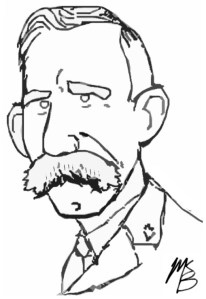
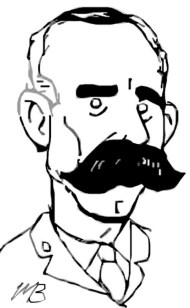
Lieutenant Colonel George Morfitt
137th (Calgary) BattalionMorfitt

The Major has another good one. During his recruiting experiences—and he has enrolled 3,800—he has come across two Tipperary men who did not know their birthday. He christened them both for Christmas Day, so that it would be easy for them to remember in the future.

(Medicine Hat News, 7 Oct 1915, 4)

Born on 16 March 1873 in St. Mary’s Ontario, George W Morfitt was a Calgary broker and member of the 103rd Militia Regiment. Before his appointment to command the 137th Battalion in November 1915, he had been a recruiter for the 31st under Arthur Henry Bell and second-in-command of the 82nd. Suspicious of foreign volunteers with Germanic names, the “eagle-eyed” recruiting officer vowed, “I’m not taking any chancesnot if I know it. A German who slips into the 82nd will have to get up pretty early in the morning.”

Continue reading

The Broken-Hearted

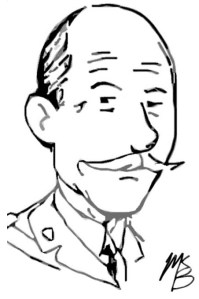
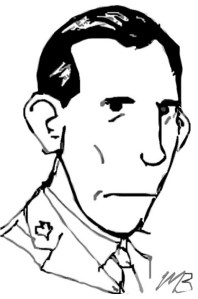
Lieutenant Colonel J. W. Arnott
151st (Central Alberta) BattalionArnott

Song for the 151st

But bloodier yet will the field be,
Till, ‘twill quench his insatiable thirst,
And there will be glory at last for the boys,
Of the Hundred and Fifty First

Oh, into the thick of the fight
We’re straining each moment to go
As Bill’s match, his plans to ignite
With those of his servitor, foe;
When their air castles lie in ruins
And their subjects from bondage have burst,
Then we’ll come back home,— those who are left of us,
Of the Hundred and Fifty First

(Wetaskiwin Times, 12 Oct 1916, 3)

John Wilson Arnott was a gentleman militia officer and graduate of military instruction at Toronto and Kingston. Born on 9 December 1860 in Northumberland County, Canada West, Arnott had long belonged to the 49th Hastings Rifles before he moved west in 1912.

Continue reading

Another Sportsman

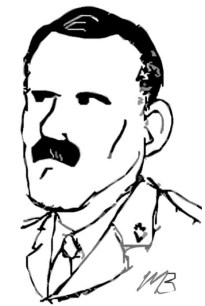
Lieutenant Colonel Peter E. Bowen
202nd (Sportsman’s) BattalionBowen

This officer is well developed. Complains of pain inch above umbilicus at times. Has vomiting of coffee ground and even pure blood. Has passages of large amount of black blood by bowel. When these attacks come on he feels very weak, and breaks out in cold sweats.

(Medical History of Invalid, Edmonton MCH, 26 Sept 1917)

Born on 14 February 1874 in Metcalfe, Ontario, Peter Edwin Bowen was a well-known Alberta hunter, trapper and marksman. An insurance broker in civilian life, Bowen also belonged to the 19th Alberta Dragoons. In August 1914, he enlisted as a captain in the 9th Battalion before transferring into the 2nd Battalion. While fighting at Langemarck during the second battle of Ypres on 23 April 1915, Bowen was shot in the head. Although he only suffered a scalp wounded, he was eventually forced from the field after the battle of Festubert in May due to nearly fatal gas poisoning.

Continue reading

The Old Soldier

Lieutenant Colonel Robert Belcher
138th (Edmonton) Battalion
Belcher

I have in mind a man who has served for many years, first in the British Army, and afterwards in the Northwest Mounted Police and then in the South African war. Finally he was authorized to raise a battalion at Edmonton. On strength of his military experience and on the strength of his personal standing, he did raise a battalion without any serious difficulty. Surely such a man with such a battalion, raised under such circumstances—surely it would be right and proper that that battalion should go to the front intact under such leadership.

(Frank Oliver, Debates, 23 Jan 1917, 76)

Criticizing the breakup of the Canadian battalions, Frank Oliver, Liberal MP for Edmonton, alluded to the experience of Colonel Robert Belcher. Born on 23 April 1849 in London, England, the sixty-seven year old soldier and policeman was “one of the real old-timers in the west.”

Continue reading

The Park Ranger

Lieutenant Colonel S. Maynard Rogers
9th BattalionRogers

The Canadian parks, I believe, possess vast potentialities for the betterment of the Canadian people in body, mind, and resultant energy and activity, and each year, as their attractions become better known, they will undoubtedly draw increasingly larger numbers to share in the benefits of the out-of-door life.

(S. M. Rogers, Humanitarian Ideals, April 1914)

Samuel Maynard Rogers was a military man, outdoorsman and sportsman. Born on 14 April 1862 in Plymouth, England, Rogers had volunteered to fight in the 1885 Rebellion and the Boer War. In 1913, Rogers was appointed first superintendent of Jasper Forest Park. As the administrator of Jasper, he promoted efficiency, wildlife protection and tourism.

Continue reading

The Professional

Brigadier General A. H. Bell, D.S.O.
31st (Bell’s Bulldogs) BattalionBell

Do not allow any factors to induce you to take an action contrary to the dictates of your own judgment and conscience. In many long years of military life my experience has taught me that a soldier who does so spends the balance of his career in making a series of errors, each in the vain attempt to correct the one immediately preceding, and all resulting from his first violation of sound practice.

(A.H. Bell to H.W. McGill, Medicine and Duty, 2007, 21)

Arthur Henry Bell was a professional soldier and veteran of the Boer War. Born on 16 September 1871 in King’s County, Ireland, Bell served with the Leinster Regiment, the Cape Mounted Police, the Matabele Relief Force, and the Imperial Yeomanry in South Africa. At the outbreak of the First World War, he was the commanding officer of Lord Strathcona’s Horse in Calgary.

Continue reading

The Fighter

Lieutenant Colonel Russ Boyle †
10th (Canadians) BattalionBoyle

Words will not express the absolute sense of calamity which has struck every officer and man in the battalion since we have lost him. He was our ideal of a man and a leader and I can assure you that there was not one of us who did not feel to the very limit his loss.

(Captain Ross, 10th Bn. to Mrs. Laura Boyle [wife], 27 May 1915)

Russell Lambert Boyle was one of three CEF colonels killed in action during the second battle of Ypres in April 1915. Born on 29 October 1880 in Port Colbourne, Ontario, Boyle was active in the militia from a young age. He joined the Canadian Field Artillery in 1894 and served with the 15th Light Horse. During the Boer War, he volunteered and fought in South Africa. As a resident of Crossfield, Alberta, Boyle sat on the town council and owned a ranch.

Continue reading

The Moustache

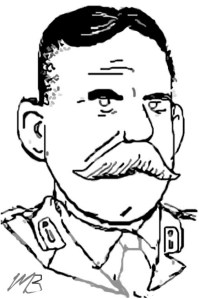
Lieutenant Colonel W. C. G. Armstrong
56th (Calgary) Battalion

WArmstrong

Troops In Garrison Promise Fresh Attack Tonight On “Suspicious” Hotels
OFFICERS ARE POWERLESS

The attack followed those of Thursday night, when two cafes belonging to the White Lunch company were demolished. The attack tonight is expected upon other hotels whose managers have expressed sympathy with owners of structures already destroyed. When the attack was made on the Riverside hotel last night. Lieut-Col. Armstrong, commanding the 56th battalion rushed to the scene of activities, but he was unable to persuade the men to quit.

(Winnipeg Tribune, 12 Feb 1916, 1)

William Charles Gordon Armstrong was a Calgary civic leader and founder of the 103rd (Calgary Rifles) Regiment. Born on 2 November 1865 in Sleaford, England, Armstrong immigrated to western Canada in 1892. He was a land surveyor, investor, city councillor and capitalist. After serving several years in the 15th Light Horse, he created the 103rd Regiment on 1 April 1910.

Continue reading