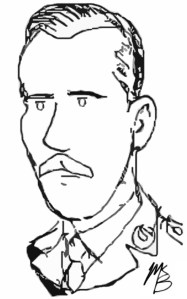
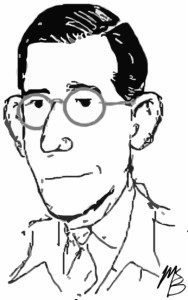
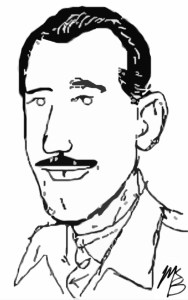
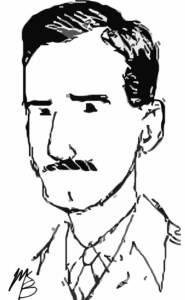
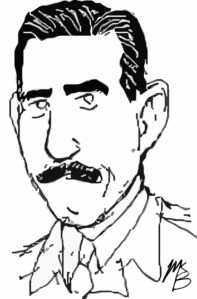
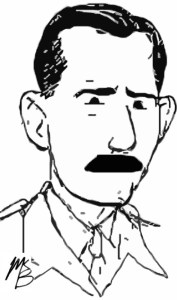
Lt-Col. R.G. Pine-Coffin

Lieutenant-Colonel Geoffrey Pine-Coffin
3rd Parachute Battalion,
7th (Yorkshire) Parachute Battalion

Lieutenant-Colonel Pine Coffin, he was—and I’m not saying this because I’m being taped—he was the finest officer that any man can wish for … He was for the men. He wasn’t one of those ‘oh because I’m an officer, I’m above you’ … He never degraded you.

(Walter Tanner, IWM interview, 31 Jul 1990)

Born on 2 December 1908 in Portledge Manor, Bideford, Devon, Richard Geoffrey Pine-Coffin graduated from Eton and Trinity College, Cambridge. He was commissioned into the Devonshire Regiment in 1928 and mobilized with the 2nd Battalion, Duke of Cornwall’s Light Infantry. He served in the Battle of France and after Dunkirk joined the 11th Devons as a major.  His compound family name led soldiers to dub him “Wooden Box” as the dead were typically buried in simple coffins made of pinewood.

Continue reading

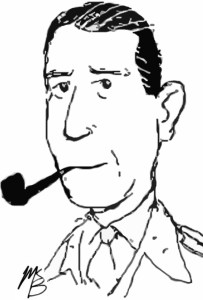
Lt-Col. T. Otway

Lieutenant-Colonel Terence Otway
9th Parachute Battalion

The more I think about it the more I wonder how in the devil we did it … It was this fantastic training that saved us. I can’t believe we could have pulled it off otherwise … It was an appalling shambles and only Good knew what lay in store for us. I asked myself, do I pack up or do I go on? It had been stressed to me how vital it was to see the thing through. So I really had no option but to have a go.

(Quoted in Brimingham Post, 6 Jun 1969, 24)

Born on 15 June 1914 in Cairo, Egypt, Terence Brandram Hastings Otway was educated at Royal Military College, Sandhurst and took a commission with 2nd Battalion, Royal Ulster Rifles in 1934. He served overseas in Hong Kong, Shanghai, and on the North West frontier in India. Following staff college and War Office duties in London, he transferred to the airborne forces in August 1943 and later became second-in-command of the 9th Parachute Battalion under Lieutenant-Colonel Martin Lindsay. Just months before D-Day, Otway had taken commander under inscrutable circumstances.

Continue reading

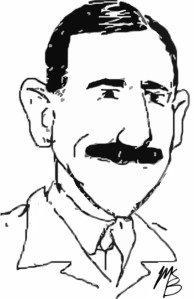
Lt-Col. A.S. Pearson

Lieutenant-Colonel Jock Pearson
1st Parachute Battalion
8th (Midlands) Parachute Battalion

I do not believe that there is any man, who, in his heart of hearts, would not rather be called ‘brave’ than any other virtue attributed to him. This elemental and reasoning attitude is a good one. Because courage is not merely a virtue but is THE virtue. Without courage, there are no other virtues. Faith, hope and charity, and all the rest, don’t become virtues unless you have the courage to exercise them.

(Pearson lecture quoted in Julian James, A Fierce Quality, 118)

Born on 1 June 1915 in Glasgow, Scotland, Alastair Stevenson “Jock” Pearson was educated at Kelvinside Academy and worked as a baker during the Great Depression before joining the Territorial Army. He rose to become one of the youngest battalion commanders in the British Army. “Gentlemen, do what you are told and stay alive,” he would stress to his officers. “Remember, there will be no bloody medals in this battalion.” Yet with four D.S.O.’s and one Military Cross, Pearson ended the war as one of the most highly decorated officers.

Continue reading

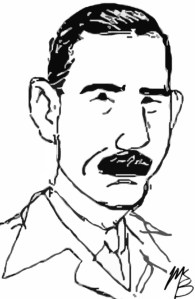
Col. W. Dec

Colonel Wladyslaw Dec
3rd Rifle Brigade

‘To hell with women just now — what I need is a bridge! Report your discovery to the General.’ I shouted somewhat un-gallantly. I forgot that the world is small and while a mountain might not meet up with another, people are in fact likely to meet again. Also, I didn’t think that one day people would remember that I preferred a bridge to women.

(Quoted in Dec, Narvik and Falaise, 377-9)

Born on 13 February 1898 in Sokołów Małopolski, Władysław Dec was drafted into the Austro-Hungarian Army during the First World War and was commissioned a second lieutenant in 1916. He joined the newly formed Polish Army in November 1918 and fought during the wars of independence. After the September 1939 campaign, Major Dec escaped with his brigade to France via Hungary and the Balkans.

Continue reading

Lt-Col. K. Complak

Lieutenant-Colonel Karol Complak
1st Podhale Rifles Battalion

Without Lieutenant Colonel Complak’s presence, this attack on very heavily defended enemy’s position, would have been very costly, both in men and time lost. Throughout the fighting in France, Belgium, Holland and Germany, Lieutenant Colonel Complak has shown great coolness and personal bravery and been an example of true Soldier’s bravery on the Battlefield.”

(D.S.O. citation, 28 June 1945)

Born on 20 November 1899, Karol Józef Complak was a veteran of the First World War, having served in the Polish Legions while attached to the Austrian Army. By November 1918, he joined the newly created Polish Army and participated in the Polish–Ukrainian War then the Polish-Soviet War. A major by the outbreak of the Second World War, he escaped into Romania then made his way to France.

Continue reading

Maj. Kański & Lt-Col. Dowbor

Major Jan Kański
&
Lieutenant-Colonel Romuald Dowbor
24th Polish Uhlan Regiment

Born on 10 November 1898 in Ternopilska, Ukraine, Jan Witold Kański took command of the 24th Polish Uhlan Regiment in November 1942. During the Battle of Falaise, he was badly wounded by artillery fire and died shortly thereafter on 27 August 1944. Within days he was succeeded by Major Romuald Jerzy Dowbor who was born on 11 February 1905 and joined the Polish Army at an early age. He had been taken prisoner by the Soviets in September 1939 but escaped and eventually reached France via Hungary and the Balkans. He then joined the reconstituted 24th Polish Uhlan Regiment in 1940 and became a squadron commander with the 10th Mountain Rifle Regiment after the evacuation to the United Kingdom

Continue reading

Lt-Col. H.A.C. Blair-Imrie

Lieutenant-Colonel Hew Blair-Imrie
5th/7th Battalion, Gordon Highlanders

… while a bevy of padres of various denominations descended on me and started being sympathetic. Actually what I wanted at that moment was not sympathy (although I quite like the wounded hero role!) but a stimulant … well I got my stimulant in the form of hot sweet tea!’

(Blair-Imrie to wife quoted in Jon Latimer, Alamein, 198)

Born on 24 July 1915 in Brecknock, Breconshire, Wales, Hew Angus Christopher Blair-Imrie was an officer in the 5th Black Watch, which his father had commanded during the First World War. The younger Blair-Imrie served as a company commander during the Second Battle of El Alamein where he was wounded and earned the Military Cross.

Continue reading

Lt-Col. M.A. Lindsay

Lieutenant-Colonel Martin Lindsay
9th Parachute Battalion
1st Battalion, Gordon Highlanders

I rise with trepidation and ask for the traditional indulgence of the House. In the course of the last 18 months I have had the honour of commanding an infantry battalion in sixteen operations, and anyone who has had that experience will be familiar with the agonies of apprehension before and after zero hour, but, Mr. Speaker, I am convinced that, for sheer misery, there is nothing to touch the suspense of waiting to catch your eye for the first time.

(Martin Lindsay, Hansard, 7 Nov 1945)

Born on 22 August 1905 in London, Martin Alexander Lindsay was a Scottish noble and explorer. After adventures to West Africa, the Congo, and the far North, he led the British Trans-Greenland Expedition in 1934. After attending Royal Military College, Sandhurst in 1925, he had been commissioned in Royal Scots Fusiliers but retired from the army in 1936 when named Conservative Party candidate for the riding of Brigg. The outbreak of the Second World War paused his political career, and he rejoined the army. Given his arctic experience, he served as a staff officer during the Norwegian campaign in April 1940.

Continue reading

Lt-Col. J.A. Grant-Peterkin

Lieutenant-Colonel J.A. Grant-Peterkin
15th Scottish Reconnaissance Regiment
1st Battalion, Gordon Highlanders

Grant-Peterkin is a tremendous success as C.O. He has personality, brains and charm, but above all, drive and enthusiasm. He is a tall, well-built man with sharp features and very blue eyes, clean-shaven, and fair hair brushed nearly straight back.

(Martin Lindsay, So Few Got Through, 148)

Born on 15 September 1909 in Kinloss, Moray, Scotland, James Alexander Grant-Peterkin was a cricket player and commissioned officer in the Queen’s Own Cameron Highlanders since 1929. He served as brigade major with 4th Infantry Brigade with the British Expeditionary Force in 1940 and was then posted as an instructor to the staff school at Camberley. He was appointed to command 15th Scottish Reconnaissance Regiment in February 1943.

Continue reading

Lt-Col. H.C.H.T. Cumming-Bruce

Lieutenant-Colonel Harry Cumming-Bruce 
1st Battalion, Gordon Highlanders

He seems a charming chap; perhaps a slightly unorthodox military figure with his rather old-fashioned curly moustache, white framed horn-rimmed spectacles and slight stoop … I hope to God he knows his job.

(Martin Lindsay, So Few Got Through, 12)

Born on 29 May 1910 in Barnet, Hertfordshire, England, Henry Charles Hovell-Thurlow-Cumming-Bruce was the heir to Baron Thurlow. He attended Eton College and Royal Military College, Sandhurst before taking a commission with the Seaforth Highlanders in 1930. In the mid 30s, he served as aide-de-camp to the British High Commissioner for Palestine and Transjordan and held posts in the Middle East during the early phase of the Second World War.

Continue reading