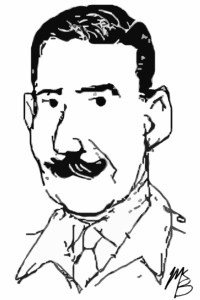
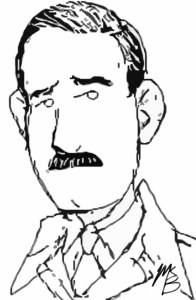
Lt-Col. J.D.W. Renison

Lieutenant-Colonel Bill Renison
2nd Battalion, East Yorkshire Regiment

It was magnificent to see the majestic approach of wave after wave of big bombers, flying quite low in very tight formation at an almost pin-point target. As far as the eye could see they stretched out towards the sea and the sinking sun. As the raid progressed, a cloud of dust rose high into the air and blotted out almost everything, drifting slowly towards us and up the valley of the Orne. By the end of the raid the troops were standing on the end of their slit trenches clapping and cheering; the effect on morale was electric

(Renison journal, July 1944)

Born on 18 April 1909 Rock Ferry, Cheshire, James Douglas Willoughby Renison was an insurance broker and Royal Liverpool Club golfer. In the Territorial Army, he held a commission with the Liverpool Scottish (Queen’s Own Cameron Highlanders) since 1927. He was promoted to major in 1938, and served as second-in-command of the 1st and 2nd Battalions while stationed in Northern Ireland. Shortly after the Normandy landings, Renison joined a draft of reinforcement officers for the 2nd Battalion, East Yorkshire Regiment.

Continue reading

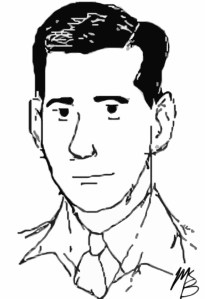
Lt-Col. N.J. Dickson

Lieutenant-Colonel Jimmy Dickson
2nd Battalion, East Yorkshire Regiment

In the rescuing of the child and bringing ashore of Sgt Chamberlain, Brigadier Dickson displayed courage of the highest order which was an example to all. Especially is this so in the second attempt when in spite of his exhausted state and his injuries he was immediately prepared to risk his life—and knew it was a very grave risk—to try single-handed to save a drowning man.

(George Medal citation, 12 Oct 1960)

Born on 11 August 1911 in British India, Norman James Dickson was commissioned with the Northamptonshire Regiment in 1931 after attending the King’s School and Royal Military College, Sandhurst. He served on the North West frontier in India and was promoted to captain in September 1939. He completed staff college and served as brigade major and then participated in the planning for D-Day with general headquarters, 21st Army Group.  

Continue reading

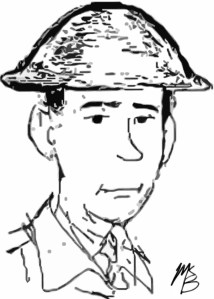
Lt-Col. C.F. Hutchinson

Lieutenant-Colonel C.F. Hutchinson
2nd Battalion, East Yorkshire Regiment
8th Battalion, Durham Light Infantry
6th Battalion, Green Howards
6th Battalion, Royal Welch Fusiliers

Col. Hutchinson, with complete disregard for his own safety, moved forward to where he could control the attack and was successful in capturing the first locality. He was, however, wounded, and have to be evacuated. Throughout the assault he had set a fine example to his battalion and led them in spite of heavy casualties through the beach defences and up to the final objective.

(D.S.O. citation, 31 August 1944)

Born on 5 March 1908 Darlington, Durham, Charles Francis Hutchinson was a educated at Durham University and a Territorial Army officer, commissioned officer with the Durham Light Infantry since 1926. He joined the 2nd Battalion, East Yorkshire Regiment in October 1942 and served as second-in-command prior to succeeding Lieutenant-Colonel L.H. Spicer in January 1944. After five months of training and planning, Hutchinson led the 2nd East Yorks ashore at Sword Beach on 6 June 1944.

Continue reading

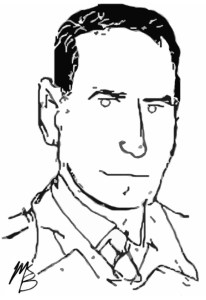
Lt-Col. R.W. Craddock

Lieutenant-Colonel R.W. Craddock
2nd Battalion, South Wales Borderers
1st Battalion, Suffolk Regiment (The Buffs)

The speech he made on the 9th October marked him out as a great man, knowing the men he commanded. True to his word he was indefatigable in visiting the forward positions till, later in the battle, falling a victim to a German mine, he was very badly wounded . Even so, with a shattered leg, he had crawled out of the mine field before being picked up, and he could still joke about the limb he had lost. His name was for long a legend in the First Battalion.

(Walter Norris Nicholson, The Suffolk Regiment, 1928 to 1946, 128)

Born on 3 August 1910, Calcutta, British India, Richard Walter Craddock was Sandhurst educated and a commissioned officer in the Royal East Kent Regiment (Buffs) since 1930. He served during the Battle of France as captain and adjutant in the 2nd Battalion, Buffs, which was recognized with an award of the Member of the Most Excellent Order of the British Empire. In 1943, he was posted to Prime Minister Winston Churchill’s delegation for the conferences in Washington, D.C., Quebec City and Cairo.

Continue reading

Lt-Col. F.F.E. Allen

Lieutenant-Colonel Freddie Allen
1st Battalion, Suffolk Regiment (The Buffs)
1st Battalion, East Lancashire Regiment

Throughout the long and anxious period of 27 hours, Lt-Col Allen, in spite of his wound, lack of sleep and his heavy responsibilities, continued to command his battalion with great skill, calm confidence and outstanding personal gallantry. His personal example and superb fighting qualities ensured beyond any doubt that his battalion’s objective was held firm, and that by their offensive spirit whey were able to destroy very large number of the enemy who were equally determined to regain the vital ground captured and held secure by this battalion.

(D.S.O. Bar citation, 19 Apr 1945)

Born on 30 December 1912 in Middlesex, London, Frederick Fernley Edmund Allen was an insurance broker educated at Brighton College. He joined the Territorial Army in 1937 and took a commission with the Oxford and Buckinghamshire Light Infantry. He became a replacement second-in-command for the 1st Battalion, Suffolk Regiment a month after the D-Day landings. He took command in August 1944 and October when successive commanding officers were wounded in action.

Continue reading

Lt-Col. J.G.M.B. Gough

Lieutenant-Colonel Kit Gough
1st Battalion, Suffolk Regiment (The Buffs)

The role of 1st Suffolk on D day was: 1st to capture a Battery of guns covering beach 2nd To clear the village of Coalville 3rd To capture strong point “Hillman.”

First two were easy, but “Hillman” proved difficult nut to crack, & was finally taken about 7 PM “D” day. The slowness has been the subject of severe criticism in the Book (forgotten name!) concerning the whole campaign in N.W. Europe. When I visited “Hillman” last year, (most of the concrete works remain) I pondered over the problem again, and realised what a tough egg it was.

(Gough questionnaire, Cornelius Ryan WWII papers, box 021, folder 04, 1958)

Born on 30 August 1907 in Pocklington, Yorkshire, James Gordon Milestone Boulter Gough was commissioned into the Lincolnshire Regiment in 1928. During the 1930s, he served overseas with the 1st Battalion in Gibraltar, Shanghai, Hong Kong, and India. He was a company commander with the 2nd Battalion during the Battle of France in 1940. Afterwards he became second-in-command, then at the end 1942 was instructor at the school of infantry. In October 1943, he was posted to the 1st Battalion, Suffolk Regiment as second-in-command.

Continue reading

Lt-Col. R.E. Goodwin

Lieutenant-Colonel Dick Goodwin
1st Battalion, Suffolk Regiment (The Buffs)

I am just writing this letter to you before setting out on the great adventure … There is very little else to say as one can’t say much. I expect you will hear all about everything before you get this. Don’t worry too much because it won’t do anyone any good! … There will be much to tell you when I see you next.

(Goodwin to wife, 5 Jun 1944) https://ve-vjday80.gov.uk/letter/lt-col-dick-goodwin-to-anthea-goodwin/

Born on 17 August 1908 in London, Richard Elton Goodwin was commissioned with the Suffolk Regiment in 1928 after education at Cheltenham and Royal Military College, Sandhurst. While serving in India, he became aide-de-camp to the Governor of Madras in 1935. After the outbreak of war, Goodwin was second-in-command of 9th Battalion, Royal Warwickshire Regiment before returning to the Suffolks as commanding officer of the 1st Battalion in June 1943.

Continue reading

Lt-Col. P.J. Luard

Lieutenant-Colonel P.J. Luard
13th (Lancashire) Parachute Battalion

The battalion had been on the move and in action for forty-eight hours, almost without let-up, and was very tired. So, we stayed where we were. I had a company commanders meeting and in the middle of it, I was so tired that I went to sleep as I was actually talking. They left me sleeping, and left word that I was not to be disturbed. I woke up two hours later and the rest of the meeting was resumed, with my apologies.

(Quoted from Airborne Assault Museum) https://paradata.org.uk/content/4642689-lieutenant-colonel-peter-luard

Born on 6 June 1911 Warblington, Hampshire, Peter John Luard was the son of a British Navy admiral and a commissioned officer in the Oxfordshire and Buckinghamshire light infantry since 1931. He served in Burma during the early 1930s and qualified as a staff officer in 1941. Following appointments with the 6th Battalion, Ox and Bucks and to 31st Infantry Brigade, Luard volunteered to be a paratrooper in early 1942.

Continue reading

Lt-Col. A.P. Johnson

Lieutenant-Colonel Johnny Johnson
12th (Yorkshire) Parachute Battalion

Everything opened up. There was airbursts and there was machine gun fire coming right across, tracer bullets coming at us, mortars being dropped and shells … There were a few of us around there. There was the C.O., the second-in-command, the adjutant, I think there must have been about half a dozen. And there was such a bang against this wall that I wondered what it was. I didn’t know evidently it was a shell that had dropped amongst us … it killed the C.O.

(Ronald Dixon, IWM interview, 3 Sep 1999)

Born on 28 July 1911 in Maidenhead, Berkshire, Alexander Percival Johnson was commissioned into the Suffolk Regiment in 1931. He had previously been educated in Switzerland before graduating from the Royal Military College, Sandhurst. Just as he completed staff college in 1941, the British Army had started to form the new airborne forces. As an adventuring sportsman with an interest in skinning and mountain climbing, Johnson volunteered as a paratrooper.

Continue reading

Lt-Col. R.J.H. Carson

Lieutenant-Colonel Hank Carson
1st Battalion, Royal Ulster Rifles

His tactical ability has always been sound, his planning painstaking and thorough. His battalion has always maintained a high morale and in the most difficult conditions their cheerfulness has been noticeable and outstanding. This is to a very large extent due to the personality and example set by their commanding officer.

(O.B.E. citation, 29 Apr 1952)

Born on 18 July 1909 in Mussoorie, British India, Robert John Heyworth Carson was educated at Charterhouse and RMC Sandhurst. After taking a commission the Royal Ulster Rifles in 1929, he served around the world including in Northern Ireland, Palestine, Egypt and Hong Kong. Carson briefly commanded the 70th (Young Soldiers) Battalion, Royal Ulster Rifles, a unit formed in 1940 for underaged soldiers too young for conscription. In February 1943, he succeeded Lieutenant-Colonel R.J.R. Campbell in command of the 1st Battalion, RUR.

Continue reading