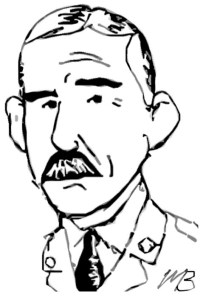
The Penny Pincher

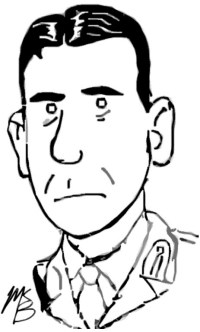
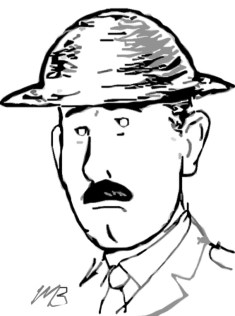
Lieutenant Colonel John Thompson
124th (Governor General’s Body Guard) Battalion

All who know him must regard Colonel Thompson as a man of the highest probity and integrity. His honesty and ability cannot be question. I for one am prepared to believe that the qualities of character which have made him somewhat rigid in the work of administration of the particular commission over which he presides are characteristics of a strict impartiality…

 (W.L.M. King, Debates, 30 June 1934, 4556)

John Thomas Connolly Thompson was the eldest son of Canada’s fourth Prime Minister, John Sparrow David Thompson (1845-1894). He was born in Halifax, Nova Scotia on 21 October 1872. A barrister in Toronto, Thompson enlisted with Lieutenant Colonel W. C. V. Chadwick’s 124th Battalion in March 1916 at the rank of major.

Continue reading

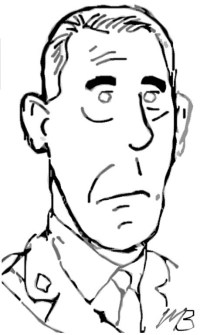
Lt. Col. Piuze

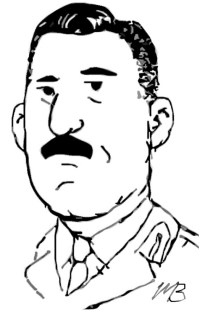
Lieutenant Colonel P.A. Piuze
189th (Canadien-Français) Battalion
Puize

Don’t you think, Sir, that the fact of leaving my family (I am the father of five children) and position is one sacrifice that should count for something? Furthermore, the sudden disbanding of my Battalion will certainly seriously hurt my reputation not only in the military life but also in the civil.

 (Piuze to George Perley, 16 Nov 1916)

Born on 28 October 1888 in Fraserville, Quebec, Philippe-Auguste Piuze was a militia captain in the 89th Regiment. Commanding officer of 189th Battalion, the twenty-eight year old lieutenant colonel was one of the more successful recruiters in Quebec. “I was anticipating my Battalion to go to the front as a draft, although I was promised it would go as a Unit,” he wrote on arrival in England. Instead, his battalion was taken from him almost immediately after disembarking.

Continue reading

The Flu Victim

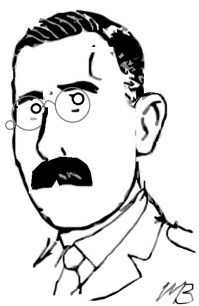
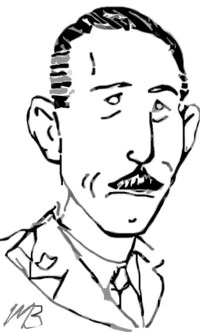
Lieutenant Colonel J.D. Clarke
111th (South Waterloo) Battalion

A very good officer who gave me an excellent impression, well qualified, has a good command, is apparently tactful and altogether fitted to command.

(111th Inspection report, 7 Aug 1916)

“After having raised the 111th South Waterloo Battalion, taking it overseas and spending four weeks on the firing line in France, Lieut.-Col. J.D. Clarke slipped quietly into town today.”

(Toronto World, 9 Feb 1917)

Born on 1 March 1884 in Elora, Ontario, James Drury Clarke was a newspaper publisher and the son of a prominent Liberal politician. His father, Charles Clarke (1826—–1909) had been a member of the Ontario legislature and speaker. He was appointed to organize the 111th Battalion from the Galt and Waterloo region. Although he found the German-speaking Mennonites in the area loyal, their equally strong pacifism made “recruiting efforts in that section are absolutely wasted.” Continue reading

The Adventurer

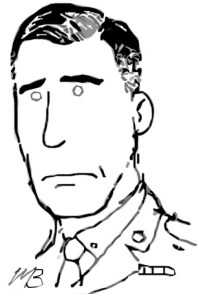
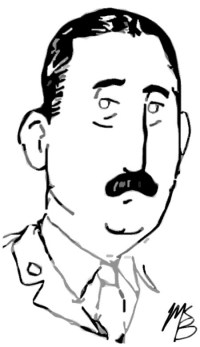
Lieutenant Colonel Jim Cornwall
218th (Irish Guards) Battalion
Cornwall

He certainly knows his constituency better than most representatives do. There is scarcely a mile of these unmapped ways that he has not tramped alone; not an Indian guide in the North can last with Jim for a week, in summer or on snowshoes.

(A.D. Cameron, The New North, 1910,)

On 3 March 1916, James Kennedy Cornwall enlisted as a private in Lieutenant Colonel L. J. Whittaker’s 218th Battalion. Within two months, Cornwall, a former Liberal Alberta MPP (1909—1913), was commanding the unit. Nicknamed “Peace River Jim,” he was a pioneer, prospector, trapper, adventurer and entrepreneur. Born on 29 October 1869 in Brantford, Ontario, he became a world traveler before settling in Peace River, Alberta in 1902.

Continue reading

The Vanished Officer

Lieutenant Reginald J. Woods
The Lake Superior Regiment

An illustrated story of one officer featured in my book Scandalous Conduct: Canadian Officer Courts Martial, 1914–45.

On 16 August 1944, Lieutenant Reg Woods joined his regiment fighting in France. After being under enemy fire for the first time, he vanished the next day. Two months later, Woods resurfaced in London claiming amnesia. He was admitted to a neurological hospital as a possible psychiatric casualty. Was he a battle exhaustion case deserving treatment or a disciplinary problem? One doctor believed the amnesia genuine, but the hospital’s commanding medical officer suspected Woods was faking to conceal deliberate misconduct. He was arrested and charged with desertion.

Woods comic 1
Continue reading

The Nervous Officer

Lieutenant Kenneth Cameron Fellowes
84th and 25th Battalions

An illustrated story of one officer featured in my book Scandalous Conduct: Canadian Officer Courts Martial, 1914–45.

Speaking quite impersonally, it is manifest that having regard to the very trying conditions at the Front it would never do to establish the principle that an officer who by reason of his nervous condition failed to carry out an order given to him could escape the consequences by attributing the fault to his nervousness. Men at the front have to “stick it” at all costs, and the establishment of a precedent excusing the failing to do so would be very dangerous.

(Maj. Walter Gow, 17 Jan 1917)

Fellowes 1A
Continue reading

Maj. Vanderwater

Major Roscoe Vanderwater, D.S.O.
2nd (Iron Second) Battalion

Vanderwater

Sharp at 4.45 one afternoon in broad daylight and under an almost cloudless sky, three companies under command of Major Vanderwater sprang from their trenches and advanced steadily toward the German line. In front of them our artillery laid down an intense barrage and out men followed so closely that they were almost in the midst of their own shells.

(The Weekly Ontario and Bay of Quinte Chronicle, 28 Sept 1916, 2)

Roscoe Dudley Vanderwater was a farmer and militia officer born in Foxboro, Sidney Township, Ontario on 6 January 1889. Shortly after the sudden death of his wife, in March 1915, he enlisted with Lieutenant Colonel J.A.V. Preston’s 39th Battalion from Belleville. After the 39th was broken up, Vanderwater reverted in rank from captain to lieutenant and joined the 2nd Battalion on the front.

Continue reading

Lt. Cols. Cowan and McPherson

Lieutenant Colonel Harry Cowan
&
Lieutenant Colonel C.D. McPherson
McPherson

32nd (Portage la Prairie) Battalion

In view of the serious war situation I decided that I would write to you to ascertain what steps those of us located in this part of the world, and wishing to serve, should take … Just to what extent this U.S. neutrality law would restrain us, I do not know. However, I do know that there will be quite a large number who will offer to serve should hostilities break out.

(McPherson to defence minister, 24 Aug 1939)

Harry James Cowan was a Boer War veteran and commanding officer of the 18th Mounted Rifles. In November 1914, he was authorized to raise the 32nd Battalion from Manitoba and Saskatchewan. He selected Major Charles Duncan McPherson, of “C” Squadron in the 18th Mounted Rifles, as his second-in-command.

Continue reading

Maj. Gen. Loomis

Major General F.O.W. Loomis
13th (Royal Highlanders of Canada) Battalion
Loomis

We have laid the bodies of many of our best under rows of little wooden crosses. We love those comrades who have fallen; we remember their deeds, and recall their deaths with pride and joy, and we know that their souls go marching with us. We know that the spirit of devotion that animated them remains with us, and we feel that the enemy has no battalions, no gas, guns, shells, nor bombs which will dampen or deter this spirit of determination — the Canadian Spirit.

 (Loomis to W. F. Gibson, The Listening Post, 1 Dec 1917, 3)

Frederick Oscar Warren Loomis was a Montreal manufacturer and member of the militia since 1886. He was born in Sherbrook, Quebec on 1 February 1870. As commander of the Royal Highlanders, Loomis led the 13th Battalion to France in February 1915. He guided the Highlanders through the first major action at Second Ypres and was promoted to command the 2nd Brigade in January 1916.

Continue reading

Lt. Col. Ritchie

Lieutenant Colonel C.F. Ritchie, D.S.O., M.C.
24th (Victoria Rifles) Battalion
Ritchie

His battalion held the front line for nine days under very trying conditions prior to our attack . Several counterattacks were completely repulsed, the enemy suffering heavy casualties, and prisoners were made.

(Ritchie, D.S.O. Citation, 8 Cot 1919, 3203)

Charles Frederick Ritchie was three-time commanding officer of the 24th Battalion during some of the heaviest fighting on the front including Vimy Ridge, Passchendaele, Hill 70 and the final Hundred Days. Born in Three Rivers, Quebec on 12 October 1888, he was a bank manager and member of the 3rd Victoria Rifles since 1909. He led the 24th from 7 December 1916 to 14 April 1917, 4 August 1917 to 22 January 1918, and 5 September 1918 to demobilization.

Continue reading