Lieutenant-Colonel Ian Freeland
7th Battalion, Royal Norfolk Regiment
1/5th Battalion, Queen’s Royal Regiment
The petrol bomb is a lethal weapon … anybody who manufactures, carries, or throws a petrol bomb is liable to most terribly tough punishment. They are liable to be shot dead in the street if, after warning, they persist. So, if you could get that across to any potential … bomb throwers, I would be grateful.
(Freeland interview, 6 Apr 1970)
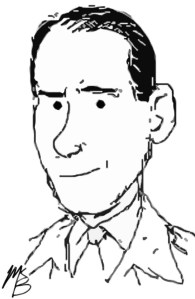
Born on 14 September 1912 in Milton, Hampshire, Ian Henry Freeland was commissioned into the Norfolk Regiment after completing RMC, Sandhurst in 1932. Following service in India, he became adjutant for the 1st Battalion in 1940 shortly before it returned to the United Kingdom. He was brigade major for the 7th Infantry Brigade in 1942 and posted to the War Office in 1943. In April 1944, he was promoted to lieutenant-colonel in command of the 7th Battalion, Royal Norfolk Regiment.
In late June 1944, the battalion deployed to France with the 59th Division. For actions in early August, Freeland earned the D.S.O.: “[His] whole conduct of this operation was an absolute model of what personal command of a battalion by an outstanding officer can achieve. There is no doubt to his great gallantry and inspiring example had much to do with the magnificent stand made by his Battalion.”
In August 1944, the 59th Division was withdrawn from the line and disbanded. Freeland transferred to the 7th Armoured Division and took command of the 1/5th Battalion, Queen’s Royal Regiment. By the end of the war in Europe, he was awarded the Chevalier of the Order of the Crown with palm and Croix de Guerre 1940 with palm by Belgium. He held several staff posts with the British Army of the Rhine through to 1948.
He was next an instructor at Staff College, Camberley, commanded the 2nd Battalion, Royal Inniskilling Fusiliers in Cyprus in 1954 and was promoted to acting brigadier in 1956. During the 1960s, he served in East Africa including a posting in command of British Land Forces Kenya. He was made deputy chief of the Imperial General Staff and knighted in 1968.
From 1969 to 1971, he served as general officer commanding and director of operations for Northern Ireland. At the height of the Troubles, he faced opposition from both Unionists and Republicans for his outspokenness. When Freeland suggested that British troops would respond to violence with force in a television interview, Unionist MP Stratton Mills responded:
One of the most disastrous happenings in Northern Ireland during recent days has undoubtedly been the very provocative and arrogant attitude of General Freeland, both on television and at a Press conference in Northern Ireland. That, above and beyond all other issues, has caused such tension in Northern Ireland that standing here today I am in the throes of despair, for I believe that his speech can do nothing but further exacerbate the tensions in Northern Ireland … I believe that generals should be seen and not heard.
From the other side, Unity MP Bernadette Devlin stated, “What we need in Northern Ireland is not General Freeland running around telling the working-class hooligan that he will be instantly shot if he shows his nose on the streets … Possibly enough has been said about the crass stupidity of General Freeland’s statement on television last night.”
Home Secretary and Labour MP James Callaghan defended Freeland’s remarks: “Some hon. Gentlemen may not like the choice of language, but the way to avoid it is very simple. Do not go out with a petrol bomb. That is the answer. There is not a single problem in Northern Ireland today, there is not a single injustice—though there are some which exist in Northern Ireland—which is worth the loss of a life of a single British soldier or a single Irish citizen—not one.”
Citing the stress of the position, Freeland stepped down in February 1971 and retired from the army months later. He died on 2 July 1979 in Cambridge.
 World War Graphic History