Lieutenant-Colonel Freddie Allen
1st Battalion, Suffolk Regiment (The Buffs)
1st Battalion, East Lancashire Regiment
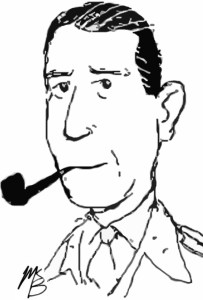
Throughout the long and anxious period of 27 hours, Lt-Col Allen, in spite of his wound, lack of sleep and his heavy responsibilities, continued to command his battalion with great skill, calm confidence and outstanding personal gallantry. His personal example and superb fighting qualities ensured beyond any doubt that his battalion’s objective was held firm, and that by their offensive spirit whey were able to destroy very large number of the enemy who were equally determined to regain the vital ground captured and held secure by this battalion.
(D.S.O. Bar citation, 19 Apr 1945)
Born on 30 December 1912 in Middlesex, London, Frederick Fernley Edmund Allen was an insurance broker educated at Brighton College. He joined the Territorial Army in 1937 and took a commission with the Oxford and Buckinghamshire Light Infantry. He became a replacement second-in-command for the 1st Battalion, Suffolk Regiment a month after the D-Day landings. He took command in August 1944 and October when successive commanding officers were wounded in action.
In November 1944, the original 1st Suffolk commanding officer, Lieutenant-Colonel R.E. Goodwin had recovered from wounds sustained within days of the Normandy landings and resumed his post. Allen was assigned to the 1st Battalion, East Lancashire Regiment in the 53rd Division to replace Lieutenant-Colonel G.W.P.N. Burden, who although overage at forty-seven had been allowed to lead his battalion for the past six months in the field.
Allen earned the D.S.O. for actions in early January 1945 in the Ardennes. After three strikes on the battalion command post left the adjutant and four others dead, Allen moved forward to communicate with his companies “which were under heavy and accurate fire by artillery, mortar and tanks and were suffering heavy casualties on the open snow covered slopes. From this exposed position he directed his battle and when his forward companies were held up he directed his reserved in such a way so that the momentum of the attack was maintained and the Battalion captured its final objective as planned.”
Allen received a D.S.O. Bar for further excellent leadership at the Reichwald Forest in February. He had been struck in the chin with a bullet and knocked out. “On regaining consciousness shortly afterwards he immediately continued to direct the battle, and by his efforts he fought his battalion through their objective.” Cut off from communication and surrounded by Germans, “It was impossible to get food and water forward and he could not evacuate his casualties. From early next morning 12th February until late that night the enemy put in several fierce counter-attacks using a Panzer formation. Every one was repulsed immediately with heavy loss to the enemy and at no point did the battalion give any ground.”
Allen commanded until the end of the war in Europe, and as a fluent German-speaker then became Military Governor of Brunswick and worked in the finance division of the British Military Government in occupied Germany. He retired from the army in 1946 and resumed his insurance career.
He moved to the United States in 1997 and died in Rye, New York on 15 June 2005.
 World War Graphic History