Lieutenant-Colonel Lucien Lalonde
Régiment de Maisonneuve
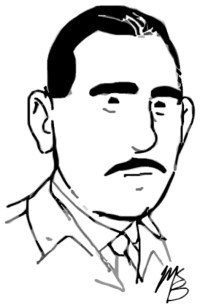
German officers are hypocrites and constitute a class that should be watched closely, especially when they appear submissive and eager to cooperate. Isms of any kind are no good for use. Those who preach them in Canada have never been to the countries they speak so glowingly about. In fact, they don’t know what they are talking about.
(Lalonde in Montreal Gazette, 15 Mar 1946, 2)
Born in Montreal on 14 December 1908, George Lucien Lalonde graduated from L’Assomption College in 1926 and the University of Montreal with a law degree in 1930. He mobilized as with the Régiment de Maisonneuve, and went overseas as a captain in August 1940. When Lieutenant-Colonel Robert Bourassa fell ill, Major-General Victor Odlum of the 2nd Division considered Lalonde for the appointment. It was, however, deemed inappropriate to promote a captain over the unit’s other senior officers. Instead, he went to the war staff college.
Lalonde returned to Quebec, where by 1943 he had been promoted to lieutenant-colonel and served as general staff officer at No. 4 Military District in Montreal. He reverted in rank to major to return overseas and rejoin the Régiment de Maisonneuve then fighting in Northwest Europe. He arrived in March 1945, and succeeded Lieutenant-Colonel Julien Bibeau the next month. He commanded the battalion for the final push in the campaign and led the troops home in November 1945. He was made Officer of the Order of the British Empire.
When the Canadian Legion refused to admit NRMA conscripts in 1946, Lalonde dissented arguing, “When they fought, they fought damn well … we originally didn’t want anything to do with them but on the field of battle they proved themselves good Canadian soldiers … let them in.” As a result of involvement in the Legion, he developed a greater Interest with the concerns and welfare of fellow veterans. He became assistant deputy minister of Veteran Affairs in 1948 and deputy minister in 1955. He moved over to deputy minister of public works in 1963 until retirement from the civil service in 1970.
He died in Boca Raton, Florida on 2 February 1977 and is buried in Ottawa .
 World War Graphic History
Thanks very much for this. I was not aware of my uncle’s feelings regarding German officers. BTW, he was made OBE at the end of the war, and he actually died in Boca Raton, Florida (although he is indeed buried in Ottawa).
Thanks very much for reading, and the post as now been corrected