Lieutenant-Colonel J.P.E. Poirier
Royal 22nd Regiment
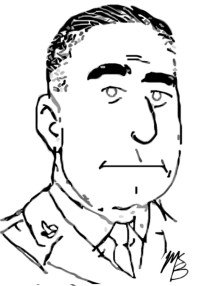
The case of this officer is one which it is rather difficult to deal with. He has a very pleasant personality, is very popular and has a splendid war record. Furthermore, when really sober is professionally capable. On the other hand, he seems quite incapable of withstanding the temptations of drink for more than a few weeks at a time, almost invariably lapses when it is really important that he should keep sober, his appearance has all gone to pieces and he seems unable to pass his promotion examinations.
(Brig. J.M. Prowse to adjutant-general’s branch, 7 Jan 1935)
Born in Thetford Mines, Quebec on 1 May 1896, Joseph Philippe Emile Poirier enlisted in the 22nd Battalion as a private and earned two Military Medals for bravery. Commissioned in June 1918, he joined in the Royal 22nd Regiment as part of the Permanent Force in 1920. He became second-in-command on mobilization in September 1939. After Lieutenant-Colonel Percy Flynn fell seriously ill in England and returned to Quebec in January 1941, Poirier took command of the regiment.
His elevation to command would be somewhat surprising as only a few years earlier he had been marked for forced retirement due to intemperance. His early military career had showed much promise as a “very good leader, energetic, full of tact & judgement.” However, throughout the 1930s, superiors found his drinking became worse and increasingly impaired his duties. His 1935 annual confidential report stated:
Without wishing to labour the point I am of the opinion that intemperance is Capt. Poirier’s only serious failing. I believe his lapses are as much due to environment as to any craving for alcohol. He impresses me as a man of great energy but of few intellectual resources. The practical side of soldiering is both an occupation and a hobby to him.
“As a last opportunity to redeem himself,” superiors had transferred Poitier to the RCR in Toronto, hoping that the change of environment and close supervision would “correct his habits.” Instead, he was arrested for drunk driving and sentenced to a week in jail in October 1937.
“His attitude appears to be one of indifference,” the chief of the general staff concluded, “He has completely forfeited the respect and confidence of his subordinates.” Although recommended for removal from the Permanent Force, Poirier remained an officer in the 22nd Regiment. By the end of 1938, Lieutenant-Colonel Percy Flynn confirmed that the “conduct of this officer has been exemplary.” Thus, despite such a mixed record, he went overseas with the regiment in December 1939.
Ill health forced him to relinquish command to Major J.P.E. Bernatchez in September 1941, Suffering bleeding of the bladder, likely a side effect of his alcoholism, Poirier returned to Quebec, where he eventually took up army training duties. “His career has been somewhat colourful,” a superior remarked, “with a showing of most excellent traits as a soldier and some weaknesses which may have offset at times what might have been a perfect record.”
With declining health, he was recommended for retirement after twenty-nine years service. He died of heart failure on 7 February 1945 at the age of 48.
 World War Graphic History