Lt-Col. G.C. Corbould

Lieutenant-Colonel Gordon Corbould
Westminster Regiment
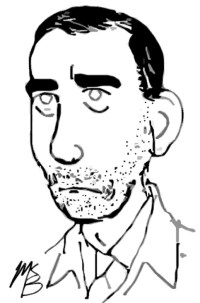
Corbould

Lt.-Col. Corbould was chief umpire for the army-air force scheme … “Someone has to run a show like this,” Lt.-Col. Corbould remarked dourly. “Otherwise it becomes just another game of cowboys and Indians, with people running around shouting ‘Bang! You’re dead!.’”

(Edmonton Journal, 15 Feb 1958, 23)

Born on 2 June 1909 in New Westminster, British Columbia, Gordon Charleson Corbould became the fourth generation of his family to hold the rank of colonel in the Canadian Army. A member of the militia since 1927, he went overseas as a lieutenant with the Westminster Regiment in 1941. He later transferred to the Irish Regiment as second-in-command under fellow British Columbian Lieutenant-Colonel R.C. Clark.
Continue reading

Lt-Col. R.L. Tindall

Lieutenant-Colonel R.L. Tindall
The Perth Regiment
Westminster Regiment

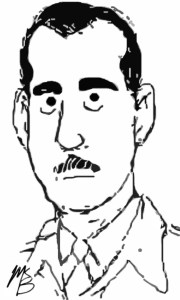
Considering this officer’s age, I do not believe that he would be able to command a motor battalion successfully under the conditions of intense and prolonged strain involved in mobile operations of an armd formation.

(Confidential report by Maj-Gen. E.L.M. Burns, 5 Feb 1944)

Born on 28 September 1899 in Lennoxville Quebec, Ralph Lockhart Tindall had enlisted as a sixteen-year-old in April 1917 and transferred to the Boy’s Battalion once overseas. By 1918, he had joined the Royal Air Force and was appointed flight cadet a month before the armistice. Back in civilian life, he took out a patent on an early automobile turn signal device and started work for the Imperial Tobacco Company in Montreal in 1932. Commissioned with the Royal Canadian Hussars since 1932, he became second-in-command of the Perth Regiment after mobilization in 1940.

Continue reading