Lt-Col. A.A. Ernst

Lieutenant-Colonel A.A. Ernst
West Nova Scotia Regiment
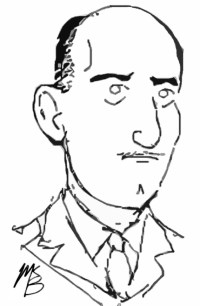
Ernst

He has a pleasant rather earnest manner, common sense and a firm character. His appreciation of ground is good and he can give clear verbal orders. His tactical knowledge of his own rm is good and that of other arms is up to the average of his rank.

He expresses himself clearly and sensibly in discussions. Although 46 years old he is fit and wiry and is fit to command.

(Commandant, Senior Officers’ School, 1941)

Born in Lunenburg, Nova Scotia on 12 July 1895, Arnold Albert Ernst was an accountant and a First World War non-commissioned veteran. He served for a year with the RCR as a private until he was severely wounded at Vimy Ridge. A bullet had passed through both lungs and he coughed blood for several days. He ended the war as a sergeant and rejoined the militia ten years later as a commissioned officer. On mobilization in September 1939, he transferred from the Halifax Rifles to go overseas as Major in the West Nova Scotia Regiment.
Continue reading

Lt-Col. M.F. Gregg

Lieutenant-Colonel Milton Gregg
West Nova Scotia Regiment
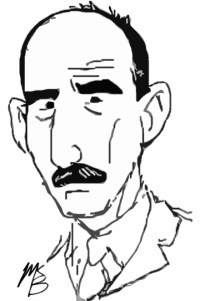
Gregg

He personally killed or wounded 11 of the enemy and took 25 prisoners, in addition to 12 machine guns captured in this trench. Remaining with his company in spite of wounds, he again on the 30th September led his men in attack until severely wounded. The outstanding valour of this officer saved many casualties and enabled the advance to continue.

(V.C. citation, 6 Jan 1919)

With a Victoria Cross and two Military Crosses for heroism in the First World War, Milton Fowler Gregg was one of Canada’s most decorated officers. Born in Kings County, New Brunswick on 10 April 1892, he had enlisted as a sergeant in November 1914 and rose to a lieutenant with the Royal Canadian Regiment. Three-times wounded, three-times decorated for gallantry, Gregg “annihilated” a German machine gun crew at Lens in summer 1917 and repulsed an enemy counter-attack at Arras in summer 1918, before his actions at Cambrai in late September 1918, which earned the VC, the highest award for bravery in the British Empire.

Continue reading

Lt-Col. G.W. Bullock

Lieutenant-Colonel George Bullock
West Nova Scotia Regiment

Would [I] be able to meet the spiritual needs of the men whom then Lieutenant Colonel Bullock had personally recruited and led into this maelstrom? … It was only later, after I had been attached to the West Novas, that I realized the importance of some of the questions Captain Bullock raised during that brief visit. So much was left unsaid.

(L.F. Wilmot, Through the Hitler Line, 11)

Born in Gibraltar on 4 June 1884, Gerald Wetherall Bullock was an Anglican clergyman in Bridgewater, Nova Scotia and an army chaplain who had been twice wounded during the First World War. He went on to join the militia and was active in the Canadian Legion. When critics complained that military camps taught young men bad habits, Bullock defended militia service, arguing that swearing and drinking were more likely to be picked up in civilian society anyway. He became commanding officer of the West Nova Scotia Regiment in 1936 and led the battalion overseas after mobilization four years later.

Continue reading